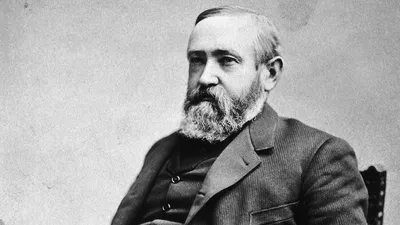
iqsafe.info – The presidency of Benjamin Harrison (1889-1893) was marked by several important political and economic struggles, but one of the most significant and contentious issues during his time in office was the battle for the tariff. Tariff policy in the late 19th century was at the heart of a fierce political battle, as it was seen as a way to influence the nation’s economy, protect domestic industries, and generate federal revenue. The debate over tariffs had been ongoing for decades, with deep divisions between two primary factions: protectionists, who advocated for higher tariffs to shield American manufacturers from foreign competition, and free traders, who called for lower tariffs to encourage competition and reduce consumer prices.
This article explores Benjamin Harrison’s involvement in the tariff debate, examining the political and economic factors that shaped his position on tariffs, the significant legislative developments during his administration, and the long-term consequences of the tariff policies enacted during his presidency.
The Tariff Debate: A Longstanding Issue in American Politics
Historical Context of the Tariff in the United States
The debate over tariffs had been a central issue in American politics since the nation’s founding. Early American economic policy was shaped by the vision of Alexander Hamilton, the first Secretary of the Treasury, who argued for a strong, protectionist system to nurture American manufacturing and industry. This vision was embodied in the Tariff of 1789, the first significant tariff law passed by Congress, which sought to protect fledgling American industries from competition with established European markets.
Throughout the 19th century, the tariff issue remained divisive. Northern industrialists generally supported protective tariffs, which would help shield their businesses from foreign competition. Southern and Western states, which were more agrarian and less industrialized, were largely in favor of free trade, as they relied on exports of agricultural products and sought lower tariffs to reduce costs for consumers.
By the late 19th century, with the United States having experienced rapid industrialization after the Civil War, the country found itself at the heart of an intense debate over how to balance the interests of agriculture and industry. This debate would come to a head during Benjamin Harrison’s presidency.
Harrison’s Background and Economic Philosophy
A Protectionist Advocate
Benjamin Harrison, a Republican, was an advocate of the protectionist tariff policy, which was consistent with the views of the Republican Party at the time. Harrison was a strong supporter of high tariffs as a means of protecting American industries, particularly in the rapidly growing manufacturing sector. He believed that tariffs were necessary to shield U.S. industries from the competition of cheaper foreign goods and to ensure that American workers were not undercut by lower wages abroad. Harrison’s stance on the tariff was closely aligned with the interests of industrial capitalists in the North, who sought protection for their factories, as well as workers who were benefiting from the expansion of American industry.
As a senator from Indiana before becoming president, Harrison had supported high tariffs, believing they were a tool for stimulating economic growth, fostering domestic manufacturing, and generating revenue for the federal government. This position would inform his policies when he took office in 1889.
The Republican Party and the Tariff Issue
The Republican Party of the late 19th century was solidly behind the protectionist cause. High tariffs were viewed as a means to protect American jobs and businesses, promote industrial growth, and maintain a healthy balance of trade. For Republicans, tariffs were not only an economic tool but a political issue that helped solidify support among industrialists and working-class voters in the Northern states.
Democrats, on the other hand, typically advocated for lower tariffs or free trade. They argued that high tariffs led to higher consumer prices and disproportionately benefited wealthy industrialists, while hurting farmers and consumers. For Democrats, reducing tariffs was seen as a way to promote economic fairness and free markets. The intense rivalry between Republicans and Democrats over the tariff issue would shape the political landscape during Harrison’s presidency.
The McKinley Tariff: Harrison’s Battle for Protection
The Push for Tariff Reform
Benjamin Harrison entered office in 1889 at a time when the tariff issue was more heated than ever. The previous administration under Grover Cleveland, a Democrat, had called for tariff reduction, but his efforts had been blocked by a Republican-controlled Congress. Harrison, determined to follow through on the Republican Party’s commitment to protectionism, made the tariff issue a central focus of his presidency.
In 1890, Harrison signed the McKinley Tariff into law, a measure that raised tariffs to the highest levels in U.S. history at the time. The McKinley Tariff, named after Ohio Congressman William McKinley, who championed the legislation, was designed to protect American industries by raising tariffs on imported goods. The tariff affected a wide range of products, including wool, sugar, iron, and textiles, with an average increase of 48% on imported goods.
The Economic Goals of the McKinley Tariff
The goal of the McKinley Tariff was to protect American industries from foreign competition, especially in the face of rapidly industrializing European countries. By imposing higher tariffs, Harrison and his Republican allies sought to create a more favorable environment for American manufacturers to compete in the global marketplace. The protectionist tariffs were intended to ensure that U.S. businesses, especially in the Northeast, had an advantage over foreign manufacturers and could continue to grow in a competitive global economy.
Additionally, the McKinley Tariff was designed to stimulate domestic production and provide jobs for American workers. By reducing the availability of foreign goods, the tariff aimed to increase demand for domestically produced products. For Harrison and his allies, this was seen as a necessary step to ensure the prosperity of the American industrial economy.
Opposition to the McKinley Tariff
While the McKinley Tariff was supported by many in the Republican Party, it faced significant opposition from various quarters. One of the most vocal opponents was the Democratic Party, which decried the tariff as a mechanism for enriching wealthy industrialists at the expense of consumers. Democrats argued that the tariff led to higher prices for goods, particularly for everyday items such as food, clothing, and household products. Southern and Western Democrats, in particular, were concerned about the negative impact of higher tariffs on farmers and consumers, who would face higher costs for goods that they could not produce themselves.
In addition to opposition from the Democrats, the McKinley Tariff also faced criticism from within the Republican Party. Midwestern farmers were especially vocal in their opposition, arguing that the tariff disproportionately benefited industrialists and harmed agricultural interests. They pointed out that the tariff raised the cost of imported goods, such as farm tools and machinery, which many farmers relied on for production. For many of these farmers, the McKinley Tariff represented an unfair burden on their already strained financial situation.
Despite these criticisms, the McKinley Tariff was a key legislative victory for Harrison’s administration, and it solidified his reputation as a proponent of protectionism. However, the political fallout from the tariff would have lasting consequences.
The Consequences of the McKinley Tariff
The 1890 Midterm Elections
The McKinley Tariff proved to be politically costly for the Republican Party. While the law was intended to stimulate economic growth and protect American industries, it led to widespread public discontent, particularly among farmers and working-class consumers. The tariff caused an increase in the cost of many goods, and the resulting economic hardship for various groups fueled a growing backlash against the Republican Party.
In the 1890 midterm elections, the Democrats made significant gains, taking control of the House of Representatives and winning a substantial number of seats in the Senate. The Republican Party’s support for the high tariffs was a central issue in the election, and many voters saw the tariff as emblematic of the Republican Party’s allegiance to wealthy industrialists and its disregard for the interests of ordinary citizens.
The Impact on Harrison’s Legacy
The McKinley Tariff, despite its initial popularity among industrialists and protectionists, ultimately became a political liability for Harrison and the Republican Party. In the aftermath of the 1890 elections, public opinion turned against the tariff, and it became a symbol of Republican overreach. Many critics of the tariff argued that it had led to higher prices, hurting consumers, and had failed to deliver on its promises of economic growth.
In the years following Harrison’s presidency, the tariff issue remained a focal point of American politics. In 1894, the Wilson-Gorman Tariff was passed by a Democratic Congress, which sought to reverse some of the provisions of the McKinley Tariff and reduce tariffs on certain goods.
Long-Term Effects on U.S. Tariff Policy
The McKinley Tariff was a turning point in the history of U.S. tariff policy. While the tariff system remained a central feature of American politics for many years, Harrison’s efforts to raise tariffs set the stage for future debates about the role of tariffs in the economy. The issues raised by the McKinley Tariff, including the balance between protecting domestic industries and ensuring fair consumer prices, would continue to be a source of political division in the decades to come.
The legacy of Harrison’s tariff policies can also be seen in the Progressive Era, when reformers sought to address the perceived injustices of the tariff system, among other economic issues. Harrison’s policies set the stage for future tariff reforms, including the Underwood Tariff of 1913, which lowered tariffs and introduced the first federal income tax in an attempt to create a more equitable economic system.
Conclusion: A Legacy Shaped by Protectionism
Benjamin Harrison’s presidency was shaped by the political and economic battle over the tariff. As a staunch advocate for protectionism, Harrison championed the McKinley Tariff as a means to protect American industries, promote economic growth, and provide jobs for American workers. However, the political fallout from the tariff, including rising consumer prices and public discontent, left a lasting impact on the Republican Party and the broader national debate over trade policy.
While the McKinley Tariff achieved some of its economic goals, it also highlighted the complexities and contradictions of tariff policy. The debate over the tariff, and the legacy of Harrison’s support for protectionism, would continue to influence American politics for years to come. Benjamin Harrison’s involvement in the battle for the tariff marked an important chapter in the development of U.S. economic policy, and his presidency remains a key moment in the history of tariff legislation and its impact on the nation’s political landscape.