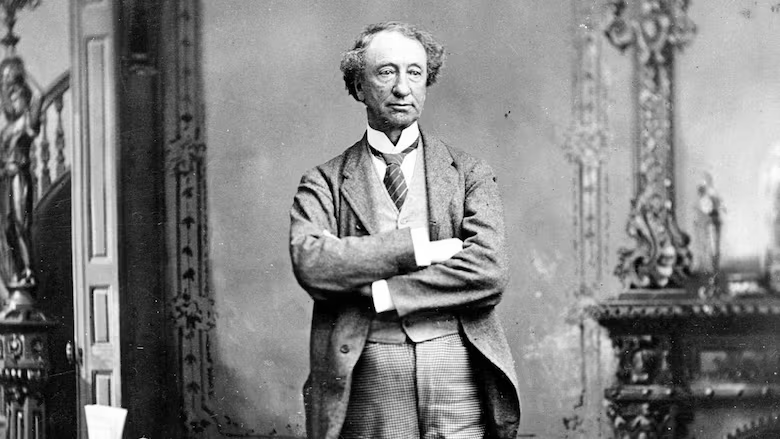
John A. Macdonald: Tokoh yang Membentuk Masa Depan Kanada

iqsafe.info – John A. Macdonald adalah salah satu tokoh paling penting dalam sejarah Kanada. Sebagai Perdana Menteri pertama negara ini, dia memainkan peran kunci dalam pembentukan dan perkembangan Kanada sebagai negara federasi yang merdeka. Melalui visinya yang besar, Macdonald berhasil menciptakan fondasi yang membawa Kanada ke masa depan yang lebih stabil dan berkembang. Artikel ini akan membahas peran John A. Macdonald dalam membentuk masa depan Kanada, disajikan oleh iqsafe.info.

Latar Belakang dan Awal Karir John A. Macdonald

John Alexander Macdonald lahir pada 11 Januari 1815 di Glasgow, Skotlandia, dan pindah ke Kanada bersama keluarganya pada usia muda. Setelah menyelesaikan pendidikannya, Macdonald memulai karir politiknya di Kanada pada awal 1830-an. Ia dikenal sebagai seorang politikus yang cerdas dan visioner, dengan kemampuan luar biasa untuk membangun konsensus di antara berbagai kelompok yang ada di Kanada pada saat itu.

Macdonald mulai dikenal sebagai pemimpin yang gigih dalam perjuangannya untuk menyatukan koloni-koloni Kanada yang terpecah. Ia berjuang untuk menciptakan sebuah negara yang kuat dan stabil, dengan sistem pemerintahan yang mengakomodasi kebutuhan berbagai kelompok yang berbeda.

Pembentukan Konfederasi Kanada

1. Visi untuk Konfederasi

Pada 1860-an, Kanada terdiri dari berbagai koloni yang terpisah, dan masing-masing memiliki kebijakan serta sistem pemerintahan sendiri. Ketegangan antara koloni-koloni ini semakin meningkat, baik karena ancaman eksternal maupun masalah internal. Di tengah situasi yang tidak stabil ini, Macdonald melihat kesempatan untuk menciptakan sebuah federasi yang lebih kuat dengan menggabungkan koloni-koloni tersebut.

Macdonald memimpin proses pembentukan Konfederasi Kanada pada 1 Juli 1867, yang menyatukan empat koloni – Kanada Atas (Ontario), Kanada Bawah (Quebec), Nova Scotia, dan New Brunswick – menjadi Dominion of Canada. Sebagai Perdana Menteri pertama, Macdonald memastikan bahwa dasar-dasar hukum dan konstitusional yang membentuk negara Kanada yang baru bisa diterima oleh semua pihak.

2. Proses Perundingan yang Keras

Pembentukan Konfederasi tidaklah mudah. Macdonald harus menghadapi berbagai tantangan dan oposisi dari berbagai pihak yang khawatir dengan konsekuensi penggabungan ini. Namun, melalui perundingan yang panjang dan penuh taktik politik, Macdonald berhasil meyakinkan para pemimpin koloni untuk menerima gagasan konfederasi. Ia bekerja keras untuk memastikan bahwa setiap koloni yang bergabung dapat mempertahankan beberapa bentuk otonomi, yang kemudian menjadi dasar bagi sistem federal Kanada.

Peran Macdonald dalam Ekspansi dan Pembangunan Kanada

1. Ekspansi Wilayah Kanada

Setelah terciptanya Konfederasi, Macdonald tidak berhenti bekerja untuk memperkuat Kanada. Salah satu pencapaiannya yang paling penting adalah memperluas wilayah Kanada ke arah Barat. Melalui pembangunan jalur kereta api transkontinental, Macdonald berhasil menghubungkan wilayah-wilayah timur dengan wilayah barat yang masih sedikit penduduk. Jalur kereta api ini tidak hanya mempercepat pengembangan ekonomi Kanada, tetapi juga memperkuat persatuan antara provinsi-provinsi yang terpisah.

2. Kebijakan Imigrasi dan Pengembangan Wilayah

Macdonald juga menyadari bahwa untuk mengisi wilayah-wilayah yang luas dan kurang penduduk, Kanada perlu menarik imigran dari luar. Oleh karena itu, ia mengimplementasikan kebijakan imigrasi yang membuka peluang bagi ribuan imigran dari Eropa, terutama dari Inggris dan negara-negara Eropa lainnya, untuk pindah ke Kanada. Kebijakan ini tidak hanya mengisi tanah yang kosong, tetapi juga mendukung pertumbuhan ekonomi melalui pengembangan pertanian dan industri.

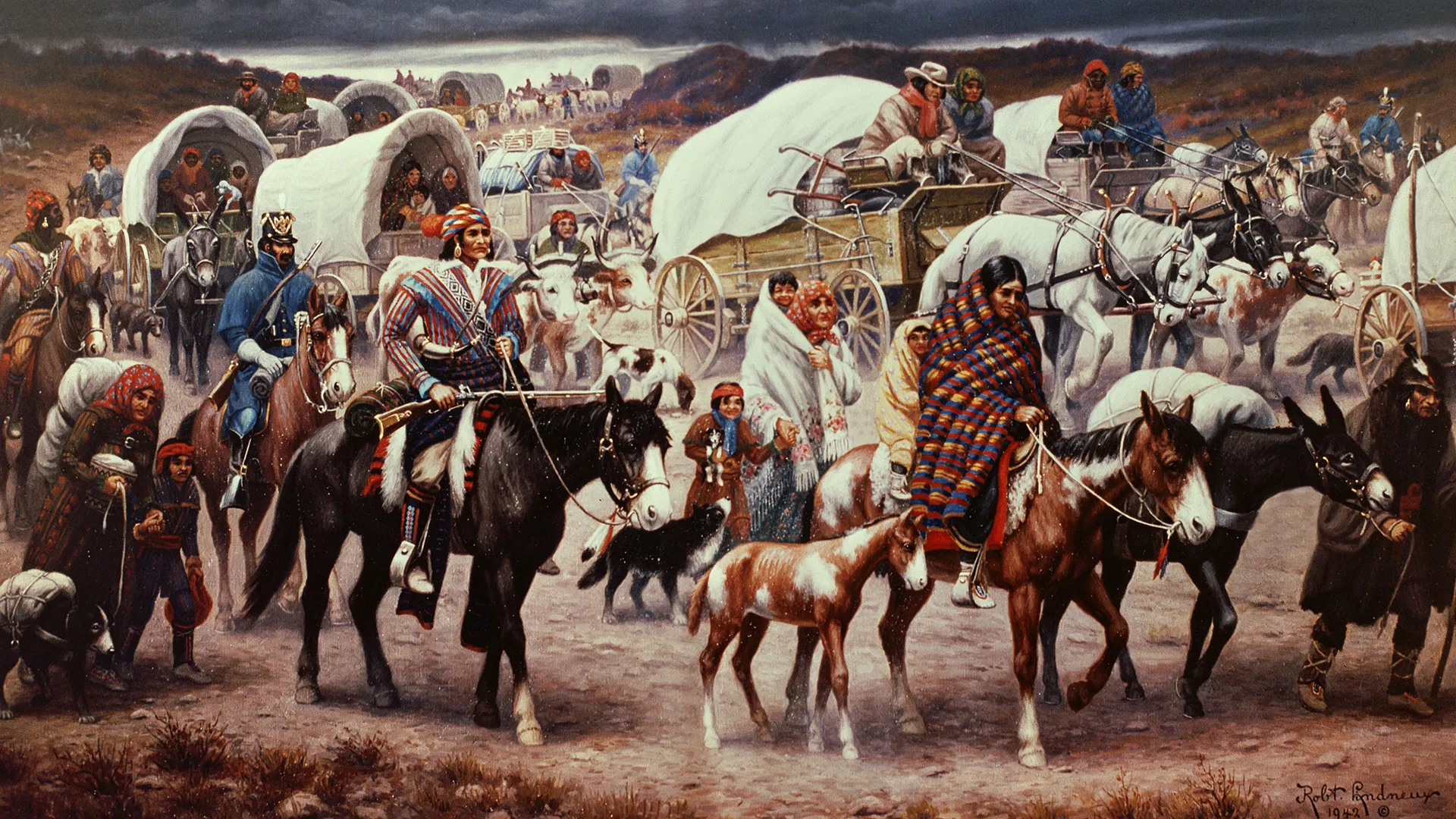
Namun, kebijakan ini juga memiliki dampak negatif, terutama bagi masyarakat asli Kanada, yang dipaksa untuk meninggalkan tanah mereka demi ekspansi. Hal ini merupakan salah satu bagian kontroversial dari kebijakan Macdonald yang masih diperbincangkan hingga saat ini.

Warisan Politik John A. Macdonald

1. Membangun Negara yang Kuat dan Stabil

Sebagai “Bapak Konfederasi,” Macdonald dikenang karena usahanya yang berhasil menciptakan negara Kanada yang lebih stabil dan kuat. Ia adalah pemimpin yang memiliki visi jauh ke depan tentang bagaimana negara ini harus dibentuk. Macdonald tidak hanya fokus pada pembentukan sistem pemerintahan, tetapi juga pada penguatan ekonomi dan pengembangan wilayah yang lebih luas.

Keberhasilannya dalam membangun jalur kereta api transkontinental dan kebijakan imigrasi yang efektif membawa Kanada ke arah kemajuan ekonomi yang pesat. Meskipun banyak tantangan yang dihadapi, Macdonald tetap menjadi tokoh yang dihormati karena peranannya yang sangat penting dalam menciptakan negara yang utuh.

2. Kontroversi Kebijakan Terhadap Masyarakat Asli

Namun, warisan Macdonald juga tidak lepas dari kontroversi. Kebijakan-kebijakan yang ia ambil terhadap masyarakat asli Kanada, terutama yang berkaitan dengan pemindahan paksa dan pengabaian hak-hak mereka, menjadi topik perdebatan hingga saat ini. Walaupun Macdonald dianggap sebagai pahlawan dalam membangun negara Kanada, dampak kebijakan terhadap masyarakat asli merupakan bagian kelam dari sejarah politiknya.

Kesimpulan

John A. Macdonald adalah seorang tokoh besar yang memainkan peran penting dalam pembentukan negara Kanada. Sebagai Perdana Menteri pertama, visinya dalam menciptakan sebuah negara federasi yang kuat dan stabil menjadikan Kanada seperti sekarang ini. Meskipun beberapa kebijakan yang ia terapkan masih menuai kontroversi, tidak dapat disangkal bahwa kontribusinya terhadap negara ini sangat besar.

Untuk informasi lebih lanjut mengenai sejarah dan politik Kanada, kunjungi iqsafe.info.

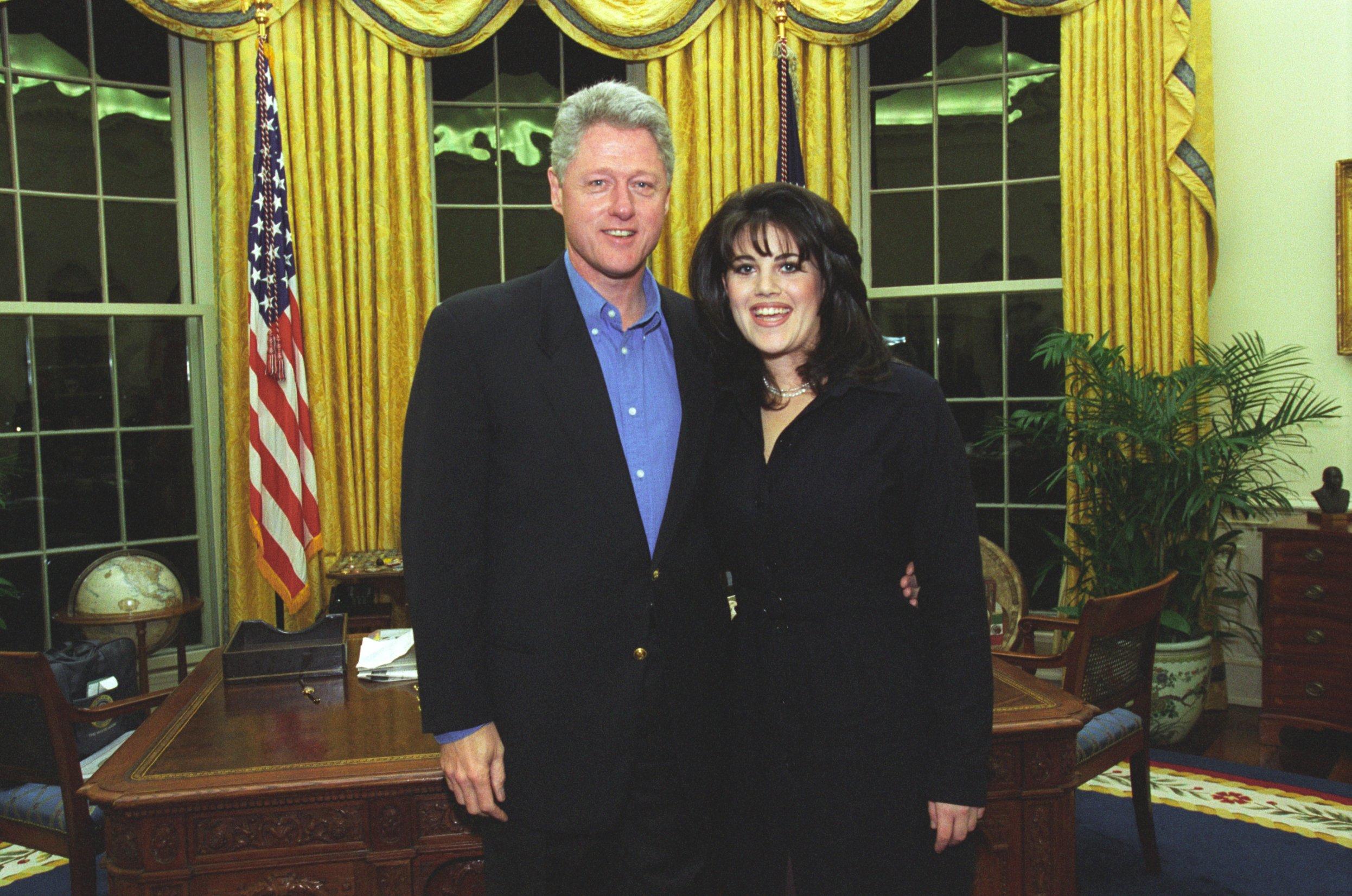
Skandal Monica Lewinsky: Proses Impeachment Kontroversial Bill Clinton

iqsafe.info – Skandal Monica Lewinsky yang terjadi pada akhir 1990-an mengguncang dunia politik Amerika Serikat. Skandal ini tidak hanya mempengaruhi kehidupan pribadi Presiden Bill Clinton, tetapi juga memicu proses impeachment yang kontroversial. Artikel ini akan membahas perkembangan skandal tersebut dan bagaimana impeachment Clinton berlangsung.

Latar Belakang Skandal Monica Lewinsky

Pada 1998, skandal antara Bill Clinton dan Monica Lewinsky, seorang pegawai magang di Gedung Putih, mencuat. Clinton awalnya membantah tuduhan ini, namun bukti-bukti yang muncul menunjukkan bahwa hubungan tersebut benar adanya. Kejadian ini terjadi di luar ikatan pernikahan Clinton dengan Hillary Clinton.

Penyelidikan oleh Ken Starr

Penyelidikan terhadap Clinton dimulai pada 1994, saat Ken Starr, pengacara independen, ditunjuk untuk menyelidiki berbagai skandal yang melibatkan keluarga Clinton. Awalnya, Starr menyelidiki kasus Whitewater. Namun, penyelidikan berkembang menjadi kasus hubungan Clinton dengan Lewinsky setelah kesaksian Lewinsky terungkap.

Pada Januari 1998, Lewinsky memberi kesaksian kepada Starr tentang hubungannya dengan Clinton. Hal ini memicu penyelidikan lebih lanjut mengenai kebohongan dan penyalahgunaan kekuasaan oleh presiden.

Proses Impeachment Bill Clinton

Impeachment Clinton dimulai setelah ia memberi kesaksian yang bertentangan dengan bukti yang ada. Clinton diduga melakukan perbuatan peradilan palsu dan penghalangan keadilan, yang menjadi dasar proses impeachment.

Pengesahan Artikel Impeachment

Pada 11 Desember 1998, Dewan Perwakilan Rakyat mengesahkan dua artikel impeachment terhadap Clinton: penghalangan keadilan dan peradilan palsu. Clinton menjadi presiden kedua yang menghadapi impeachment, setelah Andrew Johnson pada 1868.

Meski Dewan Perwakilan Rakyat mengesahkan artikel impeachment, Senat tidak berhasil mencapai kesepakatan untuk menghapus Clinton dari jabatannya. Pada 12 Februari 1999, Senat memutuskan untuk membebaskan Clinton dari kedua tuduhan tersebut.

Dampak dan Kontroversi

Proses impeachment ini memicu perdebatan di masyarakat. Pendukung Clinton berargumen bahwa meskipun ia melakukan kesalahan pribadi, impeachment tidak perlu dilakukan. Sebaliknya, pihak yang menentang Clinton merasa perbuatannya merusak integritas jabatan presiden.

Kontroversi ini mempengaruhi citra Clinton di mata publik. Meskipun tetap menjabat, Clinton harus menghadapi kritik tajam terkait kehidupan pribadinya.

Kesimpulan

Skandal Monica Lewinsky dan proses impeachment Bill Clinton menjadi salah satu momen paling kontroversial dalam sejarah politik Amerika Serikat. Clinton selamat dari impeachment, namun peristiwa ini menunjukkan betapa pentingnya integritas pemimpin negara. Skandal ini juga memperlihatkan pengaruh media dan opini publik dalam membentuk pandangan terhadap seorang pemimpin.

George H. W. Bush: Warisan Diplomasi dan Kepemimpinan Global

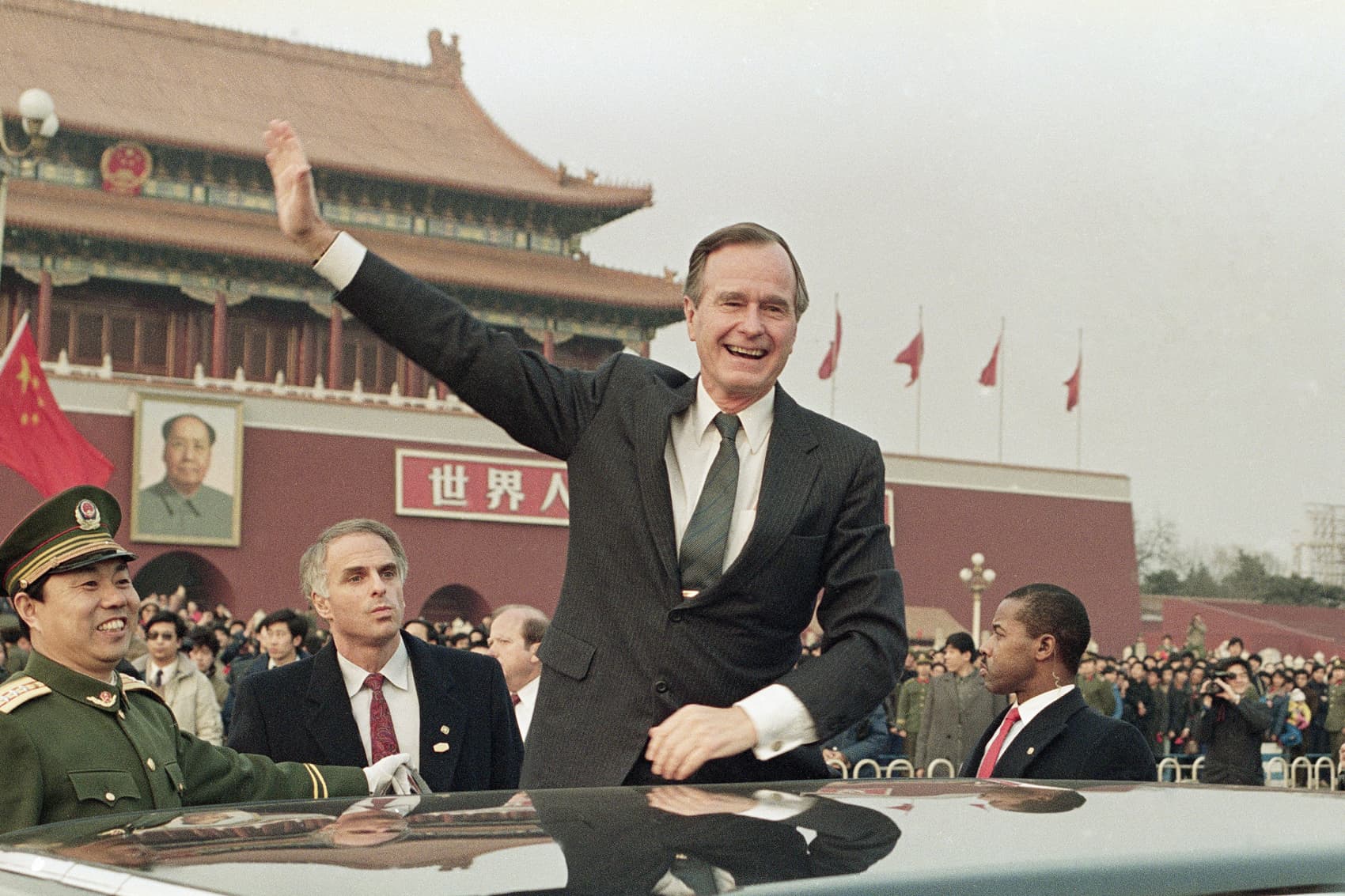
iqsafe.info – George H. W. Bush merupakan salah satu tokoh penting dalam sejarah diplomasi dan kepemimpinan global. Masa jabatannya sebagai Presiden Amerika Serikat menandai era penting dalam hubungan internasional, dengan penekanan pada kerja sama multilateral dan penyelesaian konflik melalui dialog. Artikel ini akan mengulas warisan diplomasi dan kepemimpinan global yang ditinggalkan oleh George H. W. Bush, mulai dari karier awalnya hingga kontribusinya dalam menjaga stabilitas dunia.

Latar Belakang dan Karier Awal

Masa Muda dan Pendidikan

George H. W. Bush lahir dalam keluarga yang memiliki tradisi pelayanan publik. Pendidikan yang ditempuhnya serta pengalaman awal di berbagai bidang memberikan fondasi yang kuat untuk karier politiknya. Kecerdasan dan dedikasinya terlihat sejak masa mudanya, yang kemudian mengantarkannya ke berbagai posisi penting di pemerintahan dan sektor swasta.

Karier Politik Awal

Sebelum mencapai puncak kepemimpinan, Bush meniti karier politik yang cemerlang. Ia pernah menjabat sebagai duta besar dan pejabat tinggi lainnya, yang memperkaya pengalaman diplomatiknya. Perjalanan politiknya ini membentuk pandangan dan strategi yang kemudian ia terapkan ketika memimpin negara sebagai Presiden.

Kepemimpinan di Panggung Global

Pengalaman Diplomatik

Pengalaman Bush di kancah internasional sangat berpengaruh pada pendekatannya dalam menyelesaikan masalah global. Kepiawaiannya dalam merundingkan perjanjian internasional dan membangun aliansi strategis memberikan dampak positif bagi hubungan antarnegara. Pendekatan diplomatiknya menekankan pentingnya dialog dan kompromi dalam menghadapi berbagai tantangan global.

Hubungan Internasional dan Aliansi

Di tengah dinamika politik dunia yang kompleks, Bush berhasil membangun dan memperkuat hubungan dengan berbagai negara. Strategi aliansinya yang luas, termasuk kerjasama dengan NATO dan negara-negara sekutu, memperlihatkan komitmennya terhadap keamanan kolektif dan perdamaian dunia. Langkah ini menjadi fondasi bagi kerjasama internasional yang terus berlanjut setelah masa kepemimpinannya.

Warisan Diplomasi dan Kebijakan Luar Negeri

Penanganan Krisis dan Konflik

Salah satu aspek paling menonjol dari kepemimpinan Bush adalah kemampuannya dalam menangani krisis dan konflik internasional. Pendekatan yang berfokus pada penyelesaian damai, namun tegas dalam menghadapi agresi, terbukti efektif dalam mengurangi ketegangan di berbagai belahan dunia. Kebijakannya menekankan pentingnya stabilitas dan keamanan global melalui penyelesaian konflik secara diplomatis.

Perang Teluk dan Dampaknya

Kepemimpinan Bush juga dikenang karena peranannya dalam Perang Teluk. Keputusannya untuk mengambil langkah militer yang terkoordinasi dengan aliansi internasional tidak hanya menunjukkan kekuatan militer Amerika Serikat, tetapi juga menegaskan prinsip-prinsip diplomasi dan kerja sama global. Dampak dari konflik ini terasa hingga hari ini, sebagai bukti bahwa strategi yang matang dan kolaboratif dapat menghasilkan perdamaian yang langgeng.

Kontribusi terhadap Stabilitas Global

Pendekatan Multilateral

George H. W. Bush selalu mendorong pendekatan multilateral dalam kebijakan luar negerinya. Dengan melibatkan berbagai negara dalam dialog dan pengambilan keputusan, ia berhasil menciptakan lingkungan yang kondusif untuk perdamaian dan keamanan. Pendekatan ini telah menjadi inspirasi bagi banyak pemimpin dunia dalam menyikapi tantangan global yang semakin kompleks.

Pengaruh dalam Era Perubahan Dunia

Di era pasca-Perang Dingin, dunia menyaksikan perubahan besar dalam tatanan politik dan ekonomi. Kepemimpinan Bush memberikan kontribusi penting dalam menavigasi transisi ini, dengan menekankan stabilitas dan kerjasama internasional. Warisannya tetap relevan, mengingat dunia terus mencari solusi damai atas konflik dan tantangan global.

Kesimpulan

Warisan George H. W. Bush sebagai pemimpin global dan diplomat ulung masih terus dirasakan hingga saat ini. Dengan pendekatan yang mengutamakan dialog, kerja sama internasional, dan penyelesaian damai atas konflik, ia meninggalkan jejak yang mendalam dalam sejarah dunia. Pengalaman dan kebijakan luar negerinya mengajarkan pentingnya kepemimpinan yang visioner dan kolaboratif dalam menjaga stabilitas global dan mewujudkan perdamaian dunia.

Ronald Reagan: Menggabungkan Kekuatan dan Diplomasi untuk Mengakhiri Perang Dingin

iqsafe.info – Ronald Reagan, Presiden Amerika Serikat ke-40, memainkan peran penting dalam mengakhiri Perang Dingin, konflik ideologi yang berlangsung lebih dari empat dekade antara blok Barat yang dipimpin oleh Amerika dan blok Timur yang dipimpin oleh Uni Soviet. Dengan pendekatan yang unik, Reagan dikenal sebagai pemimpin tegas yang cerdas dalam menggunakan diplomasi untuk merespons ancaman dari Soviet. Artikel ini mengeksplorasi bagaimana Reagan menggabungkan diplomasi dan penolakan dalam menghadapi tantangan besar selama Perang Dingin.

Pendekatan Awal: Dari Penolakan hingga Dialog

Kepercayaan pada Kekuatan Militer
Saat pertama kali menjabat pada 1981, Reagan mengadopsi kebijakan luar negeri agresif terhadap Uni Soviet, yang dia sebut sebagai “Imperium Jahat” (Evil Empire). Pandangan ini tercermin dalam pidatonya yang keras terhadap komunisme, serta kebijakan pertahanan yang memperkuat posisi Amerika. Reagan percaya bahwa Amerika hanya bisa menekan Uni Soviet dengan menunjukkan kekuatan militer yang luar biasa.

Keputusan Reagan untuk meningkatkan pengeluaran militer, terutama dengan mengembangkan sistem pertahanan rudal strategis (SDI), memicu ketegangan lebih lanjut. Banyak pihak mengkritik kebijakan ini karena dikhawatirkan akan memperburuk perlombaan senjata nuklir. Namun, Reagan berpendapat bahwa hanya dengan menunjukkan kekuatan besar, Uni Soviet akan dipaksa untuk bernegosiasi.

Dari Ketegangan ke Diplomasi: Pembicaraan dengan Gorbachev

Perubahan Pendekatan ke Diplomasi
Meskipun awalnya keras dalam menanggapi Uni Soviet, Reagan mulai mengubah pendekatannya dan mencari jalan diplomatik. Perubahan ini terjadi setelah Mikhail Gorbachev, pemimpin baru Uni Soviet, muncul pada pertengahan 1980-an. Gorbachev memiliki pandangan berbeda dan berupaya menjalin hubungan yang lebih baik dengan Barat.

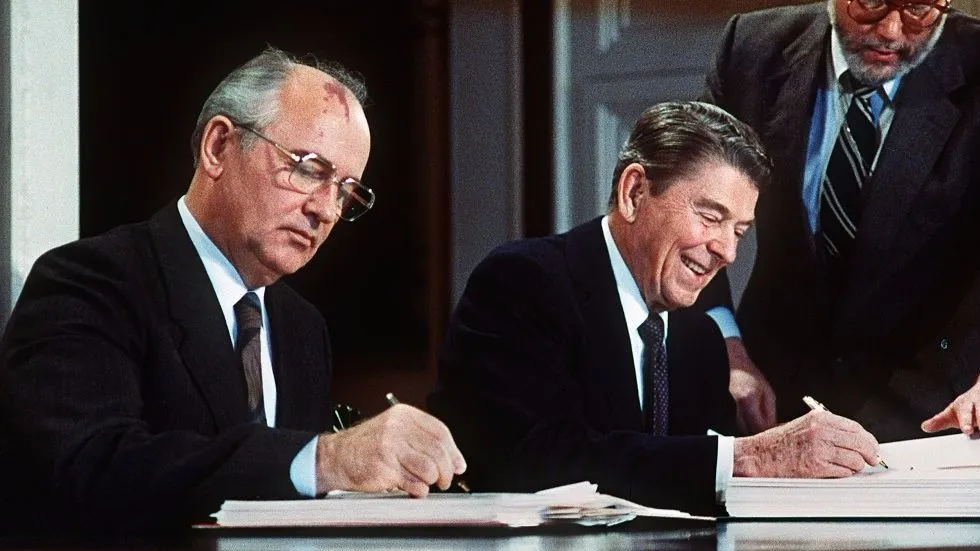
Reagan dan Gorbachev mengadakan beberapa pertemuan yang mengarah pada kesepakatan penting dalam pengurangan senjata nuklir. Salah satunya adalah Perjanjian Pengurangan Senjata Nuklir Jangka Menengah (INF) pada 1987, yang mengarah pada penghancuran lebih dari 2.600 misil nuklir jarak menengah milik kedua negara. Kesepakatan ini meredakan ketegangan yang telah berlangsung lama.

Diplomasi Reagan: Menciptakan Kepercayaan dengan Uni Soviet

Menyatukan Kepentingan Global
Pada masa pemerintahan Reagan, ancaman perang nuklir sangat besar. Namun, dengan kepemimpinan tegas dan diplomatik, Reagan berhasil membuka saluran komunikasi dengan Uni Soviet yang sebelumnya sangat terbatas. Pendekatan ini, yang menggabungkan kekuatan militer dengan niat mencapai kesepakatan damai, terbukti efektif mengurangi ancaman nuklir.

Reagan sangat berhati-hati dalam memilih kata-kata, terutama ketika berbicara dengan Gorbachev. Dia sadar bahwa setiap pernyataan yang tidak bijaksana bisa memperburuk situasi. Melalui pertemuan seperti yang terjadi di Reykjavik pada 1986, Reagan menunjukkan kepada dunia bahwa dialog tetap bisa dilakukan meski ketegangan terus ada. Pendekatan diplomatik ini membuka jalan untuk kebijakan detente, sebuah periode pengurangan ketegangan yang membawa dampak besar bagi hubungan kedua negara.

Perubahan Gaya Kepemimpinan: Dari Penolakan ke Rekonsiliasi

Momen Penting dalam Kepemimpinan Reagan
Salah satu momen penting dalam perubahan gaya kepemimpinan Reagan terjadi pada pidatonya di Berlin pada 1987. Di sana, ia meminta Gorbachev untuk “merobohkan tembok ini!” (Mr. Gorbachev, tear down this wall). Tembok Berlin, yang menjadi simbol pemisahan antara Jerman Barat dan Timur, akhirnya runtuh pada 1989, hanya dua tahun setelah pidato itu. Pidato ini tidak hanya menjadi simbol dari keberhasilan diplomasi Reagan, tetapi juga menunjukkan tekadnya untuk mengakhiri pemisahan ideologi yang telah berlangsung lama.

Reagan mampu mengubah pandangan dunia terhadap Uni Soviet, dari ancaman yang harus dihancurkan menjadi mitra yang bisa diajak berdialog. Ini membuktikan bahwa kepemimpinan yang menggabungkan kekuatan dan kebijaksanaan diplomatik bisa mengubah sejarah dunia.

Kesimpulan: Warisan Reagan dalam Perang Dingin

Reagan meninggalkan warisan besar dalam mengakhiri Perang Dingin, yang tidak hanya berakar pada kebijakan pertahanan yang kuat, tetapi juga pada kemampuannya bernegosiasi dan membangun hubungan dengan Uni Soviet. Dengan pendekatan cerdas yang seimbang antara diplomasi dan ketegasan, Reagan berhasil menurunkan ketegangan global yang hampir mencapai titik didih.

Melalui pembicaraan dengan Gorbachev dan keberhasilannya dalam pengurangan senjata nuklir, Reagan menunjukkan bahwa seorang pemimpin bijaksana tidak hanya mengandalkan kekuatan, tetapi juga kebijakan diplomatik untuk menciptakan perdamaian.

Kebangkitan Jimmy Carter: Dari Gubernur Georgia hingga Presiden

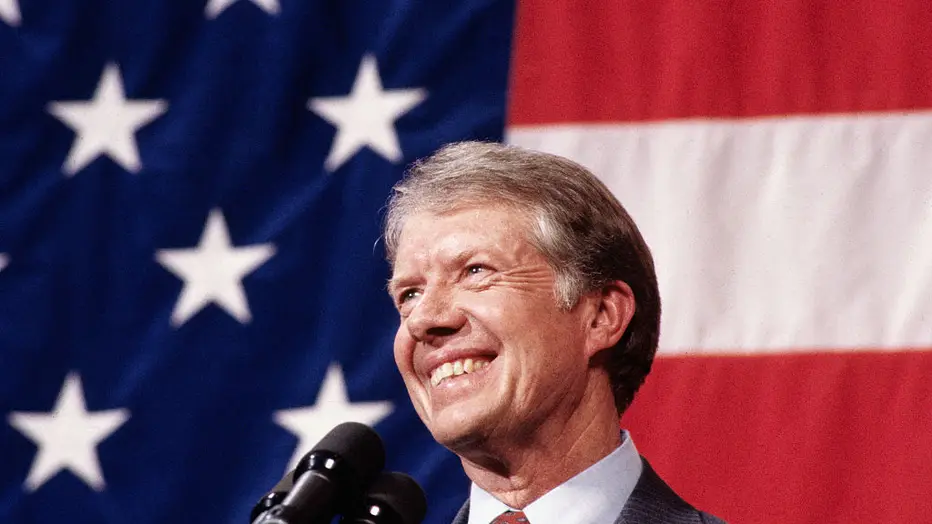
Jimmy Carter adalah salah satu presiden Amerika Serikat yang dikenal dengan dedikasinya terhadap hak asasi manusia, perdamaian dunia, dan kebijakan domestik yang progresif. Namun, perjalanannya untuk mencapai kursi Presiden AS bukanlah hal yang mudah. Artikel ini akan mengulas perjalanan hidup Jimmy Carter, dari seorang gubernur Georgia yang relatif tidak dikenal hingga akhirnya menjadi Presiden Amerika Serikat yang ke-39. Kami di iqsafe.info akan melihat bagaimana Carter berhasil meraih kesuksesan dan mengatasi berbagai tantangan dalam karier politiknya.

Awal Kehidupan dan Karier Politik di Georgia

Lahir pada 1 Oktober 1924 di Plains, Georgia, James Earl Carter Jr. dibesarkan dalam keluarga yang sederhana. Ayahnya adalah seorang petani, dan ibunya adalah seorang perawat. Meskipun berasal dari latar belakang yang tidak kaya, Carter mendapat pendidikan yang baik dan akhirnya lulus dari akademi angkatan laut Amerika Serikat pada tahun 1946. Setelah mengabdi di angkatan laut, ia kembali ke Georgia dan mulai terjun ke dunia politik.

Pada tahun 1962, Carter memulai karier politiknya dengan terpilih menjadi anggota Dewan Pengurus Georgia. Namun, ia tidak segera mendapatkan perhatian besar. Baru pada tahun 1970, setelah dua kali mencoba, Carter terpilih sebagai Gubernur Georgia, sebuah posisi yang menjadi batu loncatan penting dalam perjalanan politiknya menuju Gedung Putih.

Kepemimpinan sebagai Gubernur Georgia

Sebagai gubernur Georgia dari tahun 1971 hingga 1975, Carter dikenal karena pendekatannya yang progresif dan integritasnya yang tinggi. Salah satu pencapaian besar Carter sebagai gubernur adalah usahanya untuk mengurangi segregasi rasial di negara bagian tersebut. Meskipun menghadapi banyak perlawanan, Carter berhasil memajukan kesetaraan rasial dengan mengangkat lebih banyak pejabat Afrika-Amerika ke posisi pemerintahan dan mendukung reformasi pendidikan yang lebih inklusif.

Selain itu, Carter juga dikenal karena kebijakannya yang mengutamakan efisiensi pemerintah. Ia memperkenalkan berbagai reformasi administrasi yang membantu mengurangi birokrasi dan meningkatkan layanan publik di Georgia. Namun, meskipun sukses sebagai gubernur, Carter tetap merasa bahwa peluang untuk berbuat lebih banyak secara nasional ada di Washington, D.C. Inilah yang akhirnya mendorongnya untuk mencalonkan diri sebagai Presiden.

Melangkah ke Panggung Nasional: Kampanye Presiden 1976

Pada tahun 1976, setelah berhasil memposisikan dirinya sebagai tokoh yang berintegritas dan memiliki kebijakan progresif, Carter mencalonkan diri untuk menjadi Presiden Amerika Serikat. Meski pada awalnya tidak dikenal luas di luar Georgia, Carter berhasil memenangkan hati banyak orang dengan penekanan pada kejujuran dan perubahan politik di Washington, D.C.

Membangun Kepercayaan dan Memenangkan Pemilu

Carter memanfaatkan ketidakpuasan publik terhadap pemerintahan Presiden Gerald Ford yang baru saja mengakhiri masa kepresidenannya setelah skandal Watergate. Carter menonjolkan dirinya sebagai calon yang bersih dan tidak terlibat dalam politik Washington yang korup. Kampanye “Saya akan membawa perubahan” resonan di banyak kalangan, terutama di tengah ketidakpercayaan terhadap politik establisemen.

Keberhasilan kampanyenya juga didorong oleh kebijakan-kebijakan yang mencerminkan nilai-nilai moral dan sosial yang dimiliki Carter. Ia berfokus pada isu-isu seperti hak asasi manusia, peningkatan kesejahteraan sosial, dan pengurangan ketergantungan pada energi asing, yang semuanya sangat relevan dengan situasi dunia pada saat itu. Dalam pemilu 1976, Carter berhasil mengalahkan petahana Gerald Ford dengan margin tipis, dan ia akhirnya dilantik sebagai Presiden Amerika Serikat pada Januari 1977.

Kepresidenan dan Warisan

Sebagai Presiden, Carter berfokus pada diplomasi internasional, hak asasi manusia, dan reformasi domestik. Salah satu pencapaian terbesar dalam kepresidenannya adalah perjanjian damai yang dikenal dengan Perjanjian Camp David antara Mesir dan Israel pada 1978. Selain itu, ia juga mendorong reformasi kebijakan luar negeri yang lebih humanistik, termasuk menekan pemerintahan-pemerintahan yang dianggap melanggar hak asasi manusia.

Namun, masa kepresidenannya juga diliputi oleh krisis, seperti krisis energi dan krisis sandera di Iran, yang menyebabkan ketidakpopuleran Carter menjelang akhir masa jabatannya. Meskipun demikian, Carter tetap dikenang sebagai seorang pemimpin yang berbicara dengan jujur dan berkomitmen pada prinsip-prinsip moral yang tinggi.

Kesimpulan: Perjalanan Politik yang Penuh Tantangan

Perjalanan Jimmy Carter dari seorang gubernur Georgia yang relatif tidak dikenal hingga menjadi Presiden Amerika Serikat adalah kisah tentang ketekunan, integritas, dan dedikasi pada prinsip-prinsip yang diyakininya. Di iqsafe.info, kami percaya bahwa kisah Carter menginspirasi banyak orang untuk selalu berjuang untuk apa yang benar, meskipun perjalanan menuju tujuan tersebut penuh dengan tantangan.

Warisan Carter sebagai Presiden lebih dari sekadar kebijakan yang ia jalankan, tetapi juga tentang keberaniannya untuk tetap teguh pada nilai-nilai moralnya dalam dunia politik yang penuh dengan kekuasaan dan kepentingan pribadi. Sebuah perjalanan yang mengajarkan kita pentingnya kepemimpinan yang jujur dan bertanggung jawab.

Tangan yang Teguh: Kepemimpinan Gerald Ford Setelah Watergate

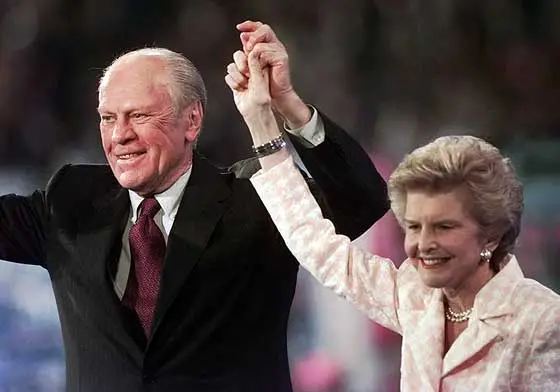
Gerald Ford dikenal sebagai pemimpin yang datang pada saat yang penuh gejolak bagi Amerika Serikat. Setelah skandal Watergate yang mengguncang pemerintahan Presiden Richard Nixon, Ford diangkat sebagai Presiden ke-38 Amerika Serikat. Dengan dunia politik yang terpecah dan masyarakat yang dilanda ketidakpercayaan terhadap pemerintah, Ford mengemban tugas besar untuk memulihkan negara. Artikel ini akan membahas bagaimana Ford memimpin dengan tangan yang teguh setelah Watergate, menghadapi tantangan besar, dan bagaimana keputusan-keputusan yang diambilnya membentuk warisan kepemimpinannya.

Krisis Pasca-Watergate: Tantangan Berat yang Harus Dihadapi Ford

Setelah pengunduran diri Richard Nixon pada Agustus 1974, Amerika Serikat berada dalam keadaan krisis yang luar biasa. Skandal Watergate menyebabkan rasa malu nasional yang mendalam, dan negara membutuhkan pemimpin yang mampu mengembalikan stabilitas politik dan kepercayaan publik. Gerald Ford, yang saat itu menjabat sebagai Wakil Presiden, dilantik menggantikan Nixon dalam situasi yang sangat sulit.

Ford mewarisi sebuah pemerintahan yang terpecah, dengan banyak warga Amerika merasa bahwa negara telah kehilangan arah. Kepercayaan terhadap pemerintah berada pada titik terendah, dan Ford menyadari bahwa langkah-langkah yang diambilnya harus memiliki tujuan yang lebih besar: pemulihan dan penyembuhan bangsa.

Keputusan Pengampunan Nixon

Salah satu keputusan paling berani dan kontroversial yang diambil Ford setelah menjadi Presiden adalah pengampunan penuh yang diberikan kepada Richard Nixon atas segala tindakannya yang terkait dengan Watergate. Banyak yang mengkritik langkah ini, dengan alasan bahwa Nixon harus diadili untuk mempertanggungjawabkan perbuatannya. Namun, Ford merasa bahwa untuk menghindari perpecahan yang lebih dalam, negara perlu bergerak maju dan memfokuskan diri pada pemulihan.

Dalam pidato pengampunannya, Ford mengungkapkan bahwa keputusan tersebut diambil demi “penyembuhan nasional.” Pengampunan Nixon memang menimbulkan banyak perdebatan, namun langkah ini mencerminkan pandangan Ford yang lebih besar tentang stabilitas jangka panjang bagi negara. Ford tidak ingin negara terus-menerus terjebak dalam konflik hukum dan politik yang berkepanjangan.

Kepemimpinan yang Berfokus pada Penyembuhan

Selain memberikan pengampunan kepada Nixon, Ford juga memimpin dengan mengutamakan penyembuhan sosial dan politik di Amerika Serikat. Di masa kepemimpinannya, ia berusaha mengurangi ketegangan yang ada, baik dalam aspek politik maupun sosial. Salah satu langkah penting Ford adalah berfokus pada rekonsiliasi antar faksi-faksi politik yang berbeda dan memperbaiki hubungan antara pemerintah dan rakyat.

Ford juga berusaha menghidupkan kembali perekonomian Amerika Serikat yang sempat terpuruk. Meskipun menghadapi tantangan besar dalam hal inflasi dan pengangguran, Ford meluncurkan kebijakan ekonomi yang bertujuan mengurangi dampak krisis tersebut. Meskipun beberapa kebijakan ekonominya tidak selalu populer, ia tetap berkomitmen untuk menstabilkan kondisi ekonomi negara.

Tangan Teguh dalam Menangani Krisis Eksternal

Selain masalah domestik, Ford juga menghadapi tantangan luar negeri yang signifikan. Ketegangan Perang Dingin masih terasa kuat selama masa pemerintahannya, dan Ford harus memastikan bahwa Amerika Serikat tetap menjadi kekuatan yang stabil di panggung dunia. Ford menunjukkan kepemimpinan yang hati-hati dalam menghadapi situasi internasional, terutama dalam menghadapi Uni Soviet dan permasalahan di Asia Tenggara.

Pada tahun 1975, Ford berhasil menyelesaikan konflik di Vietnam dengan menandatangani pengesahan pengunduran diri pasukan Amerika dari Vietnam Selatan, meskipun perang tersebut berakhir dengan jatuhnya Saigon. Ford juga mendukung normalisasi hubungan dengan Tiongkok dan melanjutkan kebijakan luar negeri yang lebih berfokus pada diplomasi dan kestabilan.

Warisan Gerald Ford: Kepemimpinan yang Tidak Dikenal Secara Luas

Meskipun Ford tidak terpilih kembali dalam pemilihan presiden tahun 1976, kepemimpinannya selama masa yang penuh tantangan ini tetap dihargai oleh banyak sejarawan. Ia dikenal sebagai sosok yang lebih memilih untuk mengutamakan negara daripada kepentingan pribadi atau politik, dan memimpin dengan tangan yang teguh di tengah gejolak yang luar biasa.

Keputusan-keputusan sulit yang diambil Ford, termasuk pengampunan Nixon dan fokus pada penyembuhan negara, menggambarkan karakter kepemimpinan yang sangat berani dan bijaksana. Meskipun popularitasnya tidak selalu tinggi selama masa pemerintahannya, warisan Ford sebagai seorang pemimpin yang berkomitmen pada stabilitas nasional dan rekonsiliasi sosial tetap menjadi bagian penting dari sejarah politik Amerika Serikat.

Kesimpulan

Gerald Ford adalah pemimpin yang menghadapinya saat-saat penuh tantangan setelah skandal Watergate mengguncang negara. Dengan tangan yang teguh, ia memimpin negara menuju pemulihan dan stabilitas. Keputusan-keputusan sulit yang diambilnya, termasuk pengampunan Nixon, menjadi bukti bahwa ia lebih mengutamakan masa depan bangsa daripada politik jangka pendek. Meskipun kontroversial, kepemimpinan Ford tetap diingat sebagai salah satu contoh bagaimana seorang pemimpin dapat mengarahkan negara melewati masa-masa sulit.

Artikel ini dipublikasikan di iqsafe.info, tempat di mana kami menggali lebih dalam tentang sejarah politik dan kepemimpinan yang membentuk dunia kita hari ini.

Leadership Under Pressure: Eisenhower’s Role in World War II

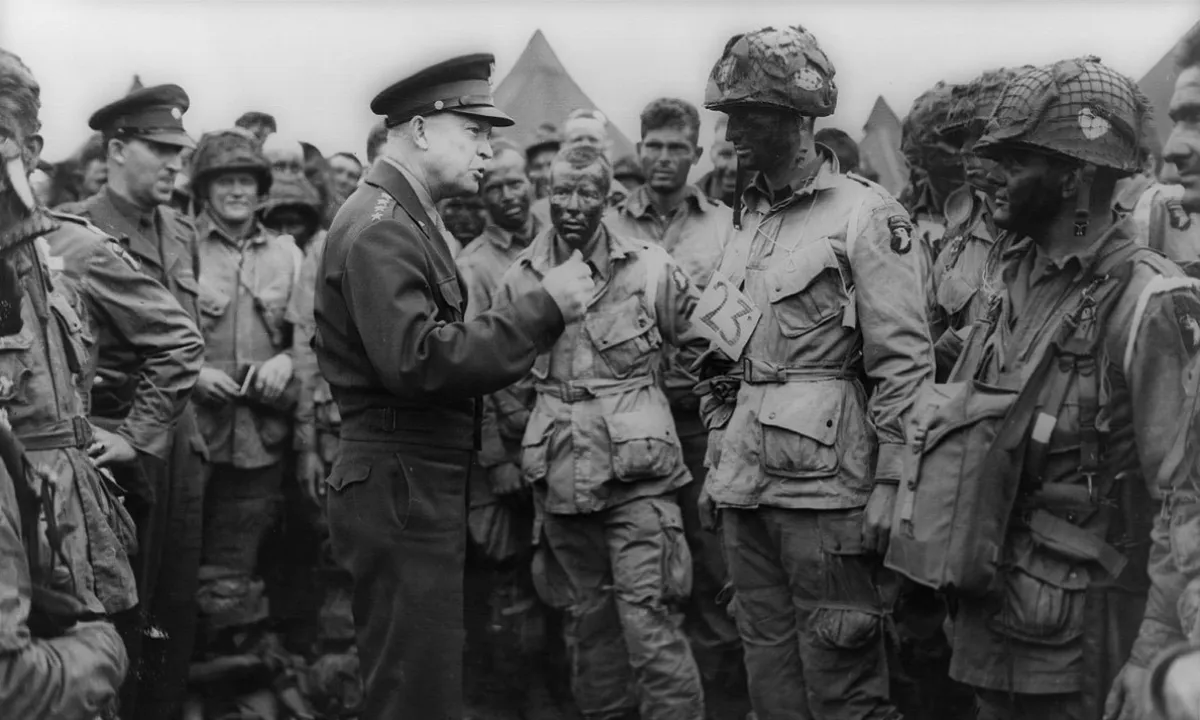
iqsafe.info – In times of conflict and crisis, true leaders emerge. Among those who led with resilience, clarity, and precision during one of the most turbulent periods in world history, Dwight D. Eisenhower stands out. As the Supreme Commander of the Allied Expeditionary Force during World War II, Eisenhower was thrust into situations where the stakes were incredibly high, and the pressure to succeed was overwhelming. Yet, time and again, he demonstrated an uncanny ability to make the right decisions under intense pressure, ultimately helping to secure the Allied victory. Let’s explore how Eisenhower’s leadership under pressure not only shaped the outcome of the war but also established him as one of the most respected military leaders in history.

The Weight of Command: Eisenhower’s Leadership Style

Eisenhower’s rise to Supreme Commander of the Allied Expeditionary Force wasn’t by accident. He had shown tremendous promise throughout his military career, quickly gaining the trust of his superiors and peers. However, it was his calm demeanor, ability to unite diverse groups, and sound decision-making that made him an exceptional leader in the most trying of circumstances.

One of Eisenhower’s most remarkable qualities was his ability to remain composed under pressure. In an environment where split-second decisions could mean life or death for thousands of soldiers, Eisenhower’s ability to maintain clarity and think critically in moments of crisis became an invaluable asset. His leadership style was pragmatic, diplomatic, and deeply focused on unity—qualities that were necessary for managing the massive and complex Allied forces.

A Multinational Force: Uniting Diverse Allies

When Eisenhower was appointed Supreme Commander in 1943, one of his biggest challenges was managing a coalition of Allied forces from different nations, each with their own interests, military traditions, and strategies. The United States, the United Kingdom, and other Allied powers like Canada and Free France were all committed to defeating Nazi Germany, but their priorities and approaches often differed.

Eisenhower’s ability to balance these varying perspectives while maintaining a clear, unified strategy was one of his greatest strengths. From his first day as Supreme Commander, he was tasked with aligning these diverse forces under one central command. His deep respect for different cultures, his diplomatic skill, and his ability to communicate effectively helped him foster a spirit of collaboration among the Allies. He understood that unity, rather than discord, would be key to achieving victory.

D-Day: The Ultimate Test of Leadership

While Eisenhower’s leadership was tested on numerous occasions throughout World War II, it was during the planning and execution of Operation Overlord—the D-Day invasion of Normandy on June 6, 1944—that his leadership under pressure was put to the ultimate test.

The D-Day invasion was the largest amphibious assault in history, involving over 156,000 troops from multiple countries, and its success was vital to the Allied strategy to liberate Western Europe from Nazi control. The planning for D-Day had been long and meticulous, but Eisenhower knew that the operation, which involved tremendous logistical challenges, could fail at any moment.

The pressure was immense. Eisenhower faced the burden of ensuring the operation went smoothly, coordinating air, sea, and ground forces from different nations, all while contending with unpredictable weather, intelligence challenges, and the constant threat of enemy forces. On the night before the invasion, Eisenhower famously prepared a speech to take responsibility if the mission failed, showing his unwavering commitment to leadership and accountability.

The invasion was a success, but it came at a heavy cost. Thousands of soldiers lost their lives, and the fight for the beaches of Normandy was grueling. Nevertheless, Eisenhower’s calm leadership throughout the operation, his ability to make split-second decisions, and his capacity to inspire confidence in his troops were essential to the success of D-Day.

Managing Crisis and Making Tough Decisions

Beyond D-Day, Eisenhower was consistently faced with situations that required him to make difficult decisions with far-reaching consequences. As the war progressed and the Allies advanced through France and into Germany, Eisenhower was tasked with managing a delicate balance of military, political, and logistical challenges.

For example, as Allied forces moved closer to Germany, the question of how to handle the growing number of Nazi prisoners of war became more urgent. Eisenhower made the difficult decision to treat the prisoners with discipline and order, not allowing them to return to their homes until the war’s end, a decision that was harsh but ultimately necessary to maintain stability in the region.

Another challenge was managing the war’s endgame. As the Allies liberated territories, they faced the question of what to do with the occupied lands and the civilian populations. Eisenhower’s leadership during this phase was not just about military victories but also about ensuring that the post-war world would be shaped by cooperation and stability.

Eisenhower’s Leadership After World War II

The pressure Eisenhower experienced during the war did not end when Germany surrendered in 1945. The leadership lessons he learned in the crucible of World War II would continue to serve him throughout his post-war career. After the war, Eisenhower served as the military governor of occupied Germany, where he helped rebuild the country, laying the groundwork for its future economic prosperity.

In 1952, Eisenhower’s leadership under pressure was again called into service when he became the 34th President of the United States. His time as President was marked by a steady hand in the face of the Cold War, civil rights challenges, and the threat of nuclear conflict. Much like his time as a military leader, Eisenhower’s ability to keep calm under pressure made him a capable and respected leader.

Legacy of Leadership: Eisenhower’s Impact

Eisenhower’s leadership under pressure during World War II has left an indelible mark on military strategy and leadership. His calm, diplomatic approach, his ability to work with people from diverse backgrounds, and his focus on unity and collaboration all contributed to the success of the Allied forces in the war. More importantly, his leadership has become a model for future leaders, whether in military, political, or business environments.

At CoeUniversity.com, we study figures like Eisenhower to better understand how leadership can shape world events. His ability to navigate extreme pressure, make difficult decisions, and lead with humility provides valuable lessons for today’s leaders. In many ways, Eisenhower’s leadership not only won a war but also helped define the modern understanding of what it means to lead with integrity, vision, and composure in the face of adversity.

Eisenhower’s role in World War II showed the world that effective leadership isn’t about avoiding pressure; it’s about rising to the occasion when the stakes are highest and guiding others toward success.

Franklin D. Roosevelt: Leading America Through Crisis

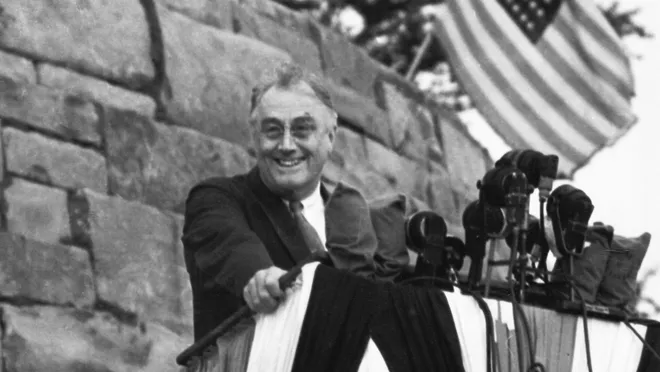
iqsafe.info – Franklin Delano Roosevelt, the 32nd president of the United States, stands as one of the most iconic and influential leaders in American history. Serving four terms from 1933 to 1945, Roosevelt led the nation through two of its gravest crises: the Great Depression and World War II. His leadership, vision, and ability to rally the American people during these times of unprecedented turmoil cemented his legacy as a president who steered America through darkness and laid the foundation for a more prosperous, secure, and equitable future.

This article explores Roosevelt’s leadership during the Great Depression and World War II, examining how he navigated these crises, reshaped the role of government, and forever altered the political, economic, and social landscape of the United States.

Early Life and Political Rise

A Prominent Upbringing

Franklin Delano Roosevelt was born on January 30, 1882, into a wealthy and influential family in Hyde Park, New York. He grew up in a privileged environment, receiving private education and eventually attending Harvard University. Roosevelt’s family background instilled in him a sense of duty and service, but it was his distant cousin, Theodore Roosevelt—26th president of the United States—who served as a key inspiration for his political ambitions.

In 1905, Franklin married Eleanor Roosevelt, Theodore’s niece, beginning a lifelong partnership that would greatly influence his political career and shape his progressive values.

Political Beginnings

Roosevelt entered politics in 1910 when he was elected to the New York State Senate as a Democrat, a rare feat in a predominantly Republican district. His charisma and political skill quickly propelled him into the national spotlight. In 1913, President Woodrow Wilson appointed him Assistant Secretary of the Navy, a position he held during World War I. Roosevelt’s work in the Navy gave him valuable experience in leadership and administration, and he emerged from the war as a rising star in the Democratic Party.

In 1920, Roosevelt ran for vice president on the Democratic ticket but lost. Shortly after, he was struck by a personal tragedy that would shape the rest of his life—he contracted polio, leaving him partially paralyzed. However, Roosevelt’s determination and resilience never wavered. Through years of physical therapy and with the support of his wife, Eleanor, he overcame his physical limitations and returned to politics stronger than ever.

The Great Depression and the New Deal

The Stock Market Crash and Economic Collapse

By the time Roosevelt was elected president in 1932, the United States was in the depths of the Great Depression, the most severe economic crisis in its history. The stock market crash of 1929 had triggered a massive collapse of the banking system, widespread unemployment, and economic despair. By 1932, the U.S. unemployment rate had soared to 25%, and millions of Americans were homeless, hungry, and desperate.

Roosevelt ran for president on a platform of optimism and hope, promising a “New Deal” for the American people. His message resonated with a nation longing for relief, and he won the 1932 election in a landslide, defeating incumbent President Herbert Hoover.

The First Hundred Days: Immediate Action

Upon taking office in March 1933, Roosevelt wasted no time. In his first Hundred Days, he introduced an unprecedented wave of legislation aimed at stabilizing the economy, providing immediate relief to struggling Americans, and laying the groundwork for long-term recovery. Roosevelt’s first priority was to restore confidence in the banking system, which was on the verge of collapse. He declared a national bank holiday, temporarily closing all banks while the government worked to secure and reorganize them. This action, coupled with the Emergency Banking Act, helped restore public trust and stem the tide of bank failures.

The Hundred Days also saw the creation of numerous programs and agencies designed to address the immediate needs of the American people. The Civilian Conservation Corps (CCC) put unemployed young men to work on environmental conservation projects, while the Public Works Administration (PWA) and Civil Works Administration (CWA) provided jobs building infrastructure such as roads, bridges, and schools. Roosevelt’s administration also established the Agricultural Adjustment Administration (AAA) to help farmers by stabilizing crop prices and reducing surpluses.

The cornerstone of Roosevelt’s early New Deal efforts was the National Industrial Recovery Act (NIRA), which aimed to boost industrial production and improve labor conditions by encouraging cooperation between government, business, and labor. Although the NIRA was later ruled unconstitutional, it laid the groundwork for future labor reforms.

The New Deal: Expanding the Role of Government

Roosevelt’s New Deal was more than a collection of emergency programs; it was a fundamental rethinking of the relationship between the federal government and the American people. Under Roosevelt, the government took on a much more active role in regulating the economy, protecting workers, and providing a social safety net for citizens.

One of the most significant New Deal programs was the Social Security Act of 1935, which established the nation’s first federal retirement system, providing pensions for the elderly and unemployment insurance for those who lost their jobs. The Social Security Act marked a major expansion of the federal government’s role in ensuring economic security for Americans and remains a cornerstone of the American welfare state to this day.

Other key New Deal initiatives included the Wagner Act, which strengthened labor unions by guaranteeing workers the right to collectively bargain, and the creation of the Securities and Exchange Commission (SEC) to regulate the stock market and protect investors from fraud.

While the New Deal did not fully end the Great Depression—economic recovery would not come until the outbreak of World War II—it succeeded in providing relief to millions of Americans, stabilizing key sectors of the economy, and restoring hope to a nation in crisis. Roosevelt’s leadership during this period fundamentally reshaped American society and the role of government in addressing social and economic challenges.

World War II: Leading America on the Global Stage

The Road to War

As the 1930s progressed, Roosevelt turned his attention to the growing threat of war in Europe and Asia. By 1939, Nazi Germany, led by Adolf Hitler, had launched a series of aggressive territorial expansions, invading Poland and triggering the outbreak of World War II. In Asia, Japan was pursuing its imperial ambitions, expanding into China and Southeast Asia.

Though Roosevelt recognized the threat posed by fascist regimes, the United States remained deeply isolationist in the years leading up to the war. Many Americans were reluctant to become involved in another overseas conflict, especially in the aftermath of World War I. Despite this sentiment, Roosevelt worked behind the scenes to prepare the United States for potential involvement. He increased military spending, expanded the Navy, and sought ways to support Allied nations fighting against the Axis powers, particularly the United Kingdom.

In 1940, Roosevelt made the unprecedented decision to run for a third term as president, arguing that the nation needed continuity of leadership in a time of global crisis. He won re-election and soon after ramped up support for the Allies through measures like the Lend-Lease Act, which allowed the U.S. to provide military aid to countries fighting against Germany, Italy, and Japan.

Pearl Harbor and America’s Entry into the War

The United States officially entered World War II on December 7, 1941, when Japan launched a surprise attack on the U.S. naval base at Pearl Harbor, Hawaii. The attack killed over 2,400 Americans and destroyed much of the Pacific Fleet. The next day, Roosevelt delivered his famous “Day of Infamy” speech to Congress, and the United States declared war on Japan. Shortly thereafter, Germany and Italy declared war on the United States, pulling the nation into the global conflict.

Roosevelt’s leadership during the war was critical in guiding the nation through one of its most challenging periods. He oversaw the mobilization of the American economy for war production, transforming factories to produce weapons, planes, ships, and other materials necessary for the war effort. Under his administration, the United States became the “Arsenal of Democracy,” supplying not only its own military but also the Allies with the tools needed to defeat the Axis powers.

Leadership as Commander-in-Chief

As Commander-in-Chief, Roosevelt worked closely with Allied leaders, including British Prime Minister Winston Churchill and Soviet Premier Joseph Stalin, to develop military strategy and coordinate efforts to defeat Nazi Germany and Imperial Japan. Together, they forged the Grand Alliance, a coalition of nations committed to the defeat of the Axis powers.

Roosevelt played a key role in planning the D-Day invasion of Normandy, which marked the beginning of the end for Nazi Germany. He also supported the development of the Manhattan Project, the top-secret program that would eventually lead to the creation of the atomic bomb.

Throughout the war, Roosevelt skillfully balanced military strategy with diplomacy, ensuring that the Allies remained united in their efforts despite differing political ideologies and post-war ambitions.

Roosevelt’s Legacy

Transforming the Role of Government

Franklin D. Roosevelt’s presidency fundamentally transformed the role of the federal government in American life. Through his New Deal programs, he expanded the government’s responsibilities in regulating the economy, providing social welfare, and protecting workers’ rights. These changes laid the foundation for the modern welfare state and established the principle that the government has a responsibility to ensure the well-being of its citizens.

Shaping the Post-War World

As the war drew to a close, Roosevelt turned his attention to shaping the post-war world. He was instrumental in the creation of the United Nations, an international organization aimed at promoting peace, security, and cooperation among nations. Roosevelt envisioned a world where nations would work together to prevent future conflicts and protect human rights. Although he did not live to see the end of the war, his vision for a more just and peaceful world endured.

Enduring Influence

Franklin D. Roosevelt passed away on April 12, 1945, just months before the Allied victory in World War II. His death marked the end of an era, but his legacy continues to shape American politics and society. His leadership during the Great Depression and World War II left an indelible mark on the United States, and his belief in the power of government to improve people’s lives remains a guiding principle for many to this day.

Roosevelt’s ability to navigate two of the greatest crises in American history—the Great Depression and World War II—cemented his place as one of the greatest presidents in U.S. history. He remains a symbol of resilience, leadership, and the enduring capacity of the American people to overcome adversity.

In conclusion, Franklin D. Roosevelt’s presidency was defined by crisis, but it was also defined by his vision for a better future. He led the nation through economic hardship and global conflict, emerging as a transformative figure who fundamentally reshaped American society and government. Roosevelt’s leadership, ideals, and legacy continue to inspire and resonate, not just in the United States but around the world.
Coolidge in Crisis: How He Led America – Great Depression

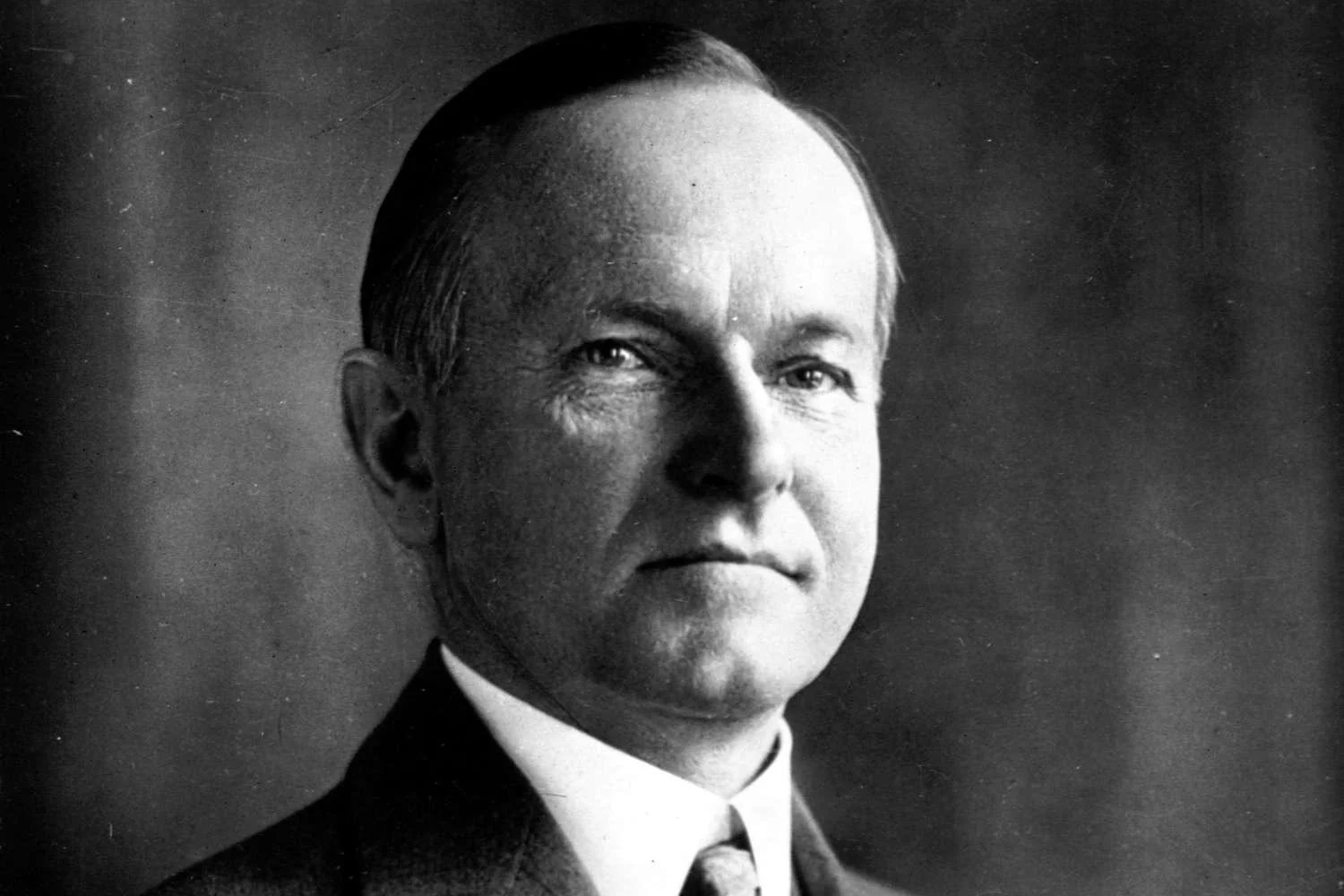
iqsafe.info – Calvin Coolidge, the 30th President of the United States, is often remembered for his quiet leadership and steadfast commitment to fiscal conservatism. Serving from 1923 to 1929, Coolidge presided over one of the most prosperous periods in American history—the “Roaring Twenties.” However, his presidency was not without its challenges. As he prepared to leave office in 1929, signs of a looming economic crisis were already beginning to appear. Though Coolidge did not live to witness the full effects of the Great Depression, his leadership in addressing the early signs of economic distress left a significant impact on the nation and shaped how future leaders would respond to economic crises.

This article explores how Coolidge navigated the early signs of economic turbulence during the late 1920s. While he was deeply committed to a philosophy of minimal government intervention, his pragmatic response to the emerging crisis showcased a nuanced understanding of the need for federal action—without abandoning his belief in limited government. Coolidge’s actions during this time, including his cautious approach to addressing the stock market boom and his policies surrounding agricultural distress, provide a window into the challenges faced by a president at the cusp of the worst economic downturn in American history.

The Roaring Twenties: Prosperity and Its Perils

When Coolidge assumed the presidency in 1923 following the sudden death of Warren G. Harding, the U.S. economy was in a period of rapid expansion. The country had recovered from the aftermath of World War I, and the 1920s saw technological advancements, a growing consumer culture, and the rise of stock market speculation. Economic growth seemed unstoppable, and many Americans embraced a sense of optimism and prosperity.

Coolidge, a fiscal conservative and firm believer in laissez-faire economics, played a significant role in fostering this period of growth. He championed tax cuts, reduced government spending, and maintained a relatively hands-off approach to business regulation. These policies were well-received, and by the mid-1920s, the U.S. economy was booming. However, beneath the surface of this economic success, cracks were beginning to appear—signs of an impending financial disaster that Coolidge and his administration would soon have to confront.

Stock Market Speculation and the Coming Crisis

One of the most significant early warning signs of the coming Great Depression was the rampant speculation in the stock market. During the 1920s, the stock market experienced a dramatic rise, fueled by widespread investor enthusiasm and the availability of easy credit. Many Americans, including middle-class individuals, began investing in stocks, often with borrowed money. The practice of buying on margin—borrowing money to purchase stocks—became increasingly common, creating an inflated sense of the stock market’s true value.

While Coolidge’s administration took a largely hands-off approach to regulating the stock market, there were growing concerns among financial experts that the market was becoming dangerously overvalued. Coolidge, who believed in minimal government intervention, was hesitant to take drastic action, fearing that any interference might harm the economy’s growth. However, he did acknowledge the potential risks posed by stock market speculation and expressed concern over the dangers of “excessive speculation.”

In 1927, the Federal Reserve took initial steps to cool down the overheated stock market by raising interest rates, which slowed the growth of stock prices. However, Coolidge, while supportive of the Fed’s actions, continued to advocate for a limited role of government in managing economic affairs. His reluctance to intervene directly in the stock market or to introduce more substantial regulatory reforms is a reflection of his broader philosophy of government minimalism.

Coolidge’s avoidance of significant regulatory reform would come to haunt the nation. By 1929, the stock market crash, which would trigger the Great Depression, was imminent. Although Coolidge did not live to see the full consequences, his tenure was marked by the early signs of speculative excess that would lead to one of the most severe economic crises in U.S. history.

Agricultural Distress: The Struggles of Farmers

Another significant challenge facing Coolidge’s administration was the worsening plight of American farmers. While urban America thrived in the 1920s, rural America faced a starkly different reality. Farmers, particularly those in the Midwest and South, were struggling with falling agricultural prices, overproduction, and growing debt. The global market, which had once been a source of demand for American agricultural products, was in decline due to global economic shifts and a post-war slowdown in Europe.

Coolidge, who had grown up in rural Vermont and understood the importance of agriculture to the American economy, was aware of the difficulties faced by farmers. However, his belief in limited government meant that he was reluctant to implement federal interventions to directly support the agricultural sector. Coolidge, like many conservatives of his time, believed that the government should not be in the business of providing subsidies or support for struggling industries.

In response to the agricultural crisis, Coolidge’s administration took steps to address the issue by reducing tariffs on agricultural goods and attempting to negotiate international trade agreements that could open up markets for U.S. farmers. However, these efforts were limited in scope and did little to reverse the downward trend in agricultural prices. By 1928, agricultural distress was one of the early signs of a broader economic downturn, with farmers in many regions unable to make a profit or service their debts.

Although Coolidge’s hands-off approach to the agricultural crisis did not provide immediate relief, it reflected his broader economic philosophy that the market, not the government, should dictate the fate of industries. However, the challenges farmers faced during Coolidge’s presidency would contribute to the mounting economic difficulties that ultimately led to the Great Depression.

The Federal Reserve and Interest Rates: Early Signs of Economic Tightening

As the 1920s progressed, the economic landscape began to show signs of strain. The Federal Reserve, under Coolidge’s watch, began to take a more active role in responding to the overheated economy. In 1927, the Federal Reserve increased interest rates in an attempt to slow down the speculative frenzy in the stock market. While Coolidge supported the Fed’s actions, he did not advocate for greater government control over the economy.

The tightening of monetary policy by the Federal Reserve, while necessary in some respects, was not enough to prevent the inevitable crash. In 1929, after Coolidge had left office, the stock market crash plunged the nation into the Great Depression. However, the Fed’s actions in the latter years of Coolidge’s presidency provided a glimpse into the difficult economic decisions that would be needed in the years to come.

Though Coolidge was not able to prevent the impending crash, his leadership and the policies enacted during his time in office helped mitigate the damage in certain sectors. The tax cuts, reduced government spending, and efforts to maintain a stable currency were essential to the relative strength of the American economy during the early 1920s, even if those policies were not sufficient to ward off the larger economic collapse that followed.

The Election of 1928: The Changing Mood of the Nation

By the time Coolidge’s term ended in 1929, the economic warning signs had become increasingly impossible to ignore. Despite the mounting evidence of economic instability, Coolidge chose not to run for re-election in 1928, opting to retire from politics. His successor, Herbert Hoover, inherited a nation that was on the cusp of a major economic collapse. Coolidge’s departure from the political stage marked a turning point, as the country would soon face its greatest economic crisis.

Although Coolidge did not directly experience the full effects of the Great Depression, the 1928 election highlighted the growing public concerns about the future of the economy. Hoover, who ran on a platform of continued prosperity, would soon be faced with the harsh reality of the stock market crash of 1929 and the subsequent economic fallout. Despite the optimism of the 1928 election, the country was rapidly heading toward a new era of hardship.

Coolidge’s Legacy: Leadership in the Face of Economic Uncertainty

Calvin Coolidge’s presidency remains a study in contrasts. While his administration presided over one of the most prosperous periods in American history, it also marked the beginning of economic difficulties that would culminate in the Great Depression. Coolidge’s belief in minimal government intervention and fiscal conservatism, while successful in fostering growth during the 1920s, would be challenged in the years following his presidency, as the nation grappled with the effects of the stock market crash and the global economic downturn.

Coolidge’s legacy, however, is not one of failure. His cautious, restrained leadership during the early signs of economic instability showed a deep commitment to his principles, even in the face of mounting pressure. While his hands-off approach to the stock market and the agricultural sector may have been inadequate to prevent the Great Depression, his commitment to fiscal discipline and limited government would continue to influence American economic policy for decades to come.

In conclusion, Calvin Coolidge’s leadership during the early signs of the Great Depression illustrates the tension between his philosophical commitment to limited government and the reality of an economy on the brink of collapse. His presidency stands as a reminder that while government intervention should be limited, there are times when even the most committed proponents of minimal government must confront economic realities. Though Coolidge did not have the tools or the political will to prevent the coming depression, his legacy as a thoughtful, principled leader endures, offering lessons in restraint, fiscal discipline, and leadership in times of crisis.

Wilson and the Treaty of Versailles: Failed Dream of Lasting Peace

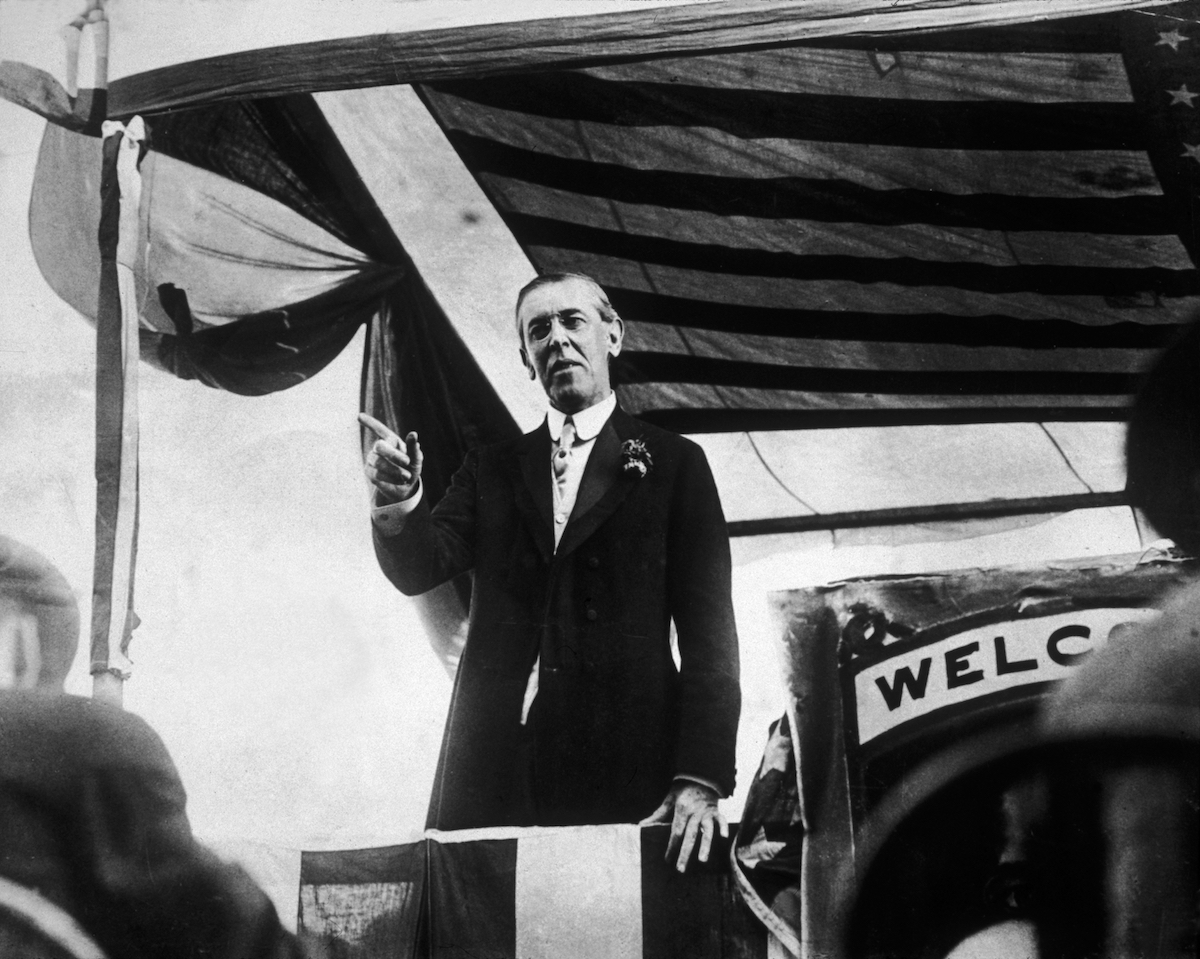
iqsafe.info – Woodrow Wilson, the 28th President of the United States, entered World War I with a vision for a world order based on peace, democracy, and the collective security of nations. By the time the war ended in 1918, Wilson’s idealistic aspirations were reflected in his Fourteen Points, a set of proposals that sought to create a fair and lasting peace after the devastation of the conflict. Wilson’s ambition was to reshape global diplomacy, create institutions that could prevent future wars, and establish a new world order built on mutual cooperation rather than conflict.

However, when Wilson arrived at the Treaty of Versailles negotiations in 1919, he was confronted with the harsh realities of international diplomacy. His vision for a peaceful world, as outlined in the Fourteen Points, faced opposition from European powers, particularly France and Britain, who had suffered tremendous losses during the war and sought revenge against Germany. The outcome was a treaty that largely failed to live up to Wilson’s lofty ideals. Despite his passionate efforts, Wilson’s vision for a just peace was undermined by compromises, national interests, and the refusal of the U.S. Senate to ratify the treaty, which ultimately doomed the League of Nations, the very institution Wilson believed would secure a lasting peace.

In this article, we will explore Wilson’s role in the Treaty of Versailles, the conflict between his ideals and the political realities of the time, the contents of the treaty, and the long-term consequences of the treaty’s failure. We will also examine how Wilson’s experience with the treaty marked a turning point in both his presidency and in the way America engaged with international affairs.

Wilson’s Vision for a New World Order

The Fourteen Points

When World War I ended in November 1918, Wilson’s vision for a post-war world was encapsulated in his Fourteen Points, which he presented to Congress on January 8, 1918. The points outlined Wilson’s hopes for a just peace and included provisions such as:

  1. Open diplomacy: The call for transparent negotiations between nations and the elimination of secret treaties.
  2. Freedom of the seas: Ensuring that the seas would remain open to all nations and free from naval blockades.
  3. Free trade: The removal of trade barriers to encourage global commerce and prosperity.
  4. Self-determination: The right of nations and peoples to choose their own government and form of political association, particularly in Europe and among colonial territories.
  5. Disarmament: The reduction of armaments to prevent future wars.
  6. Creation of the League of Nations: The establishment of an international organization aimed at preserving peace and preventing conflicts through diplomacy and collective security.

Wilson’s idealism and belief in the possibility of a cooperative and peaceful world stood in stark contrast to the nationalist and punitive sentiments that prevailed in Europe after four years of brutal warfare. His aim was to create a global system where nations would settle disputes diplomatically, respect each other’s sovereignty, and work toward mutual benefit. Wilson’s dream of a fair and lasting peace was heavily shaped by his belief that the war had been caused by an international system of imperialism, militarism, and secret alliances, which he hoped to replace with open cooperation and democratic principles.

The Challenge of Allied Interests

However, Wilson was not alone in the negotiations. The Allied Powers, particularly Britain and France, had suffered tremendous human and material losses during the war. Their desire for punitive measures against Germany and the other Central Powers was in direct contrast to Wilson’s vision of a fair peace. France, in particular, had suffered devastating damage to its infrastructure, and Prime Minister Georges Clemenceau was determined to secure reparations and weaken Germany to ensure that it would not be a future threat. Similarly, Britain, under Prime Minister David Lloyd George, had its own set of interests, focusing on securing its empire and maintaining its naval dominance.

These allied leaders were primarily focused on securing reparations from Germany and ensuring its military and economic weakness. While Wilson hoped to avoid harsh punishment for Germany, fearing that it would sow the seeds for future conflict, the European leaders saw retribution as essential for maintaining security and their own national interests. The differing priorities between Wilson and the European powers created a significant rift in the negotiations, one that would ultimately lead to compromises that undermined Wilson’s vision.

The Treaty of Versailles: A Compromise Peace

The Terms of the Treaty

The Treaty of Versailles, signed on June 28, 1919, officially ended World War I and laid out the terms of peace. While Wilson’s Fourteen Points provided the framework for the treaty, many of his ideas were diluted or discarded in favor of the demands of the European powers. Some of the key provisions of the treaty included:

  • Territorial Losses for Germany: Germany was forced to cede significant territory to neighboring countries. The Saar Basin was placed under the control of the League of Nations, and Germany lost its overseas colonies, which were distributed among the Allied powers. The Alsace-Lorraine region was returned to France, and Poland was reestablished as an independent state, with a corridor to the Baltic Sea that separated East Prussia from the rest of Germany.

  • Military Restrictions: Germany’s military was severely limited by the treaty. The size of the German army was reduced to 100,000 troops, conscription was abolished, and the country was prohibited from having an air force, submarines, or tanks. The Rhineland was demilitarized to prevent future aggression against France.

  • Reparations: Germany was held responsible for causing the war and was required to pay reparations to the Allied powers. While the exact amount was not specified in the treaty, it was later determined that Germany owed the Allies over 132 billion gold marks in reparations, a sum that put enormous economic strain on the country.

  • The League of Nations: Wilson’s dream of a League of Nations was enshrined in the treaty. The League was intended to be an international organization that would facilitate diplomacy, promote collective security, and prevent future wars. Wilson believed that the League would be the centerpiece of the new world order, but it was significantly weakened by compromises and the lack of full participation from major powers.

Despite the inclusion of the League of Nations, many aspects of the Treaty of Versailles contradicted Wilson’s Fourteen Points. Self-determination for various ethnic groups, one of Wilson’s key principles, was violated in several instances. For example, while Wilson advocated for the independence of countries like Poland, many regions in the Ottoman Empire were divided among the victors without regard for the desires of local populations.

Wilson’s Disappointment and Opposition to the Treaty

Wilson entered the Treaty of Versailles negotiations with high hopes for creating a just and lasting peace, but as the treaty took shape, he found himself increasingly sidelined by the more powerful European leaders. While Wilson had succeeded in securing the League of Nations as part of the treaty, he had been forced to concede on many of his other points, particularly in relation to Germany.

Wilson was deeply disappointed by the terms of the treaty. Although he had pushed for a more lenient peace with Germany, he found that the treaty was punitive and did not fully align with his vision of a fair peace. He wrote to his wife, Ellen, that the treaty was a “mutilated peace,” reflecting his frustration with the compromises that had been made at the expense of his ideals.

Despite his reservations, Wilson was determined to secure the treaty’s ratification in the United States and push for the creation of the League of Nations. He returned to the U.S. after the signing of the treaty, eager to gain Senate approval for the U.S. to join the League and play a central role in shaping the post-war order.

The Senate Rejection and the End of Wilson’s Dream

The Battle for the League of Nations

Wilson’s greatest challenge in securing the treaty’s legacy came when it was presented to the U.S. Senate for ratification. Many senators, particularly Republicans led by Henry Cabot Lodge, opposed the treaty, primarily because of the League of Nations. These opponents argued that joining the League would entangle the U.S. in international conflicts and compromise the nation’s sovereignty. Isolationists in the Senate feared that the collective security arrangements in the League’s charter could potentially force the U.S. to become involved in European wars.

Wilson, who was deeply committed to the idea of the League, embarked on a nationwide campaign to rally public support for the treaty. However, his efforts were undermined by his deteriorating health and the growing political opposition. In a dramatic gesture, Wilson refused to compromise on the treaty and, instead, continued to push for the Senate to ratify it as it was.

The Senate ultimately rejected the Treaty of Versailles in November 1919, and again in March 1920, ensuring that the U.S. would not join the League of Nations. Wilson’s inability to secure U.S. participation in the League marked a significant failure for his vision of global peace and diplomacy. The League was left to function without the involvement of the world’s most powerful nation, and the treaty itself was a shadow of the peace Wilson had hoped to create.

The Legacy of the Treaty of Versailles

The Treaty of Versailles was a mixed legacy for Wilson. While it succeeded in establishing the League of Nations, Wilson’s other goals — such as self-determination for all nations and the creation of a just, non-punitive peace — were largely sidelined. The punitive provisions placed on Germany contributed to economic hardship, resentment, and political instability in the country, which would eventually help pave the way for World War II.

Wilson’s intellectual vision for a peaceful world order was dashed by the realities of international politics, and his failure to secure U.S. participation in the League of Nations diminished the treaty’s potential effectiveness. Despite this, Wilson’s commitment to the idea of a cooperative, multilateral world order continues to resonate today, and his role in founding the League of Nations laid the groundwork for the United Nations following World War II.

In conclusion, the Treaty of Versailles represented the clash between Wilson’s idealism and the political realities of post-war Europe. While the treaty included provisions that reflected his vision for global cooperation and peace, it was ultimately a compromise that failed to secure a lasting and just peace. Wilson’s dream of a world governed by democracy, diplomacy, and collective security may have been unfulfilled, but his legacy in shaping the international system remains an enduring testament to the power of ideals in the pursuit of global peace.

Bully for Roosevelt: The Man Who Shaped a Nation

iqsafe.info – Theodore Roosevelt, the 26th President of the United States, is undoubtedly one of the most dynamic and transformative figures in American history. From his childhood struggles with illness to his triumphs as a statesman and reformer, Roosevelt’s life was defined by his unyielding commitment to progress, justice, and the common good. His presidency, from 1901 to 1909, marked a pivotal turning point in American politics, as Roosevelt reshaped the nation through bold action, progressive policies, and a deeply personal sense of duty to the American people.

Roosevelt’s story is not just one of political triumph, but of an individual who believed in the power of leadership to bring about meaningful change. With his iconic motto, “Bully for you!” he expressed his enthusiasm for taking on challenges with vigor and optimism. Roosevelt’s “bully” personality was more than just an expression of exuberance—it was a reflection of his relentless drive to improve both himself and the nation he led. His passionate engagement with the world around him, both in terms of policy and personal pursuits, made him a larger-than-life figure whose influence continues to be felt in the United States today.

This article explores the remarkable life of Theodore Roosevelt and his lasting impact on American history, examining how his bold leadership shaped the nation and defined the path for future generations.

The Making of a Leader: Early Life and Formative Experiences

Childhood Struggles and Triumphs

Born on October 27, 1858, in New York City, Theodore Roosevelt grew up in a family of wealth and privilege. His father, Theodore Roosevelt Sr., was a successful businessman and philanthropist, while his mother, Martha Bulloch Roosevelt, came from a prominent Southern family. Though he had every material advantage, Roosevelt’s early life was far from easy. As a child, he suffered from severe asthma, which left him physically weak and often confined to his home. For many children, this would have been a discouraging condition, but Roosevelt was not one to accept weakness. Instead, he adopted a philosophy of “the strenuous life,” vowing to overcome his frailty by pushing himself to be physically active and mentally engaged.

Roosevelt’s experiences with illness taught him resilience and the importance of personal strength. As a young boy, he threw himself into physical activities, such as boxing and hiking, to build his strength. His childhood struggles with asthma instilled in him a determination to overcome any obstacle. These formative experiences would shape not only his character but also his leadership style throughout his life.

Despite his health issues, Roosevelt had a natural intellectual curiosity. He devoured books on a wide range of subjects, from history to natural science. This early love for learning and exploration would continue throughout his life and played a key role in his later political and conservationist endeavors.

A Passion for Public Service

Roosevelt’s path to public service was influenced by both his intellectual interests and his innate sense of duty. After graduating from Harvard University in 1880, he immediately sought a career in politics, believing that public service was one of the highest callings. His first foray into public life came when he was elected to the New York State Assembly in 1882. Even as a young man, Roosevelt was known for his zeal and energy. He became a vocal advocate for reform, taking on corrupt political bosses and working to make the political system more efficient and just.

Roosevelt’s early years in politics were marked by his strong sense of duty and his unwavering commitment to public service. He believed that politicians should act in the best interests of the people, not for personal gain. His reformist views, combined with his enthusiasm for public service, earned him a reputation as an up-and-coming political leader.

Rising to the Presidency: The Rough Rider and the National Stage

A Hero’s Welcome: The Spanish-American War

Roosevelt’s rise to the presidency was not a linear path, but rather one shaped by both personal tragedy and political opportunity. In 1898, following the assassination of President William McKinley, Roosevelt became the nation’s most famous public figure, thanks in part to his leadership during the Spanish-American War.

The war, which was fought over Cuba’s independence from Spain, gave Roosevelt the opportunity to demonstrate his courage, leadership, and sense of adventure. As Assistant Secretary of the Navy, Roosevelt had helped prepare the United States for the conflict by modernizing the Navy, but he was eager to serve on the front lines. He resigned his position and organized a volunteer cavalry unit, known as the Rough Riders, which became famous for their participation in the Battle of San Juan Hill in Cuba.

Roosevelt’s bravery and leadership during the war made him a national hero, and it was his popularity as a war hero that paved the way for his political future. He was elected governor of New York in 1898, where he continued to push for progressive reforms, taking on the state’s entrenched political bosses and advocating for policies to protect workers and consumers.

The Unexpected Presidency

In 1901, following the assassination of President McKinley, Roosevelt was thrust into the White House at the age of 42, making him the youngest president in American history at the time. His unexpected rise to the presidency was a result of both his public popularity and his commitment to reform. Roosevelt had been serving as vice president under McKinley, and when the president was killed, Roosevelt was sworn in as the 26th President of the United States.

From the moment he entered the White House, Roosevelt approached the presidency with his characteristic energy, optimism, and boldness. He saw the presidency as a “bully pulpit” that gave him the opportunity to enact sweeping reforms and rally the American people to a cause. Roosevelt was not content to simply manage the affairs of state; he saw the presidency as a platform to shape the future of the nation.

A Bully for Progress: Roosevelt’s Domestic and Foreign Policies

Trust-Busting and Economic Reform

One of Roosevelt’s defining accomplishments as president was his commitment to curbing the power of monopolies and ensuring that American businesses operated fairly. Roosevelt believed that large corporations should not be allowed to dominate the economy and exploit workers or consumers. Under his leadership, the government filed numerous antitrust suits against powerful monopolies, including the famous case against Standard Oil and its founder, John D. Rockefeller.

Roosevelt’s efforts to regulate business marked the beginning of a new era of government intervention in the economy. His “trust-busting” policies, combined with his progressive reforms, earned him a reputation as a champion of the common people. In addition to his trust-busting efforts, Roosevelt worked to improve working conditions, protect consumers, and ensure fair wages. His administration passed landmark laws, such as the Pure Food and Drug Act and the Meat Inspection Act, which aimed to protect the public from dangerous and unsanitary products.

Conservation: Protecting America’s Natural Beauty

Roosevelt was deeply committed to environmental conservation, a passion that was shaped by his childhood love of nature and his time in the Badlands of North Dakota. He believed that the government had a duty to protect America’s natural resources and ensure that future generations could enjoy the country’s breathtaking landscapes. During his presidency, Roosevelt worked to expand the national parks and forests, creating the foundation for America’s modern conservation movement.

He used his executive power to establish national monuments, set aside public lands for conservation, and create the United States Forest Service in 1905. Roosevelt’s efforts resulted in the preservation of more than 230 million acres of public land, making him one of the most influential figures in the history of American environmentalism.

Foreign Policy: Big Stick Diplomacy

Roosevelt’s foreign policy was characterized by his belief in a strong, assertive American presence on the world stage. His famous slogan, “Speak softly and carry a big stick,” embodied his approach to diplomacy. Roosevelt believed that the United States should engage in diplomacy but should always back up its words with military strength.

One of Roosevelt’s most significant foreign policy achievements was the construction of the Panama Canal, which connected the Atlantic and Pacific Oceans and revolutionized global trade. Roosevelt’s role in the construction of the canal, as well as his intervention in the conflict between Russia and Japan in 1905, earned him the Nobel Peace Prize, making him the first U.S. president to receive the honor.

Roosevelt’s Legacy: The Bold Leader Who Shaped a Nation

Theodore Roosevelt’s legacy is one of bold leadership and transformative change. As a politician, he challenged the entrenched powers of big business and political corruption, while advocating for the welfare of ordinary Americans. His progressive policies helped shape the modern American state, from the regulation of business practices to the protection of the environment.

Roosevelt’s “bully” personality, with its characteristic enthusiasm and determination, reflected his deep belief that the United States was a nation with a special role to play in the world. He viewed leadership as a moral obligation to do what was best for the country, even if it meant taking bold and sometimes controversial action. Roosevelt’s presidency set a new standard for American leadership—one based on action, courage, and a commitment to justice.

Beyond his political achievements, Roosevelt’s enduring legacy is in his belief that a single individual can make a difference. Whether it was tackling corruption, conserving the nation’s natural beauty, or asserting American power on the global stage, Roosevelt’s bold actions reshaped America for the better. His life and career continue to inspire leaders and citizens alike, reminding us that true greatness comes not from avoiding challenges, but from confronting them head-on with courage and conviction.

In the end, Roosevelt’s presidency was not just about the policies he implemented or the reforms he enacted. It was about the energy, enthusiasm, and determination he brought to the office. His legacy endures as a testament to the power of leadership and the idea that one person can shape the future of a nation. “Bully for you,” Roosevelt would say—and indeed, bully for the United States, which was forever changed by his bold leadership.

Benjamin Harrison and the Battle for the Tariff

iqsafe.info – The presidency of Benjamin Harrison (1889-1893) was marked by several important political and economic struggles, but one of the most significant and contentious issues during his time in office was the battle for the tariff. Tariff policy in the late 19th century was at the heart of a fierce political battle, as it was seen as a way to influence the nation’s economy, protect domestic industries, and generate federal revenue. The debate over tariffs had been ongoing for decades, with deep divisions between two primary factions: protectionists, who advocated for higher tariffs to shield American manufacturers from foreign competition, and free traders, who called for lower tariffs to encourage competition and reduce consumer prices.

This article explores Benjamin Harrison’s involvement in the tariff debate, examining the political and economic factors that shaped his position on tariffs, the significant legislative developments during his administration, and the long-term consequences of the tariff policies enacted during his presidency.

The Tariff Debate: A Longstanding Issue in American Politics

Historical Context of the Tariff in the United States

The debate over tariffs had been a central issue in American politics since the nation’s founding. Early American economic policy was shaped by the vision of Alexander Hamilton, the first Secretary of the Treasury, who argued for a strong, protectionist system to nurture American manufacturing and industry. This vision was embodied in the Tariff of 1789, the first significant tariff law passed by Congress, which sought to protect fledgling American industries from competition with established European markets.

Throughout the 19th century, the tariff issue remained divisive. Northern industrialists generally supported protective tariffs, which would help shield their businesses from foreign competition. Southern and Western states, which were more agrarian and less industrialized, were largely in favor of free trade, as they relied on exports of agricultural products and sought lower tariffs to reduce costs for consumers.

By the late 19th century, with the United States having experienced rapid industrialization after the Civil War, the country found itself at the heart of an intense debate over how to balance the interests of agriculture and industry. This debate would come to a head during Benjamin Harrison’s presidency.

Harrison’s Background and Economic Philosophy

A Protectionist Advocate

Benjamin Harrison, a Republican, was an advocate of the protectionist tariff policy, which was consistent with the views of the Republican Party at the time. Harrison was a strong supporter of high tariffs as a means of protecting American industries, particularly in the rapidly growing manufacturing sector. He believed that tariffs were necessary to shield U.S. industries from the competition of cheaper foreign goods and to ensure that American workers were not undercut by lower wages abroad. Harrison’s stance on the tariff was closely aligned with the interests of industrial capitalists in the North, who sought protection for their factories, as well as workers who were benefiting from the expansion of American industry.

As a senator from Indiana before becoming president, Harrison had supported high tariffs, believing they were a tool for stimulating economic growth, fostering domestic manufacturing, and generating revenue for the federal government. This position would inform his policies when he took office in 1889.

The Republican Party and the Tariff Issue

The Republican Party of the late 19th century was solidly behind the protectionist cause. High tariffs were viewed as a means to protect American jobs and businesses, promote industrial growth, and maintain a healthy balance of trade. For Republicans, tariffs were not only an economic tool but a political issue that helped solidify support among industrialists and working-class voters in the Northern states.

Democrats, on the other hand, typically advocated for lower tariffs or free trade. They argued that high tariffs led to higher consumer prices and disproportionately benefited wealthy industrialists, while hurting farmers and consumers. For Democrats, reducing tariffs was seen as a way to promote economic fairness and free markets. The intense rivalry between Republicans and Democrats over the tariff issue would shape the political landscape during Harrison’s presidency.

The McKinley Tariff: Harrison’s Battle for Protection

The Push for Tariff Reform

Benjamin Harrison entered office in 1889 at a time when the tariff issue was more heated than ever. The previous administration under Grover Cleveland, a Democrat, had called for tariff reduction, but his efforts had been blocked by a Republican-controlled Congress. Harrison, determined to follow through on the Republican Party’s commitment to protectionism, made the tariff issue a central focus of his presidency.

In 1890, Harrison signed the McKinley Tariff into law, a measure that raised tariffs to the highest levels in U.S. history at the time. The McKinley Tariff, named after Ohio Congressman William McKinley, who championed the legislation, was designed to protect American industries by raising tariffs on imported goods. The tariff affected a wide range of products, including wool, sugar, iron, and textiles, with an average increase of 48% on imported goods.

The Economic Goals of the McKinley Tariff

The goal of the McKinley Tariff was to protect American industries from foreign competition, especially in the face of rapidly industrializing European countries. By imposing higher tariffs, Harrison and his Republican allies sought to create a more favorable environment for American manufacturers to compete in the global marketplace. The protectionist tariffs were intended to ensure that U.S. businesses, especially in the Northeast, had an advantage over foreign manufacturers and could continue to grow in a competitive global economy.

Additionally, the McKinley Tariff was designed to stimulate domestic production and provide jobs for American workers. By reducing the availability of foreign goods, the tariff aimed to increase demand for domestically produced products. For Harrison and his allies, this was seen as a necessary step to ensure the prosperity of the American industrial economy.

Opposition to the McKinley Tariff

While the McKinley Tariff was supported by many in the Republican Party, it faced significant opposition from various quarters. One of the most vocal opponents was the Democratic Party, which decried the tariff as a mechanism for enriching wealthy industrialists at the expense of consumers. Democrats argued that the tariff led to higher prices for goods, particularly for everyday items such as food, clothing, and household products. Southern and Western Democrats, in particular, were concerned about the negative impact of higher tariffs on farmers and consumers, who would face higher costs for goods that they could not produce themselves.

In addition to opposition from the Democrats, the McKinley Tariff also faced criticism from within the Republican Party. Midwestern farmers were especially vocal in their opposition, arguing that the tariff disproportionately benefited industrialists and harmed agricultural interests. They pointed out that the tariff raised the cost of imported goods, such as farm tools and machinery, which many farmers relied on for production. For many of these farmers, the McKinley Tariff represented an unfair burden on their already strained financial situation.

Despite these criticisms, the McKinley Tariff was a key legislative victory for Harrison’s administration, and it solidified his reputation as a proponent of protectionism. However, the political fallout from the tariff would have lasting consequences.

The Consequences of the McKinley Tariff

The 1890 Midterm Elections

The McKinley Tariff proved to be politically costly for the Republican Party. While the law was intended to stimulate economic growth and protect American industries, it led to widespread public discontent, particularly among farmers and working-class consumers. The tariff caused an increase in the cost of many goods, and the resulting economic hardship for various groups fueled a growing backlash against the Republican Party.

In the 1890 midterm elections, the Democrats made significant gains, taking control of the House of Representatives and winning a substantial number of seats in the Senate. The Republican Party’s support for the high tariffs was a central issue in the election, and many voters saw the tariff as emblematic of the Republican Party’s allegiance to wealthy industrialists and its disregard for the interests of ordinary citizens.

The Impact on Harrison’s Legacy

The McKinley Tariff, despite its initial popularity among industrialists and protectionists, ultimately became a political liability for Harrison and the Republican Party. In the aftermath of the 1890 elections, public opinion turned against the tariff, and it became a symbol of Republican overreach. Many critics of the tariff argued that it had led to higher prices, hurting consumers, and had failed to deliver on its promises of economic growth.

In the years following Harrison’s presidency, the tariff issue remained a focal point of American politics. In 1894, the Wilson-Gorman Tariff was passed by a Democratic Congress, which sought to reverse some of the provisions of the McKinley Tariff and reduce tariffs on certain goods.

Long-Term Effects on U.S. Tariff Policy

The McKinley Tariff was a turning point in the history of U.S. tariff policy. While the tariff system remained a central feature of American politics for many years, Harrison’s efforts to raise tariffs set the stage for future debates about the role of tariffs in the economy. The issues raised by the McKinley Tariff, including the balance between protecting domestic industries and ensuring fair consumer prices, would continue to be a source of political division in the decades to come.

The legacy of Harrison’s tariff policies can also be seen in the Progressive Era, when reformers sought to address the perceived injustices of the tariff system, among other economic issues. Harrison’s policies set the stage for future tariff reforms, including the Underwood Tariff of 1913, which lowered tariffs and introduced the first federal income tax in an attempt to create a more equitable economic system.

Conclusion: A Legacy Shaped by Protectionism

Benjamin Harrison’s presidency was shaped by the political and economic battle over the tariff. As a staunch advocate for protectionism, Harrison championed the McKinley Tariff as a means to protect American industries, promote economic growth, and provide jobs for American workers. However, the political fallout from the tariff, including rising consumer prices and public discontent, left a lasting impact on the Republican Party and the broader national debate over trade policy.

While the McKinley Tariff achieved some of its economic goals, it also highlighted the complexities and contradictions of tariff policy. The debate over the tariff, and the legacy of Harrison’s support for protectionism, would continue to influence American politics for years to come. Benjamin Harrison’s involvement in the battle for the tariff marked an important chapter in the development of U.S. economic policy, and his presidency remains a key moment in the history of tariff legislation and its impact on the nation’s political landscape.

Chester A. Arthur: New York’s Political Boss Turned President

iqsafe.info – Chester A. Arthur, the 21st president of the United States, is often remembered as an enigmatic figure in American political history. His presidency, which lasted from 1881 to 1885, has often been overshadowed by his rise to power, his unexpected transformation from a product of political patronage to a proponent of civil service reform, and the relatively brief duration of his time in office. Yet, Arthur’s journey from a New York political boss to the White House is an essential chapter in the history of the Gilded Age, offering a fascinating look into the intersection of politics, power, and reform in late 19th-century America.

From his early career as a key figure in New York’s political machine to his presidency, Arthur’s political trajectory was shaped by both ambition and circumstance. Known for his connections to the powerful Republican boss Roscoe Conkling and his leadership of the Stalwart faction, Arthur’s path to the presidency seemed all but certain to follow the corrupt political practices of the era. However, his tenure as president would prove to be much more complex, marked by his surprising departure from his early associations with patronage and his eventual embrace of civil service reform.

This article explores how Chester A. Arthur’s rise from political boss to president is not just a story of ambition but also one of political transformation, showcasing his contributions to American governance, his surprising reform efforts, and the legacy he left behind.

Early Life and Career: From the Backwoods to New York City

Humble Beginnings and Education

Born on October 5, 1829, in Fairfield, Vermont, Chester Alan Arthur was the son of William Arthur, a Baptist minister, and Malvina Stone Arthur. His family moved several times during his youth, and although they were not wealthy, they valued education highly. Arthur excelled academically, and after completing his education in local schools, he attended Union College in Schenectady, New York. It was at Union College that Arthur’s ambition began to take shape.

He graduated in 1848, near the top of his class, and entered the legal profession. After briefly working in Vermont, he moved to New York City, where he established a law practice. By the late 1850s, Arthur had become a successful lawyer, known for his sharp legal mind and ability to navigate the complexities of law. However, his political ambitions would soon lead him down a different path.

Political Connections and Rise to Power

In the 1850s and 1860s, New York politics was dominated by powerful political machines, particularly those led by men like William “Boss” Tweed and Roscoe Conkling. These political machines wielded significant power in the state, controlling everything from elections to government appointments. Although not initially a product of the machine, Arthur’s career would soon become entwined with the Stalwarts, the faction of the Republican Party that was closely aligned with patronage politics and the spoils system.

Arthur’s rise in politics began in the late 1860s when he became involved in the political patronage system in New York City. His legal background and connections with political figures soon led to his appointment as the Collector of the Port of New York, a highly influential position within the city’s political machine. Under the patronage system, individuals in positions like this had control over lucrative government jobs, which could be distributed to loyal political supporters. Arthur, though known for his competence, was also linked to corruption within the system, a relationship that would define his early career.

As the Collector of the Port of New York, Arthur helped build the political machine controlled by Roscoe Conkling, the powerful Republican senator who dominated New York politics at the time. Arthur became a loyal ally to Conkling, and his position as head of the port allowed him to reward political supporters with government positions, which cemented his place as a key figure in the New York political machine.

Arthur’s Path to the Vice Presidency

The Republican National Convention of 1880

By 1880, Chester A. Arthur’s political star was on the rise, but few people anticipated that he would ascend to the White House. In the Republican National Convention that year, there was significant division between two factions of the party—the Stalwarts, led by Conkling, and the Half-Breeds, a more moderate faction of Republicans. The convention deadlocked, and no candidate emerged as a clear victor. In a surprising turn of events, Arthur was chosen as the vice-presidential candidate to balance the ticket with the more moderate candidate, James A. Garfield, who had emerged as the presidential nominee.

Arthur’s selection as vice president was largely a result of political maneuvering by Conkling, who believed that Arthur’s loyalty to the Stalwarts would solidify their faction’s influence. Garfield, on the other hand, was seen as a compromise candidate who could bridge the divide between the Stalwarts and the more moderate Republicans. However, the decision to place Arthur on the ticket was viewed by many as an effort to placate the Stalwarts and secure their votes in the election.

Although Arthur was not expected to play a significant role in Garfield’s administration, fate had other plans.

Garfield’s Assassination

In July 1881, just months after taking office, President James A. Garfield was shot by an assassin named Charles Guiteau. Garfield succumbed to his wounds in September of the same year, and Arthur, as vice president, assumed the presidency. His unexpected rise to the highest office in the land surprised many, particularly those who viewed him as little more than a product of the political machine. Given his past connections to corruption and the spoils system, Arthur’s ascension was met with skepticism. Critics feared that his presidency would merely continue the political patronage practices of his predecessors, particularly Conkling’s Stalwarts.

However, what followed was far more complicated than anyone could have predicted.

Arthur’s Presidency: A Surprising Transformation

A New Political Philosophy

Chester A. Arthur’s presidency marked a surprising shift in his political beliefs and actions. Upon taking office, he initially appeared to continue the policies of the Stalwart faction, maintaining many of the traditional patronage practices that had defined his career. However, it soon became clear that Arthur was far more politically astute than many had given him credit for. He was keenly aware of the growing public outcry against the corruption of the spoils system, and he understood the need to address the demands for reform.

One of Arthur’s most significant actions as president was his embrace of civil service reform, a move that would surprise both his supporters and detractors. During his time as vice president, Arthur had been a staunch defender of the patronage system, but his attitude began to change as he assumed office. Recognizing the importance of reforming government practices to increase efficiency and eliminate corruption, Arthur threw his support behind the Pendleton Civil Service Reform Act.

The Pendleton Civil Service Reform Act of 1883

The Pendleton Act, signed into law by Arthur in 1883, was one of the most significant pieces of legislation in the history of the U.S. federal government. The law created the Civil Service Commission, which oversaw the implementation of a merit-based system for hiring federal employees. Under the new system, government jobs would no longer be awarded based on political loyalty but rather on qualifications and examination results. This landmark reform represented a break from the political patronage system that had long dominated American politics.

Arthur’s support for the Pendleton Act marked a dramatic departure from his earlier career as a political boss and reinforced his image as a president who was willing to challenge the entrenched political system in the name of good governance. The passage of the Pendleton Act is often viewed as the defining achievement of Arthur’s presidency and is considered one of the most important steps toward professionalizing the federal bureaucracy.

Other Notable Achievements

Beyond civil service reform, Arthur’s presidency saw several other key accomplishments that contributed to the modernization of the United States. One of the most significant of these was the modernization of the U.S. Navy. Arthur recognized the growing importance of naval power for projecting American influence abroad and protecting national interests. Under his leadership, the U.S. began to invest in new technologies, including steel-hulled ships, which laid the foundation for the expansion of the Navy in the coming decades.

Arthur’s administration also oversaw the passage of important tariff reforms, the completion of the first transcontinental railroad, and improvements in the U.S. infrastructure. Despite the challenges he faced in office, Arthur’s leadership helped stabilize the government and set the stage for the changes that would occur in the late 19th and early 20th centuries.

Legacy and Reputation: A Political Boss Who Became a Reformer

Chester A. Arthur’s legacy is one of surprising transformation. Though he began his political career as a product of the patronage-driven political machine of New York, he ultimately became a champion of reform. His embrace of civil service reform, his efforts to modernize the U.S. military, and his focus on improving the efficiency of government laid the groundwork for the future development of the U.S. federal system.

In recent years, historians have reassessed Arthur’s presidency, recognizing him as a man who rose above the expectations of his political background. While he may never have been the most charismatic or high-profile president, his pragmatic approach to governance and his willingness to break from his past associations have earned him a more favorable position in the annals of American history. Today, Arthur is remembered not just as a political boss turned president but as a man who, against all odds, worked to reshape the U.S. government for the better.

Conclusion: Chester A. Arthur’s Unlikely Presidency

Chester A. Arthur’s journey from political boss to president is a testament to the complexities of American politics in the Gilded Age. His rise from New York’s political machine to the presidency seemed improbable, and his early career was steeped in the very corruption he would later work to eradicate. However, Arthur’s unexpected embrace of reform, particularly in the form of the Pendleton Civil Service Reform Act, reshaped his legacy and earned him a place in the history of American governance.

Arthur’s presidency serves as a reminder that even those who begin their careers in the most corrupt systems can change, adapt, and leave behind a legacy that reflects progress and reform. His transformation from New York’s political boss to a reform-minded president marks one of the most remarkable political evolutions in American history, and his contributions to the development of the U.S. government continue to be felt today.

Rutherford B. Hayes: A President Who Restored the Union

iqsafe.info – Rutherford B. Hayes, the 19th President of the United States, often stands as a somewhat overlooked figure in American history. However, his presidency—though marked by controversies and challenges—represented a crucial turning point in the nation’s recovery from the Civil War and the Reconstruction era. Hayes is often hailed for his leadership during a time of national reconciliation and for his significant role in restoring the Union after a turbulent period. This article explores Rutherford B. Hayes’ life, his presidency, and the ways in which he worked to heal the divisions left by the Civil War.

Early Life and Career: Shaped by War and Law

A Humble Beginning

Rutherford Birchard Hayes was born on October 4, 1822, in Delaware, Ohio, into a family of modest means. His father, Rutherford Hayes Sr., died before Hayes was born, leaving his mother, Sophia, to raise him and his two siblings. Despite their financial hardships, Hayes’ mother was determined to provide her children with a good education, and Rutherford excelled in his studies. He attended Kenyon College in Ohio, where he graduated in 1842, and went on to study law at Harvard Law School.

Hayes passed the bar in 1845, establishing a successful legal career in Ohio. His practice focused on civil and criminal law, and he quickly became known for his intellect, honesty, and dedication. His early years in law were also marked by a deepening commitment to social justice and the abolition of slavery, which would later define his political career.

Military Service and Civil War Leadership

When the Civil War broke out in 1861, Hayes was eager to serve his country. He enlisted as a major in the 23rd Ohio Volunteer Infantry and rose quickly through the ranks due to his leadership abilities. He was promoted to lieutenant colonel, then colonel, and ultimately to brevet major general by the war’s end in 1865. Hayes distinguished himself in battle, participating in significant engagements, including the battles of South Mountain, Antietam, and the Siege of Petersburg.

Hayes was wounded several times during the war, but his courage and strategic leadership earned him admiration from his peers and subordinates. His service in the war was a defining aspect of his life and would later influence his policies as president, especially in regard to national unity and the treatment of veterans.

Political Rise: Governor and Advocate for Reform

Governorship of Ohio

After the war, Rutherford B. Hayes returned to Ohio and resumed his legal career. However, his experiences during the war and his desire to see the nation healed led him into politics. In 1867, Hayes was elected governor of Ohio, where he served three non-consecutive terms. As governor, Hayes was known for his progressive views on civil rights, education, and the treatment of African Americans in the post-war period.

Hayes strongly supported the abolition of slavery and worked to advance the rights of freedmen in the South. He believed that the federal government had a responsibility to ensure equality for all citizens, regardless of race, and he was an advocate for equal educational opportunities, especially for African Americans.

One of his most notable accomplishments as governor was his successful effort to improve the Ohio public school system. He implemented educational reforms that helped to expand access to schooling for the state’s children, including the establishment of a state board of education.

National Politics: A Path to the White House

Hayes’ reputation as a principled leader and advocate for reform earned him national attention. His political career culminated in his election as president in 1876, though it was a journey fraught with challenges.

The 1876 presidential election was one of the most contentious in American history. Hayes, a Republican, faced off against Democratic candidate Samuel J. Tilden in a fiercely contested race. Tilden won the popular vote by a significant margin, but the election results were disputed in several Southern states, where both parties claimed victory. The election became a constitutional crisis, and the outcome remained uncertain for months.

In what became known as the Compromise of 1877, Hayes was declared the winner of the election after a series of backdoor negotiations between Republican and Democratic leaders. In exchange for Hayes’ victory, Republicans agreed to withdraw federal troops from the South, effectively ending Reconstruction. While this compromise allowed Hayes to assume the presidency, it had profound implications for the future of African American civil rights in the South, as the withdrawal of federal troops led to the resurgence of white supremacist rule in many Southern states.

The Presidency of Rutherford B. Hayes: Restoring the Union

Ending Reconstruction and Promoting National Reconciliation

The Compromise of 1877, which was instrumental in Hayes’ path to the White House, marked the end of the Reconstruction era. Hayes’ decision to withdraw federal troops from the South was a significant turning point in American history, as it effectively ended the federal government’s efforts to protect the civil rights of African Americans in the Southern states. While this decision has been criticized by some historians as a betrayal of Reconstruction’s promises, it also represented Hayes’ commitment to national reconciliation and healing the wounds of the Civil War.

At the time of his election, the nation was still deeply divided, and Hayes recognized that healing the rift between the North and South would require compromise. His presidency sought to restore the Union by fostering cooperation between former enemies and reestablishing a sense of national unity. Although the withdrawal of troops allowed Southern states to regain control of their governments, Hayes remained committed to the idea of a unified nation.

Civil Service Reform

One of the most enduring legacies of Hayes’ presidency was his commitment to civil service reform. At the time, the federal government was rife with corruption, and political patronage was widespread. Politicians often appointed friends and allies to government positions, regardless of their qualifications. Hayes believed that government jobs should be awarded based on merit rather than political connections.

In 1877, Hayes took bold steps to reform the patronage system by issuing an executive order that prohibited political appointees from contributing to political campaigns. He also called for the creation of a merit-based civil service system, and his advocacy for reform eventually laid the groundwork for the Pendleton Civil Service Reform Act of 1883, which established a more professional and impartial federal workforce.

Economic Recovery and the End of Reconstruction

Hayes faced a series of economic challenges during his presidency. The nation was still recovering from the effects of the Civil War and Reconstruction, and economic instability persisted. The Panic of 1873, a severe depression, had left many businesses struggling, and unemployment was high.

While Hayes did not have the political support to enact major economic reforms, he worked to restore confidence in the American economy. He was a strong advocate for the gold standard and worked to stabilize the nation’s currency. He also supported the development of infrastructure, particularly railroads, as a means of spurring economic growth.

Despite these efforts, Hayes’ presidency is most often remembered for its focus on restoring the Union and promoting national healing after the Civil War. His decision to pull federal troops from the South, while controversial, allowed the country to begin moving past the divisions of Reconstruction and set the stage for the next chapter in American history.

The Legacy of Rutherford B. Hayes

Rutherford B. Hayes left office in 1881 after serving a single term. His decision not to seek re-election was in keeping with his desire to promote stability and avoid the kind of political strife that had marked the previous decade. Hayes retreated to his home in Ohio, where he remained active in public life and continued to advocate for education, civil rights, and veterans’ issues.

Though his presidency was relatively brief and his achievements were sometimes overshadowed by the controversies of his election and the Compromise of 1877, Hayes’ legacy as a leader who worked to restore the Union is significant. He demonstrated a commitment to national reconciliation, civil service reform, and the idea of a unified country after the Civil War.

His presidency was a critical period in American history, one that helped to mend the wounds of a nation torn apart by conflict and set the stage for the economic and political changes that would define the late 19th century.

Conclusion

Rutherford B. Hayes may not be remembered as one of the most transformative presidents in U.S. history, but his leadership during a crucial period of American recovery and healing remains invaluable. His efforts to restore the Union, end Reconstruction, and reform the civil service were all aimed at creating a more unified, stable, and prosperous nation. In many ways, Hayes’ presidency represents the difficult but essential work of post-war reconciliation, and his commitment to the Union helped steer the nation toward a more peaceful and stable future.

Andrew Johnson’s Legacy: Success or Failure in Post-War America?

iqsafe.info – Andrew Johnson, the 17th President of the United States, is often regarded as one of the most controversial and divisive figures in American history. His presidency, which spanned from 1865 to 1869, was marked by a tumultuous relationship with Congress, a deeply divisive approach to the Reconstruction of the South, and an unwavering defense of states’ rights. Johnson’s actions and policies during the immediate post-Civil War era had far-reaching consequences that continue to be debated to this day. Was Johnson’s legacy one of success, or did his policies and leadership leave America more fractured than it was before? This article explores the complex and often contradictory legacy of Andrew Johnson, examining the successes and failures of his presidency in the context of post-war America.

The Background of Andrew Johnson: From Humble Origins to the White House

A Southern Unionist in a Time of Division

Andrew Johnson was born on December 29, 1808, in Raleigh, North Carolina, into a poor family. His early years were marked by hardship and a lack of formal education, but he was determined to rise above his circumstances. Johnson moved to Greeneville, Tennessee, where he worked as a tailor and became involved in local politics. By the 1840s, Johnson had established himself as a prominent politician in Tennessee, eventually becoming the state’s governor and later serving as a U.S. senator.

When the Civil War broke out, Johnson was a staunch Unionist, though he hailed from a Southern state. He opposed secession, and unlike many of his Southern counterparts, he chose to remain loyal to the Union. In 1862, after Union forces gained control of Tennessee, Johnson was appointed as the military governor of the state. His tenure as governor was focused on rebuilding the state and securing Union loyalty. His moderate stance on slavery and his desire to preserve the Union without excessively punishing the South earned him the respect of many Northern leaders.

When President Abraham Lincoln was re-elected in 1864, he chose Johnson as his running mate in part to help bridge the divide between the North and the South. Johnson, a Southern Unionist, was seen as the ideal candidate to promote national reconciliation.

Johnson’s Rise to the Presidency

Johnson’s path to the presidency was dramatically altered in April 1865 when President Lincoln was assassinated by John Wilkes Booth. Johnson, who was vice president at the time, was thrust into the role of president at a critical moment in American history—just days after the end of the Civil War. Johnson faced the monumental task of leading a divided country through the process of Reconstruction, the effort to rebuild the South and reunite the nation.

Johnson’s Approach to Reconstruction: Leniency vs. Radical Change

The Presidential Plan for Reconstruction

As president, Andrew Johnson sought to quickly reunite the Southern states with the Union. His vision for Reconstruction was marked by a lenient approach toward the South. Johnson’s plan, known as the Presidential Reconstruction Plan, offered amnesty and pardons to former Confederates who took an oath of loyalty to the Union. High-ranking Confederate officials and wealthy landowners were excluded from this amnesty, but they could apply for individual pardons.

Johnson’s Reconstruction plan was designed to restore Southern state governments with minimal interference from the federal government. He allowed Southern states to re-establish their governments without significant changes to the pre-war social structure. This approach did not demand a sweeping transformation of Southern society, particularly regarding the rights of newly freed African Americans. Johnson believed that the Southern states should determine their own fate and that the federal government should avoid heavy-handed interventions in state matters.

The Black Codes and Southern Resistance

One of the primary criticisms of Johnson’s Reconstruction policies was his failure to address the plight of African Americans in the South. Under Johnson’s plan, many Southern states quickly passed Black Codes, which severely restricted the rights and freedoms of freedmen. These laws limited African Americans’ ability to own property, work in certain professions, and move freely within the states. Many Black Codes were designed to keep African Americans in a state of subjugation and economic dependency, essentially perpetuating aspects of the pre-war system of racial hierarchy.

Johnson’s unwillingness to push for federal intervention to protect the civil rights of freedmen was a major point of contention. While some Northern leaders, particularly the Radical Republicans in Congress, sought to ensure the rights of African Americans through national legislation, Johnson vetoed key civil rights bills. The most notable of these was the Civil Rights Act of 1866, which aimed to grant citizenship and equal rights to African Americans. Johnson’s veto of this bill alienated many in Congress and led to a direct conflict between the president and the legislature.

The Radical Republicans and the Clash with Congress

The Radical Republicans, a faction within the Republican Party, took issue with Johnson’s lenient approach to Reconstruction. They believed that Johnson’s plan did not go far enough in securing the rights of African Americans or addressing the social and political power of former Confederates. The Radical Republicans advocated for a more comprehensive Reconstruction that included land redistribution, federal protection for African Americans, and a stricter process for Southern states to re-enter the Union.

The conflict between Johnson and Congress came to a head in 1866 when Congress passed the Fourteenth Amendment, which granted citizenship to African Americans and provided for equal protection under the law. Johnson opposed the amendment, viewing it as an overreach of federal power. His opposition to the amendment further deepened the divide between the president and Congress, and it was eventually ratified without his support.

The standoff between Johnson and Congress reached its peak when Congress passed the Tenure of Office Act in 1867. The law, which was designed to limit Johnson’s ability to remove certain officials from office without Senate approval, was a direct response to Johnson’s efforts to dismiss Edwin M. Stanton, his secretary of war. In 1868, Johnson’s dismissal of Stanton led to his impeachment by the House of Representatives—the first impeachment of a U.S. president in history. Although Johnson was acquitted by the Senate and avoided removal from office, the impeachment battle severely damaged his political influence and weakened his presidency.

Johnson’s Legacy: Success or Failure?

A Legacy of Failure in Protecting African American Rights

Johnson’s most enduring legacy is his failure to secure the civil rights of African Americans in the immediate aftermath of the Civil War. His lenient approach to Reconstruction allowed Southern states to enact Black Codes and deny African Americans basic rights. While Congress eventually passed important civil rights legislation, such as the Fourteenth and Fifteenth Amendments, Johnson’s lack of commitment to protecting African American rights left the South entrenched in racial inequality for decades to come.

Johnson’s opposition to the Civil Rights Act of 1866, and his veto of other key legislation designed to protect African Americans, ultimately delayed the full integration of freedmen into American society. His refusal to challenge the entrenched racial prejudices of Southern society contributed to the enduring legacy of racism and segregation in the United States.

A Political Survivor, But a Failed Leader?

Andrew Johnson’s tenure as president is often seen as a failure in terms of leadership. His inability to work with Congress and his defiance of legislative action left him politically isolated. While Johnson was a political survivor—he avoided removal from office and maintained some influence within the political landscape—his presidency failed to accomplish many of the crucial goals of Reconstruction.

Johnson’s refusal to compromise with the Radical Republicans and his staunch defense of states’ rights left him with few allies in the federal government. His presidency is often viewed as a missed opportunity for true national reconciliation and healing after the Civil War. Instead of leading the nation toward unity, Johnson’s policies exacerbated divisions and left the South to govern itself without meaningful federal oversight.

A Controversial Figure in American History

In the broader context of American history, Johnson’s legacy is controversial and complex. On one hand, he played a pivotal role in preserving the Union during the Civil War and in re-integrating the Southern states into the nation. On the other hand, his reluctance to confront the deeply ingrained system of racial inequality in the South and his ineffectiveness in protecting African American rights have overshadowed his accomplishments.

Johnson’s presidency was a pivotal moment in the development of the Reconstruction era. His policies left a lasting mark on the post-war South, and his battles with Congress set the stage for the modern relationship between the executive and legislative branches of government. Ultimately, however, Johnson’s legacy is one of missed opportunities—a legacy defined by failure to fully realize the promise of equality and justice for African Americans in the post-war United States.

Conclusion: A Legacy of Division and Missed Potential

Andrew Johnson’s presidency is a testament to the challenges of leading a nation through the turbulent aftermath of war. While his determination to restore the Union and preserve states’ rights may have made him a political survivor, his failure to address the pressing issues of racial equality and social justice ultimately marred his legacy. Johnson’s actions and policies during Reconstruction left America deeply divided, and his legacy continues to spark debate about the true nature of leadership and justice in post-war America. Whether viewed as a success or failure, Johnson’s presidency will always remain a pivotal chapter in the history of the United States—a chapter marked by contentious struggles, political survival, and an enduring struggle for civil rights.

James Buchanan: A President Out of Step with History

iqsafe.info – James Buchanan, the 15th President of the United States, remains one of the most controversial figures in American history. Serving from 1857 to 1861, Buchanan’s time in office occurred during one of the nation’s most volatile periods. His presidency marked the eve of the Civil War, a time when the United States was torn apart by issues of slavery, states’ rights, and territorial expansion. Buchanan’s legacy, however, is largely defined by his failure to address the mounting sectional tensions that would eventually lead to the collapse of the Union.

Buchanan has often been described as a president out of step with the political, social, and moral currents of his time. His indecisive leadership, rooted in his unwavering belief in the Constitution and states’ rights, left the nation on the brink of destruction. While some have pointed to his political experience and diplomatic achievements as strengths, his inability to adapt to the changing political landscape of 19th-century America makes him a figure often remembered for missed opportunities and ill-timed compromises.

This article explores how James Buchanan’s presidency was out of step with the forces of history. It examines the political climate during his time in office, his leadership style, and the decisions that led to his failure to prevent the Union’s unraveling. Ultimately, Buchanan’s inability to recognize the urgency of the nation’s problems and his failure to take decisive action during a critical period marked him as a president who, rather than guiding the country through its crisis, contributed to its inevitable downfall.

A Nation Divided: The Context of Buchanan’s Presidency

When James Buchanan took office in 1857, the United States was already a divided nation. The question of slavery was at the center of nearly every political debate. The expansion of slavery into new territories was the driving issue, as the North and South increasingly found themselves at odds. The Compromise of 1850, which had sought to address these tensions, had failed to produce lasting peace. The passage of the Kansas-Nebraska Act in 1854, which allowed settlers in the western territories to decide the issue of slavery through popular sovereignty, only exacerbated the problem, leading to violent clashes in Kansas, known as Bleeding Kansas.

Buchanan, a lifelong supporter of states’ rights and an advocate for the preservation of the Union, entered the White House with the belief that he could maintain the status quo. However, the political, social, and economic changes that were occurring in the United States demanded a stronger, more dynamic leadership—qualities that Buchanan lacked. His failure to understand the gravity of the situation and his insistence on appeasing both Northern and Southern factions ultimately left the nation on the brink of collapse.

Buchanan’s Leadership Style: A Man of Principle but Poor Judgment

James Buchanan’s leadership style was shaped by his long career in public service. A seasoned diplomat, Buchanan served as the U.S. Minister to the United Kingdom and had a wealth of experience in foreign affairs. He was known for his strong belief in the Constitution and his commitment to upholding what he saw as the fundamental principles of American democracy. However, these same convictions, when applied to the domestic political crisis he faced as president, proved to be his undoing.

Buchanan’s unwavering commitment to the Constitution led him to believe that the federal government had limited power to intervene in the issues facing the nation. His strict interpretation of states’ rights left him unwilling to take strong action in response to the growing sectionalism and the escalating conflict between North and South. For example, he believed that the federal government could not prevent the expansion of slavery into new territories because the Supreme Court had ruled that the Missouri Compromise was unconstitutional in the Dred Scott decision. Buchanan, who supported the Court’s ruling, saw it as a definitive solution to the slavery question. However, rather than healing the nation, the decision only deepened the divide.

Buchanan’s inability to adapt to the changing political climate and his reluctance to confront the moral and practical realities of slavery made him an ineffective president at a time when strong, decisive leadership was needed. While he prided himself on his political acumen, his refusal to take bold action during a national crisis rendered him largely irrelevant in the face of mounting challenges.

The Dred Scott Decision: A Misguided Attempt at Resolution

One of the most significant events during Buchanan’s presidency was the Dred Scott v. Sanford decision in 1857. The case involved Dred Scott, an enslaved man who sued for his freedom after living in free territories with his master. The Supreme Court, in a 7-2 decision, ruled that African Americans, whether free or enslaved, could not be citizens of the United States and that Congress had no authority to prohibit slavery in the territories.

Buchanan strongly supported the decision, believing it would end the controversy over slavery and restore peace between North and South. However, the decision had the opposite effect. The ruling enraged abolitionists and anti-slavery advocates in the North, who saw it as a betrayal of the principles of freedom and equality. The decision further entrenched the divisions between North and South and led to greater polarization across the country.

Buchanan’s endorsement of the Dred Scott decision has been one of the most criticized aspects of his presidency. Rather than offering a path to reconciliation, Buchanan’s support for the decision only fueled the fire of division. By aligning himself so closely with the Supreme Court’s ruling, Buchanan alienated much of the Northern population and drove a wedge between himself and the growing abolitionist movement. In this sense, Buchanan’s leadership was out of step with the social and moral currents of his time, as the North increasingly viewed slavery as a moral issue that needed to be confronted head-on.

The Kansas Crisis: A Failure of Popular Sovereignty

Another significant failure of Buchanan’s presidency was his handling of the crisis in Kansas. The Kansas-Nebraska Act of 1854 had opened up the possibility of slavery in the western territories, allowing settlers to decide the issue through popular sovereignty. This provision led to violent confrontations between pro-slavery and anti-slavery settlers in Kansas, a conflict known as Bleeding Kansas.

When Buchanan took office, the violence in Kansas had already escalated, and the territory was in turmoil. Buchanan, adhering to his belief in popular sovereignty, attempted to resolve the situation by supporting the pro-slavery Lecompton Constitution, which would have allowed Kansas to enter the Union as a slave state. Buchanan’s support for the Lecompton Constitution was seen as an effort to appease the South, but it was met with strong opposition from Northern Democrats, who felt that the process had been undemocratic and unfair.

The Lecompton Constitution was ultimately rejected by Congress, and Kansas remained a battleground for pro-slavery and anti-slavery forces. Buchanan’s failure to address the situation in a way that satisfied both factions demonstrated his inability to effectively manage the growing sectional tensions. The issue of slavery in the territories, which had been at the heart of the crisis in Kansas, continued to fester under Buchanan’s leadership, further highlighting his failure to unite the nation.

The Secession Crisis: A Nation on the Brink

By the time Buchanan’s term was nearing its end in 1861, the country was on the brink of disunion. The election of Abraham Lincoln in 1860, a candidate who opposed the expansion of slavery into the territories, served as the final catalyst for the Southern states to secede from the Union. South Carolina was the first state to secede, followed by six other Southern states, who formed the Confederate States of America.

Buchanan’s response to the secession crisis was one of indecision and inaction. Although he declared that secession was illegal, he also believed that the federal government had no constitutional authority to compel states to remain in the Union. Buchanan’s refusal to take a strong stand against secession allowed the Confederacy to establish itself and set the stage for the Civil War.

Rather than confronting the crisis head-on, Buchanan sought to avoid conflict by relying on diplomatic negotiations and constitutional interpretations. His belief in the sanctity of states’ rights and his commitment to a limited federal government led him to fail to take the necessary steps to prevent the Union’s collapse. His inaction during the secession crisis ultimately left the task of preserving the Union to Abraham Lincoln, who would take office in March 1861 and immediately face the challenge of holding the nation together.

Buchanan’s Legacy: A President Out of Step with History

James Buchanan’s presidency is often viewed as a failure, not only because of his inability to prevent the Civil War but also because his leadership was woefully out of step with the historical forces of his time. The growing sectional divide, the moral question of slavery, and the need for strong leadership were issues that Buchanan was unable or unwilling to confront.

Buchanan’s strict adherence to constitutionalism and states’ rights made him incapable of taking decisive action when it was most needed. His belief in compromise, while admirable in some contexts, only served to delay the inevitable and allow the divisions within the country to deepen. Buchanan’s failure to adapt to the shifting political, social, and moral landscape left him unable to unify a nation teetering on the brink of war.

In the end, James Buchanan’s presidency is a cautionary tale of what happens when a leader is too rigid in his beliefs and too passive in the face of a national crisis. His time in office marks the tragic moment when the United States, under his leadership, moved inexorably toward the Civil War. As the last president before Abraham Lincoln, Buchanan failed to rise to the challenges of his time, leaving his successor to face the consequences of his inaction. His legacy is that of a president who was out of step with history—a man whose inability to act in a time of great national peril ensured the nation’s painful descent into conflict.

Millard Fillmore’s Legacy in the U.S. Cabinet

iqsafe.info – Millard Fillmore, the 13th president of the United States, often finds his place in history overshadowed by more well-known figures like Abraham Lincoln and Andrew Jackson. Nevertheless, his presidency and influence extend beyond just his time in office. Fillmore’s legacy is intricately tied to his decisions within his Cabinet, and the members of his administration played a crucial role in shaping the policies of his presidency. Fillmore, although not always remembered for his dynamic leadership, made key appointments that were vital to both domestic and foreign affairs during a critical period in American history.

His Cabinet was a diverse mix of politicians and statesmen who reflected the challenges and issues facing the United States in the mid-19th century. These men, many of whom had a significant influence on the political scene of their time, worked with Fillmore to navigate some of the most complex political, economic, and social issues that the country had encountered.

The Cabinet under Millard Fillmore: A Time of Compromise and Change

Appointments in the Context of Crisis

Fillmore assumed the presidency in 1850, following the sudden death of President Zachary Taylor. The nation was embroiled in a debate over slavery, the future of the newly acquired territories from the Mexican-American War, and the balance of power between the North and South. Fillmore’s Cabinet appointments were thus made with these issues in mind. In a time of national crisis, his selections were aimed at preserving the Union and finding a path to compromise. This was crucial, as the nation faced a growing divide that would eventually culminate in the Civil War.

Fillmore, a former congressman and vice president, had experience working with diverse political factions and had a deep understanding of the political landscape. He knew the importance of bringing together a team that could work across party lines. His Cabinet included men with a range of ideological positions, from moderates to conservatives, but all shared a commitment to maintaining the Union, even if it meant compromising on contentious issues like slavery.

Key Figures in Fillmore’s Cabinet

Millard Fillmore’s Cabinet consisted of individuals who played key roles in his administration and the broader political context of the time. Among the most notable were:

1. Daniel Webster – Secretary of State

One of Fillmore’s most important appointments was Daniel Webster as Secretary of State. Webster was an esteemed statesman and one of the most renowned orators of his time. He had previously served as a congressman and senator from Massachusetts and had been a prominent figure in national politics, known for his powerful speeches advocating for the preservation of the Union.

Webster played a crucial role in negotiating the Compromise of 1850, a package of legislation designed to settle the issue of slavery in the newly acquired territories. Webster’s support for the compromise, especially the controversial Fugitive Slave Act, was pivotal in getting the legislation passed. Although Webster’s stance on the issue of slavery was complex—he was not an abolitionist but believed in the preservation of the Union—his support of the compromise caused him to lose support in his home state of Massachusetts, where abolitionists were gaining influence.

2. William H. Seward – Secretary of State (Appointed in 1861)

Though William Seward did not serve directly under Fillmore (he was appointed in 1861 under Lincoln), he had been an influential member of the Whig Party prior to Fillmore’s time in office. A staunch abolitionist, Seward’s political views were diametrically opposed to Fillmore’s moderate stance on slavery. Nonetheless, Seward’s influence on American foreign policy would become significant after Fillmore’s time, particularly with his role in acquiring Alaska from Russia.

3. Thomas Corwin – Secretary of the Treasury

A well-respected Ohio politician, Thomas Corwin was appointed Secretary of the Treasury by Fillmore. Corwin had previously served as a congressman and governor of Ohio, and he was a strong advocate for economic reform and a stable national financial system. During his time in office, Corwin faced a burgeoning economic crisis, and his efforts helped strengthen the nation’s financial standing. He also worked on the country’s efforts to expand foreign trade.

4. William A. Graham – Secretary of the Navy

As a member of Fillmore’s Cabinet, William A. Graham worked on strengthening the Navy and promoting U.S. interests overseas. Graham was an experienced political figure from North Carolina and played a role in the Perry Expedition to Japan, which eventually led to the opening of Japan to trade with the United States. This was one of the most notable foreign policy achievements during Fillmore’s presidency and helped set the stage for future American interactions with East Asia.

5. Edward Everett – Secretary of State (Appointed in 1852)

Edward Everett, another prominent figure of the era, briefly served as Secretary of State under Fillmore after Daniel Webster’s departure in 1852. Everett was known for his diplomatic experience and eloquent speeches. Though he had limited time in Fillmore’s Cabinet, he played an important role in U.S. foreign relations during a pivotal period.

6. John M. Clayton – Secretary of State (1850-1852)

John M. Clayton, who was also a key player in foreign diplomacy during Fillmore’s presidency, served as Secretary of State before Everett. Clayton was instrumental in drafting the Clayton-Bulwer Treaty with Great Britain, which sought to resolve issues related to the construction of a canal across Central America, something that would become a major topic of U.S. foreign policy later on.

7. Jacob Collamer – Postmaster General

Jacob Collamer, a former senator from Vermont, was appointed Postmaster General during Fillmore’s presidency. Collamer was a member of the Whig Party and a moderate voice in politics. During his time in office, he focused on improving the efficiency of the postal system and managing the growing demands of a rapidly expanding nation.

8. Abel Upshur – Secretary of the Navy

Abel Upshur was another important member of Fillmore’s Cabinet. He succeeded William A. Graham and was deeply involved in efforts to modernize the Navy. Upshur was a staunch supporter of the expansion of American influence abroad, which he viewed as vital for the nation’s growth.

The Impact of Fillmore’s Cabinet on the Country

Fillmore’s Cabinet played a significant role in the unfolding events of the 1850s, especially in terms of foreign relations and national politics. His leadership helped ensure the passage of the Compromise of 1850, a series of laws that sought to balance the interests of slaveholding states and free states. While the compromise did not solve the issue of slavery, it did delay the outbreak of the Civil War for another decade.

His administration also saw the opening of Japan to the United States, largely through the diplomatic efforts of Commodore Matthew Perry, who was sent by Fillmore to negotiate a treaty with Japan. The Treaty of Kanagawa was signed in 1854, marking a significant shift in American foreign policy and increasing its influence in the Pacific region.

While Fillmore’s Cabinet worked diligently to manage domestic and foreign affairs, his political career would ultimately be marred by the increasing divisions over slavery, the rise of the Republican Party, and his failure to secure the Whig Party’s future. Despite this, his Cabinet’s actions were vital in shaping the policies of the era, and Fillmore’s moderate approach to politics helped prevent the country from descending into outright conflict during the years of his presidency.

Conclusion: The Lasting Impact of Millard Fillmore’s Cabinet

Millard Fillmore’s Cabinet may not have been as famous or as flashy as those of some of his successors, but it was undeniably influential in shaping the course of American history during a tumultuous time. The men he appointed worked to navigate the political and social challenges of their era, and their actions continue to reverberate in U.S. history. From domestic compromises on slavery to foreign policy triumphs, Fillmore’s Cabinet helped define the trajectory of the country during the pre-Civil War years.

While Fillmore’s own place in history may be overshadowed by the events that followed, his administration remains a significant moment in the story of the United States. His Cabinet, and the decisions they made together, was central to his presidency, reflecting his belief in pragmatism and compromise during a period of division. Their work allowed Fillmore to serve as a moderate leader during a time of great uncertainty, and their efforts provided an enduring legacy in both domestic and international policy.

Polk’s Diplomatic Legacy: The Oregon Territory and Beyond

iqsafe.info – James K. Polk, the 11th President of the United States, is often remembered for his resolute pursuit of territorial expansion. Known for his aggressive stance on Manifest Destiny, Polk’s presidency saw the United States grow by a significant portion, both in terms of land and influence. Among his most important and enduring diplomatic achievements was the resolution of the Oregon Territory dispute, which not only shaped U.S. borders but also played a critical role in the nation’s development during the 19th century. Polk’s handling of the Oregon issue, alongside his broader foreign policy endeavors, cemented his diplomatic legacy and helped define the nation’s future trajectory.

The Oregon Territory Dispute: A Land of Dreams and Conflict

By the time James K. Polk took office in 1845, the United States had long been engaged in a diplomatic struggle over the Oregon Territory. The area, which spanned present-day Oregon, Washington, Idaho, and parts of Wyoming and Montana, was claimed by multiple powers: the United States, Great Britain, Spain, and Russia. However, by the 1820s and 1830s, the main contenders for control were the United States and Britain, each asserting competing interests in the land.

In the 1818 Treaty of Joint Occupation, the United States and Britain had agreed to allow citizens of both countries to settle the region without defining a clear boundary. As American settlers began to move westward, fueled by the promise of fertile land and opportunity, tensions grew between the two nations. By the 1840s, a large number of Americans had settled in Oregon, and the question of sovereignty was becoming more pressing.

For President Polk, the Oregon Territory was one of the central goals of his expansionist agenda. When he took office, he inherited the complex situation of balancing U.S. ambitions against British interests in the region. His policy would ultimately lead to a resolution of the dispute, but it would also require careful diplomacy and the threat of conflict.

Polk’s Campaign: “Fifty-Four Forty or Fight”

James K. Polk’s presidential campaign in 1844 was defined by the slogan “Fifty-four Forty or Fight!” This phrase referred to the northern latitude line (54 degrees, 40 minutes) that the United States hoped to establish as the boundary between U.S. and British territory in the Oregon region. It symbolized Polk’s commitment to securing all of the Oregon Territory for the United States. His supporters were enthusiastic about the prospect of expansion, and the slogan quickly became a rallying cry for the notion of Manifest Destiny—the belief that the United States was destined to expand across the North American continent.

Polk’s position on the Oregon question was unequivocal: he was determined to gain control of the entire Oregon Territory up to the 54° 40′ line, rejecting British claims to the land. However, Polk also recognized that the United States had much more to gain by avoiding war with Britain. As such, his strategy would balance boldness with diplomacy, working to secure American claims while preventing a military conflict that could stretch the nation’s resources and manpower.

Diplomatic Negotiation: The Oregon Treaty of 1846

Despite the heated rhetoric surrounding the Oregon question, Polk was keenly aware that the United States did not need to engage in a costly war with Britain over the territory. As the diplomatic negotiations began in 1845, Polk shifted from the strong demands of “Fifty-four Forty or Fight!” to a more pragmatic approach. He sought a peaceful resolution that would expand the nation without escalating tensions to war.

After several months of diplomatic talks, Polk and British Foreign Secretary Lord Aberdeen reached an agreement in 1846. The result was the Oregon Treaty, which established the 49th parallel as the boundary between British Canada and U.S. territories in the Oregon region. The United States gained control of the land south of this line, including the fertile Willamette Valley, while Britain retained control of the land to the north, which eventually became British Columbia.

The Oregon Treaty was a major diplomatic victory for Polk and the United States. By compromising on the northern boundary, Polk managed to avoid war with Britain, a nation that was still a global superpower, and at the same time, secured a vast and resource-rich territory for the United States. The treaty was seen as a triumph of diplomacy, as Polk achieved his goal of expanding American territory without resorting to violence or armed conflict.

The Impact of the Oregon Treaty on the United States

The Oregon Treaty marked a turning point in U.S. foreign policy and territorial expansion. By successfully negotiating the boundary with Britain, Polk not only preserved the peace with a powerful nation but also secured the future development of the American West. The acquisition of Oregon allowed for the continued settlement of the region, and it helped solidify the nation’s claim to the Pacific Coast, a key part of the broader vision of Manifest Destiny.

The agreement also had profound economic consequences. The fertile lands of Oregon attracted thousands of settlers, many of whom traveled the Oregon Trail in search of new opportunities. As these settlers moved westward, they established farms, towns, and trade routes that would form the foundation for the U.S. economy in the Pacific Northwest. Additionally, the region’s natural resources, including timber, minerals, and fish, provided new economic opportunities for the expanding United States.

Moreover, the Oregon Treaty marked the final step in the United States’ long-standing quest to control the western portion of the continent. The acquisition of Oregon was a key moment in the history of American territorial expansion, reinforcing the idea that the nation had a divine right to stretch from coast to coast.

Beyond Oregon: Polk’s Expansionist Vision

While the Oregon dispute was one of the defining moments of Polk’s presidency, his expansionist policies extended beyond the Pacific Northwest. Polk’s vision for the United States was one of continental domination, and he was not satisfied with merely securing Oregon. His administration aggressively pursued the annexation of Texas, which had been an independent republic after its secession from Mexico in 1836. Polk’s push for Texas statehood culminated in the annexation of Texas in 1845, an act that helped trigger the Mexican-American War.

The war itself, which resulted in the Treaty of Guadalupe Hidalgo in 1848, expanded U.S. territory even further, securing vast areas in the Southwest, including California, New Mexico, Arizona, Nevada, and Utah. Polk’s successful negotiation of the Oregon Treaty and his actions in the Mexican-American War together helped fulfill the dream of Manifest Destiny, a vision that saw the United States stretch from the Atlantic to the Pacific.

Polk’s Diplomatic Legacy: A Pragmatic Expansionist

James K. Polk’s handling of the Oregon Territory is often seen as a model of pragmatic diplomacy. While his rhetoric may have suggested a willingness to go to war over the land, his actions demonstrated a careful and calculated approach to foreign policy. Polk’s diplomatic negotiation of the Oregon Treaty of 1846 was a victory for both the United States and Britain, as it avoided military conflict while securing the land necessary for American expansion.

Polk’s legacy in foreign affairs is also marked by his broader achievements in securing the nation’s borders. His presidency played a crucial role in shaping the territorial map of the United States, and his actions helped set the stage for the country’s future growth and economic success.

While the Oregon Treaty was an important diplomatic success, it was just one chapter in Polk’s broader legacy of expansion. By the end of his presidency in 1849, the United States had added more territory than at any other time in its history, cementing Polk’s place as one of the most influential expansionist presidents in American history.

Conclusion: A Diplomatic Architect of America’s Future

James K. Polk’s diplomatic legacy, particularly regarding the Oregon Territory, remains one of the most significant aspects of his presidency. Through a combination of bold rhetoric and practical negotiation, Polk was able to expand the United States’ borders while avoiding unnecessary conflict with a major European power. The resolution of the Oregon question not only fulfilled the ambitions of Manifest Destiny but also laid the foundation for the United States to emerge as a continental power by the mid-19th century.

Polk’s diplomatic triumphs were not limited to Oregon. His broader vision of American expansion reshaped the nation and marked the beginning of its rise as a global power. By securing Oregon and the Southwest, Polk helped secure the future of the United States, leaving a lasting legacy as a president who understood the importance of diplomacy in the pursuit of national interests.

William Henry Harrison’s Rise in American Politics

iqsafe.info – William Henry Harrison, the 9th President of the United States, holds a unique place in American history, not only due to his remarkably short presidency but also because of his significant rise in American politics. Harrison’s journey from a military officer to one of the most prominent political figures of his time is a testament to his determination, resilience, and the political landscape of early 19th-century America.

This article will explore the various stages of Harrison’s rise in American politics, beginning with his early life, military career, and eventual foray into the political sphere. It will highlight his political views, his role in the development of the American frontier, his battles with political adversaries, and his eventual ascension to the presidency.

Early Life and Education

William Henry Harrison was born on February 9, 1773, in Berkeley Plantation, Virginia, into a prominent family with a strong political heritage. His father, Benjamin Harrison V, was a signer of the Declaration of Independence and a former governor of Virginia, which gave young William Henry access to an influential and politically-connected world. Harrison’s early life was marked by a privileged upbringing, though it was also one of change as he came of age during a period of national transformation.

Harrison’s formal education began at the College of New Jersey (now Princeton University), where he studied under renowned scholars. However, Harrison’s academic career was cut short, and at the age of 18, he left school to pursue a career in medicine. His training under a local physician did not last long either, as he soon took a different path—one that would ultimately shape his political future.

The Military Career: Building a Reputation

Harrison’s entry into public life came through his military service. In 1791, at the age of 18, he was commissioned as an ensign in the U.S. Army during the early days of the Northwest Indian War. This was a conflict between the United States and various Native American tribes over territory in the Ohio River Valley. As a young officer, Harrison was eager to prove himself, and his first significant engagement came in the Battle of Fallen Timbers in 1794, a decisive victory for the American forces that helped secure the Northwest Territory.

In 1798, Harrison was promoted to the rank of lieutenant colonel and served as the commander of Fort Washington (modern-day Cincinnati). His continued success in the military earned him respect, and he was soon promoted to brigadier general in the U.S. Army, cementing his position as a leader in the military.

However, it was Harrison’s role in the Battle of Tippecanoe in 1811 that made him a national hero. As governor of the Indiana Territory, Harrison confronted the growing resistance of Native American tribes, particularly those led by Tecumseh, who sought to unite various tribes in opposition to U.S. expansion. Harrison’s forces defeated the Native Americans in the Battle of Tippecanoe, gaining him widespread recognition and earning him the nickname “Old Tippecanoe.” This military victory laid the foundation for his future in politics.

Political Beginnings: The Path to the Indiana Territory

Harrison’s military career, particularly his success at Tippecanoe, made him a well-known figure across the nation. In 1800, after serving in the army, Harrison was appointed by President John Adams to serve as the first governor of the Indiana Territory, a region that was being opened to American settlement. As governor, Harrison had a significant role in managing the territory, securing land for settlers, and negotiating with Native American tribes.

His tenure as governor was marked by his efforts to encourage settlement in the area and establish strong ties with the emerging states in the West. He was able to navigate the political challenges of the time and work with both the federal government and local leaders to further the cause of expansion. His skills as an administrator and his commitment to securing land for settlers earned him the trust and respect of both the federal government and local settlers.

During this time, Harrison’s political views were shaped by his experiences on the frontier. He was a staunch advocate for westward expansion and the protection of American settlers’ rights. At the same time, his dealings with Native American tribes were controversial. His attempts to negotiate treaties with the tribes were often seen as one-sided, and his role in the forced relocation of Native Americans would be a point of contention later in his career.

Harrison’s work in the Indiana Territory set the stage for his rise in American politics. His reputation as a military leader, combined with his administrative abilities, made him an ideal candidate for higher political office.

The Presidency of James Madison and the War of 1812

Harrison’s political career took a significant leap during the War of 1812, when he was once again called to serve in the U.S. Army. The war was fought between the United States and Great Britain, but it also had a significant Native American component, as British forces in Canada had been supporting Native American tribes resisting American expansion.

Harrison, as the commander of the U.S. Army in the Northwest, played a critical role in the conflict. He successfully defended American interests in the region, most notably in the Battle of the Thames in 1813, where he defeated a combined British and Native American force. The death of Tecumseh in this battle marked the end of his efforts to create a united Native American confederation, and Harrison’s victory solidified his reputation as a hero.

In the aftermath of the war, Harrison’s fame spread beyond the military. His leadership during the War of 1812 earned him national recognition, and his victory in the Battle of the Thames helped further elevate his political stature.

The Political Rise: From Senator to Presidential Candidate

Following his military success, Harrison returned to politics and began his rise through the political ranks. He was elected to the U.S. House of Representatives in 1816, where he served for one term. His political views aligned with the interests of the Western and Southern states, which were focused on internal improvements, land acquisition, and economic growth. Harrison’s support for these policies made him popular among the emerging frontier constituencies.

In 1824, Harrison was elected to the U.S. Senate, where he became a prominent voice in favor of national expansion, protective tariffs, and a strong national bank. He allied himself with the Whig Party, which emerged as a political force in opposition to President Andrew Jackson and his Democratic-Republican Party. Harrison’s experience in the Senate helped him build relationships with key political figures, and he became a trusted leader within the Whig Party.

Despite his growing political influence, Harrison’s presidential aspirations were not realized immediately. He ran for president in 1836 but was defeated by the incumbent president, Martin Van Buren. However, Harrison’s political career was far from over, and his reputation as a military hero and political leader continued to grow.

The 1840 Presidential Election: Harrison’s Triumph

In 1840, Harrison ran for president once again, this time with a different approach. The Whig Party, which had become the primary opposition to the Democratic Party, nominated him as their candidate. Harrison’s image as a war hero and man of the people resonated with voters, particularly those in the western states who were looking for a leader who understood their struggles.

The 1840 presidential campaign is often seen as the beginning of modern political campaigning. Harrison’s campaign focused on his humble background, positioning him as a man of the people in contrast to the aristocratic image of his opponent, President Martin Van Buren. The slogan “Tippecanoe and Tyler Too” emphasized Harrison’s military victories and his running mate, John Tyler, a strong political ally.

Harrison’s campaign utilized innovative techniques such as rallies, slogans, and parades to engage the electorate. These tactics helped to create a sense of excitement around his candidacy and played a significant role in his victory. Harrison won the 1840 election by a landslide, securing both the popular and electoral votes and becoming the oldest person to ever be elected president at the time.

The Legacy of Harrison’s Political Rise

William Henry Harrison’s rise in American politics was a remarkable journey from a young military officer to the presidency. His ability to navigate the challenges of military service, territorial governance, and national politics allowed him to build a reputation as a capable leader. While his presidency was cut short by illness—he died just 31 days into his term—his impact on American politics was lasting.

Harrison’s political rise reflects the changing nature of American politics in the early 19th century, as the country grappled with issues of expansion, governance, and national identity. His legacy lives on as a symbol of the emerging political power of the West and the continued struggle for influence between the growing frontier and established eastern elites.

His story is also a reminder of the importance of leadership in shaping a nation’s future. Harrison’s rise in American politics was not a quick or easy journey, but it was one marked by persistence, military success, and the ability to connect with the American people, paving the way for future generations of leaders to follow.

Andrew Jackson’s Role in Forced Relocation of Native Americans

iqsafe.info – The Trail of Tears stands as one of the most tragic chapters in American history. It refers to the forced relocation of thousands of Native Americans from their ancestral lands in the southeastern United States to designated territories west of the Mississippi River. This brutal removal process, carried out under the Indian Removal Act of 1830, resulted in the deaths of thousands of Native Americans due to disease, starvation, and exhaustion. At the center of this policy was Andrew Jackson, the seventh president of the United States, whose administration played a pivotal role in initiating and enforcing the relocation. This article explores Jackson’s role in the forced removal, the motivations behind his Indian policies, the devastating impact on Native American communities, and the lasting legacy of the Trail of Tears.

The Indian Removal Act of 1830

Jackson’s Vision for Westward Expansion

Andrew Jackson came into the presidency with a strong belief in westward expansion and the “destiny” of the United States to grow across the North American continent. A former military general and frontiersman, Jackson viewed the vast lands of the West as essential for the nation’s economic growth and prosperity. However, these lands were home to numerous Native American tribes, many of whom had lived on their ancestral lands for centuries. For Jackson and his supporters, the presence of Native Americans was seen as an obstacle to the expansion of American settlements.

Jackson’s vision of expansion was intertwined with his belief that Native Americans would not be able to coexist with white settlers in the East. He believed that the only solution to this perceived conflict was to remove Native Americans from their lands and relocate them to designated areas west of the Mississippi River. Jackson argued that this policy would benefit both white settlers, who could acquire valuable land for agriculture, and Native Americans, who would be able to preserve their cultures in territories away from American encroachment.

Jackson’s commitment to this vision was reflected in his first annual message to Congress in 1829, in which he called for the removal of Native Americans from their lands. In 1830, Congress passed the Indian Removal Act, which gave the federal government the authority to negotiate treaties with Native American tribes and forcibly relocate them to territories west of the Mississippi.

The Legal and Political Framework

The Indian Removal Act of 1830 was a legal framework designed to facilitate the removal of Native American tribes from their lands in the southeastern United States. The law empowered the federal government to enter into treaties with Native American tribes, offering them land in the West in exchange for their ancestral homelands in the East. While the Act technically called for voluntary removal, it was clear that the federal government was prepared to use force if tribes resisted.

Jackson’s administration was quick to use the Act to pressure Native American tribes into signing removal treaties. The government often used deceit, coercion, and manipulation to secure the consent of tribal leaders. Many Native American leaders were reluctant to sign away their lands, but they faced overwhelming pressure from federal agents and the threat of military force.

The Cherokee Nation, one of the most prominent tribes affected by the Indian Removal Act, resisted the removal through legal means. In 1832, the Cherokee took their case to the Supreme Court in the landmark case Worcester v. Georgia. The Court, led by Chief Justice John Marshall, ruled in favor of the Cherokee, stating that Georgia’s laws that extended over Cherokee territory were unconstitutional and that the Cherokee Nation had the right to its land. However, President Jackson famously disregarded the ruling, allegedly saying, “John Marshall has made his decision; now let him enforce it.” Jackson’s refusal to uphold the Supreme Court’s decision marked a dangerous precedent for the balance of power between the executive and judicial branches and further paved the way for forced removal.

The Implementation of the Indian Removal Policy

The Removal of the Five Civilized Tribes

The Indian Removal Act primarily targeted the Five Civilized Tribes, which included the Cherokee, Creek, Seminole, Chickasaw, and Choctaw nations. These tribes had been living in the southeastern United States for centuries and had developed sophisticated societies with their own systems of government, schools, and economies. Many of them had also adopted aspects of European-American culture, including written constitutions and agricultural practices.

Despite their efforts to assimilate, the Five Civilized Tribes were still viewed by Jackson and his supporters as obstacles to American expansion. Under the Indian Removal Act, each of these tribes was forcibly relocated to what is now known as Indian Territory, located in present-day Oklahoma. The removal process varied for each tribe, but the outcome was universally devastating.

The Choctaw were the first tribe to be forcibly relocated, beginning in 1831. Thousands of Choctaw people were marched westward, and many perished along the way due to hunger, disease, and exposure to harsh weather conditions. The Creek were removed in 1836, suffering similarly high casualties during their forced march. The Chickasaw were relocated in 1837, and like the other tribes, they endured immense suffering on the journey to Indian Territory.

The removal of the Cherokee Nation is perhaps the most well-known and is often synonymous with the Trail of Tears. In 1838, after years of resistance and legal battles, the Cherokee were forcibly removed from their lands under the orders of President Martin Van Buren, Jackson’s successor, who continued to enforce Jackson’s policies. The forced march, which took place over 1,000 miles, resulted in the deaths of an estimated 4,000 Cherokee people, many of whom died from disease, starvation, and the harsh conditions of the journey.

The Seminole, who lived in Florida, resisted removal more aggressively than the other tribes. The Seminole engaged in a series of conflicts with the U.S. government, known as the Second Seminole War, which lasted from 1835 to 1842. While some Seminole were eventually relocated, others remained in Florida, continuing to resist American control.

The Trail of Tears

The term Trail of Tears is used to describe the series of forced relocations of Native American tribes, particularly the Cherokee, who suffered immense loss and hardship during their journey to Indian Territory. The Cherokee people, along with members of other tribes, were forcibly removed from their homes, often at gunpoint, and forced to march hundreds of miles across harsh terrain. They faced freezing temperatures, inadequate supplies, and little to no medical care.

The journey was particularly deadly for the elderly, children, and the sick, many of whom succumbed to disease, malnutrition, and exhaustion. The human toll of the Trail of Tears was staggering, with estimates suggesting that as many as one-quarter of the Cherokee population perished during the relocation.

The removal process was marked by cruelty and callousness. In many cases, Native Americans were not allowed to take their belongings, and they were driven from their homes with little notice. Those who survived the journey arrived in Indian Territory to find that the land they had been promised was often inhospitable and difficult to cultivate. The trauma of the Trail of Tears left a lasting scar on Native American communities, many of whom never fully recovered from the devastation of the forced relocation.

Andrew Jackson’s Role and Legacy

Jackson’s Motivations

Andrew Jackson’s role in the forced relocation of Native Americans has been the subject of much debate and criticism. Jackson’s supporters argue that his Indian removal policy was consistent with his broader vision of westward expansion and his belief in the “Manifest Destiny” of the United States. They claim that Jackson believed he was acting in the best interests of both Native Americans and white settlers by removing Native Americans to territories where they could live without interference from American expansion.

However, critics argue that Jackson’s policy was driven by greed, racism, and a desire to satisfy the demands of white settlers, particularly in the southern states, who wanted access to Native American lands for agricultural development, especially for cotton cultivation. Jackson’s personal views on Native Americans were shaped by his experiences as a military commander, where he had engaged in numerous conflicts with Native American tribes. He viewed them as impediments to progress and believed that their removal was necessary for the future prosperity of the nation.

The Legacy of the Trail of Tears

The legacy of Andrew Jackson’s Indian removal policy is one of profound suffering and injustice. The Trail of Tears remains a symbol of the brutality and inhumanity of the forced relocation of Native Americans, and it stands as a dark chapter in the history of American expansion.

While Jackson is often celebrated for his role in expanding democracy and transforming the presidency, his treatment of Native Americans is a significant blemish on his legacy. The Indian Removal Act and the subsequent Trail of Tears exemplify the contradictions of Jackson’s presidency: on one hand, he championed the rights of the common man, but on the other, he actively pursued policies that dispossessed and marginalized Native American communities.

The impact of the Trail of Tears is still felt by Native American communities today. The forced removal not only resulted in the deaths of thousands of Native Americans but also disrupted their cultural practices, economies, and social structures. The loss of their ancestral lands, combined with the trauma of the relocation, had long-lasting effects on Native American tribes, many of which continue to face challenges related to poverty, health disparities, and cultural preservation.

Conclusion

The Trail of Tears stands as a stark reminder of the human cost of American expansion and the consequences of Andrew Jackson’s Indian removal policy. While Jackson’s presidency is often remembered for his populist appeal and his contributions to American democracy, his role in the forced relocation of Native Americans is a troubling aspect of his legacy. The suffering endured by Native American communities during the Trail of Tears continues to resonate in American history, serving as a cautionary tale of the dangers of unchecked power and the consequences of policies that prioritize expansion and economic interests over human rights and justice.

James Monroe’s Presidency: Challenges and Triumphs

iqsafe.info – James Monroe, the fifth president of the United States, served from 1817 to 1825, a time of significant change and growth for the young nation. His presidency, often referred to as the “Era of Good Feelings,” is remembered for its relative political harmony, national expansion, and growing sense of American identity. However, Monroe’s time in office was also fraught with challenges, from dealing with the aftermath of the War of 1812 to managing the complex issue of slavery and sectionalism. Despite these obstacles, Monroe’s presidency left an indelible mark on the nation’s development, particularly in terms of foreign policy and territorial expansion.

The “Era of Good Feelings” and National Unity

The End of the Federalist Party

Monroe’s presidency occurred during a time when the United States had experienced intense political divisions, particularly between the Federalists and the Democratic-Republicans. However, by the time Monroe took office in 1817, the Federalist Party had essentially dissolved. The War of 1812 had weakened the Federalists, who had opposed the war and were perceived as unpatriotic. The Democratic-Republicans, the party Monroe belonged to, became the dominant political force in the country.

With the Federalists’ decline, there was a temporary reduction in party political strife, giving rise to what is often called the “Era of Good Feelings.” This was a time when Monroe enjoyed widespread popularity, and national unity seemed to prevail. His presidency was marked by a spirit of cooperation rather than bitter political rivalry. Despite these harmonious conditions, Monroe’s presidency was not without challenges that would test his leadership and shape his legacy.

Economic Recovery After the War of 1812

The War of 1812 had left the United States economically weakened, with disrupted trade and a national debt that had ballooned during the conflict. Monroe’s administration sought to address the economic issues that arose during the war’s aftermath. In response to the economic hardship, Monroe supported internal improvements, such as building roads and canals, that would facilitate trade and communication across the country.

Monroe’s administration also supported the creation of a Second Bank of the United States in 1816. The First Bank, which had expired in 1811, was an institution that helped stabilize the national economy, but its absence after its expiration had contributed to inflation and financial instability. The Second Bank helped regulate the currency, control inflation, and facilitate the country’s financial system. Despite opposition from some quarters, Monroe’s backing of this institution reflected his belief that economic stability was essential for the future of the nation.

The Panic of 1819

While Monroe’s presidency began with economic optimism, it faced significant setbacks as well. In 1819, the United States experienced the first major financial panic since its independence. Known as the Panic of 1819, this economic downturn was caused by a combination of speculative land purchases, falling cotton prices, and an overextension of credit. The panic led to widespread unemployment, bank failures, and a sharp decline in property values.

The effects of the panic were felt most acutely in the Western territories, where settlers had relied on easy credit to purchase land. The financial crisis exacerbated tensions between the agricultural South and the more industrializing North. The panic exposed weaknesses in the banking system and the overall economy, and it took several years for the country to fully recover.

Territorial Expansion and the Monroe Doctrine

The Monroe Doctrine: Defining U.S. Foreign Policy

One of the defining achievements of Monroe’s presidency was the articulation of the Monroe Doctrine in 1823. The doctrine was a bold statement of U.S. foreign policy that declared the Western Hemisphere closed to European colonization. Monroe declared that the United States would not tolerate European interference in the affairs of nations in the Americas and that any such attempts would be viewed as acts of aggression. In return, the U.S. would not interfere in European affairs or engage in European wars.

The Monroe Doctrine was born out of a desire to protect the newly independent nations of Latin America, many of which were former Spanish colonies. Monroe and his Secretary of State, John Quincy Adams, were concerned that European powers, particularly Spain and Russia, might attempt to reassert control over these territories. In particular, Monroe was worried about the potential for European intervention in Latin America and the Caribbean, which might undermine American security.

The doctrine, while not immediately backed by military force, set the foundation for U.S. foreign policy in the Western Hemisphere for decades. It became a cornerstone of U.S. diplomacy, particularly in the 19th and early 20th centuries. Though Monroe’s warning was not universally accepted by European powers, it demonstrated the United States’ growing confidence in asserting its dominance in the Western Hemisphere.

The Acquisition of Florida

Another major achievement of Monroe’s presidency was the acquisition of Florida from Spain. Spain had long struggled to maintain control over Florida, which had become a haven for runaway slaves and hostile Native American groups. The United States had been pressing Spain to cede Florida, as it was seen as a strategic area that would secure the U.S. southern border.

In 1819, Monroe and his Secretary of State, John Quincy Adams, negotiated the Adams-Onís Treaty with Spain. Under the treaty, Spain ceded Florida to the United States and agreed to a boundary line between U.S. and Spanish territories in North America. The treaty not only secured U.S. territorial claims in the region but also eliminated a source of potential conflict with Spain, whose influence in the Americas was rapidly waning.

The acquisition of Florida also provided the United States with greater control over the southeastern region, contributing to the nation’s growing sense of territorial and geopolitical power.

Slavery and Sectionalism: The Missouri Compromise

The Missouri Crisis and the Missouri Compromise

Despite the relative unity of Monroe’s presidency, the issue of slavery began to deepen the sectional divides within the United States. The most prominent example of this divide during Monroe’s time in office was the debate over Missouri’s admission to the Union.

In 1819, Missouri applied for statehood, and its request sparked a heated debate over whether it would enter as a free state or a slave state. The admission of Missouri had the potential to upset the delicate balance between free and slave states in Congress. The question of whether slavery would be allowed to expand into new territories became a central issue, and it revealed the growing tensions between the North and South.

To resolve the crisis, Monroe’s administration supported the Missouri Compromise of 1820, brokered by Speaker of the House Henry Clay. The compromise allowed Missouri to enter the Union as a slave state while admitting Maine as a free state, thus maintaining the balance in the Senate. It also established the 36°30′ line, which prohibited slavery north of that line in the Louisiana Territory (except in Missouri). The Missouri Compromise temporarily defused the conflict, but it highlighted the deepening sectional divide over slavery.

The Growing Divide Between North and South

While the Missouri Compromise temporarily settled the issue of slavery’s expansion, it did little to address the underlying tensions between the North and South. The issue of slavery would continue to dominate U.S. politics in the coming decades, with new territories and states continuing to raise questions about the institution’s future. Monroe’s presidency, therefore, marked the beginning of a period in which slavery would become an increasingly divisive issue, leading ultimately to the Civil War.

Monroe’s Final Years in Office

Re-election and the “Era of Good Feelings”

Monroe was re-elected president in 1820, receiving virtually all of the electoral votes except for one, which was cast in favor of John Quincy Adams. The landslide victory reflected the widespread support Monroe enjoyed across the country, and his second term was marked by relative peace and stability.

The “Era of Good Feelings” continued under Monroe’s second term, but beneath the surface, the growing sectional tensions over slavery and economic instability—exemplified by the Panic of 1819—were beginning to take root. Although Monroe was able to maintain a sense of national unity, the period of goodwill was ultimately short-lived, giving way to more intense political conflict in the 1820s and beyond.

The End of Monroe’s Presidency

By the time Monroe left office in 1825, the United States had emerged as a more unified and powerful nation, but it was also a nation on the brink of major internal conflict. Monroe’s leadership during a time of relative peace and expansion set the stage for future American presidents to continue the work of territorial growth and international influence.

After leaving office, Monroe retired to his estate in Virginia, where he lived quietly until his death in 1831. His final years were marked by financial struggles, and he was largely forgotten by the public during his later life. Nonetheless, Monroe’s contributions to American foreign policy and territorial expansion remain a key part of his legacy.

Conclusion

James Monroe’s presidency was a time of both challenges and triumphs. He navigated the complexities of foreign diplomacy, including the Monroe Doctrine and the acquisition of Florida, while also dealing with growing sectional tensions over slavery. His efforts to promote national unity, economic stability, and territorial expansion helped to shape the future of the United States, but the issues he faced also highlighted the deepening divisions that would eventually lead to the Civil War.

Monroe’s legacy is that of a president who helped guide the country through a critical time in its history. His leadership in securing American sovereignty in the Western Hemisphere, his efforts to address economic instability, and his handling of the slavery question continue to influence the trajectory of the nation. Though his presidency was not without its challenges, Monroe’s role in American history remains an essential part of the story of the United States’ development as a young and ambitious nation.

George Washington: Commander of the Virginia Regiment

iqsafe.info – Before George Washington became the first President of the United States or even the Commander-in-Chief of the Continental Army, he had already proven his military leadership as the Commander of the Virginia Regiment. His experiences in this role during the French and Indian War (1754-1763) shaped not only his understanding of military strategy but also his character, which would later guide him during the American Revolutionary War. Washington’s leadership during this formative period set the stage for his future contributions to the founding of the United States.

Early Military Career: The Virginia Colony and the French and Indian War

The Road to Military Leadership

George Washington’s military career began in his early twenties when he was appointed as a lieutenant colonel in the Virginia militia in 1753. Born into the Virginia gentry, Washington had the privilege of receiving a relatively informal education, which included instruction in subjects like surveying and mathematics—skills that would later help him in both his military and landowning careers. Washington’s early life was shaped by the death of his father when he was just 11, which thrust him into the role of managing family estates and responsibilities. This early experience developed his sense of duty and discipline.

As tensions escalated between European powers in North America, particularly between Great Britain and France, the colonies found themselves drawn into the global conflict known as the Seven Years’ War (1756-1763), which was fought between these two European powers and their respective Native American allies. In 1754, when Washington was only 22 years old, he was tasked with leading an expedition into the Ohio River Valley, a region contested by the British and the French.

The French and Indian War: Washington’s Early Military Engagements

Washington’s military career truly began when he was ordered to deliver a message to the French, demanding they vacate the Ohio Valley, which was claimed by the British. This mission would mark Washington’s first military action. During this journey, Washington encountered French forces at the Forks of the Ohio (modern-day Pittsburgh), and his forces were involved in the skirmish known as the Battle of Jumonville Glen, which was the opening engagement of the French and Indian War in the Americas.

The skirmish, while a modest victory for Washington and his forces, was marred by confusion over the terms of engagement. Washington’s troops, initially on the defensive, killed several French soldiers, including a French officer. This incident sparked further hostilities and led to Washington’s first taste of military leadership under fire.

Afterward, Washington led an ill-fated attempt to capture a French fort at the Battle of Fort Necessity in 1754. The battle ended in defeat for the Virginians, and Washington was forced to surrender, although the terms were lenient. Despite this early setback, Washington’s actions during the French and Indian War made a significant impression on British officers and colonial leaders.

Becoming the Commander of the Virginia Regiment

Appointment to Command

Following his performance in the opening engagements of the war, Washington’s superiors recognized his potential. In 1755, British General Edward Braddock, who had been appointed to lead the British forces in North America, sought to strengthen the Virginia militia. Washington, having gained valuable experience from his earlier campaigns, was appointed as the commander of the Virginia Regiment. This position effectively placed Washington in charge of organizing and leading a group of colonial soldiers in the defense of the Virginia frontier.

As the Commander of the Virginia Regiment, Washington took responsibility for training and leading troops, organizing defensive strategies, and navigating the complex dynamics of colonial warfare, which often involved skirmishes with both the French and their Native American allies. His leadership was pivotal in establishing a sense of order and discipline among the Virginia militia, which had previously lacked both.

Leadership in the French and Indian War

Washington’s leadership style during this time was characterized by a willingness to learn from his mistakes and adapt to changing circumstances. His first major test came when he was assigned to assist General Braddock in an expedition to capture the French stronghold at Fort Duquesne (present-day Pittsburgh) in 1755. This mission ended in disaster, with Braddock’s army being ambushed by French and Native American forces, resulting in a devastating defeat for the British.

During the Battle of the Monongahela, Washington’s calm leadership and bravery under fire were crucial. Despite the chaos, Washington remained composed and acted to rally the troops, preventing a complete rout. His actions on the battlefield were widely praised, and his reputation as a capable leader grew. Notably, Washington was the only officer on horseback who survived the battle without injury, and this further bolstered his stature among both his men and British commanders.

In the aftermath of the battle, Washington assumed command of the remnants of Braddock’s forces and oversaw the safe retreat of his men. Though Braddock’s expedition was a failure, Washington’s conduct during the battle demonstrated his fortitude, leadership, and military acumen.

Fortifying Virginia: A Reputation Grows

As Commander of the Virginia Regiment, Washington also worked to secure the Virginia frontier from French and Native American incursions. His efforts to strengthen defenses, construct fortifications, and organize militias in Virginia were critical to the defense of the colony. Washington understood the importance of maintaining a well-supplied and organized military, and he was meticulous in his approach to these tasks.

In addition to his military responsibilities, Washington also faced the challenge of navigating the complex relationships between colonial leaders, the British government, and Native American tribes. As a colonial leader, Washington was often in the position of balancing competing interests, including negotiating with local Native American groups for alliances and peace treaties while also preparing for further military engagements against the French.

Throughout the war, Washington continued to develop his military and leadership skills. His capacity for strategic thinking, his ability to learn from setbacks, and his personal bravery all helped cement his reputation as one of the most capable officers in the British colonial military.

Washington’s Legacy as the Commander of the Virginia Regiment

A Stepping Stone to Future Leadership

Washington’s experiences as the Commander of the Virginia Regiment laid the groundwork for his future leadership during the American Revolutionary War. His time in the Virginia Regiment helped develop critical skills, including military strategy, logistics, leadership under pressure, and dealing with diverse groups of people, including both soldiers and Native Americans.

Moreover, Washington’s personal character—marked by honor, bravery, and a strong sense of duty—became central to his identity as a leader. His military setbacks and successes, as well as his leadership style, made him a respected figure in the colonies and among British military officers. These qualities would be instrumental in his later role as Commander-in-Chief of the Continental Army.

Washington’s Growing Political Influence

Although Washington’s military career was the most prominent during the French and Indian War, it also helped elevate him within the colonial political scene. His service as Commander of the Virginia Regiment increased his visibility among influential figures in Virginia, and he became a prominent member of the colonial gentry. Washington’s military service and reputation contributed to his later political career, which ultimately led him to the Continental Congress and the leadership of the American Revolution.

His military experiences in the Virginia Regiment, combined with his landowning background and strong sense of duty to the colonies, made him an ideal candidate to assume leadership during the American Revolution. When the time came, Washington’s reputation and experience ensured his election as the Commander-in-Chief of the Continental Army in 1775, an appointment that would alter the course of American history.

Building the Foundation for American Independence

Washington’s time in the Virginia Regiment was a foundational period in the development of his leadership and the cause of American independence. His early military experiences provided him with the tools, knowledge, and perspective necessary to lead the Continental Army to victory during the Revolutionary War. His dedication to the protection of the colonies, his understanding of the complexities of warfare, and his ability to inspire confidence in his soldiers all grew from the lessons learned during his tenure as the Commander of the Virginia Regiment.

Conclusion

George Washington’s role as the Commander of the Virginia Regiment played a pivotal part in shaping the future of both his own career and the history of the United States. Through his leadership during the French and Indian War, Washington developed the skills and character that would define his later role as the Commander-in-Chief of the Continental Army and eventually as the first President of the United States. His early military service not only prepared him for the challenges of the American Revolution but also helped solidify his reputation as one of America’s greatest leaders.