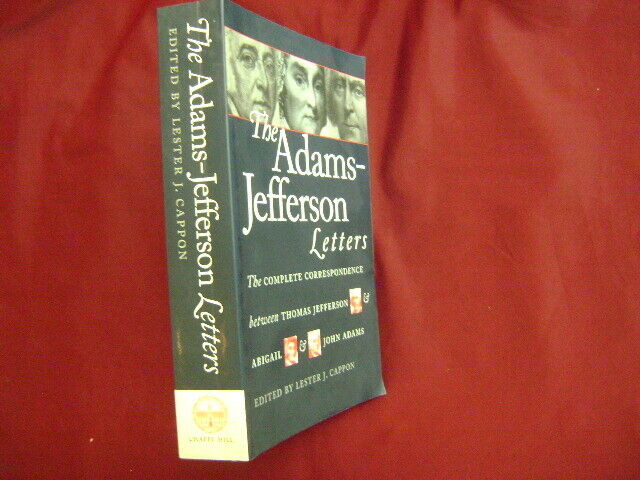
iqsafe.info – The Adams-Jefferson Letters: The Complete Correspondence Between Thomas Jefferson and Abigail & John Adams is a collection of one of the most fascinating and important correspondences in American history. This compilation, edited by Lester J. Cappon, brings together letters exchanged between two of the most prominent figures in the American Revolution and the early years of the United States—John Adams, the second president, and Thomas Jefferson, the third president—and John’s wife, Abigail Adams. Their letters offer readers an intimate look at the intellectual, political, and personal interactions between these foundational figures.
The correspondence spans several decades, from the 1770s, when both Adams and Jefferson played central roles in the Revolutionary War, to the early 19th century, when their political careers had shifted, and they were retired from public life. Despite their political differences and intense rivalry in some areas, their letters reveal a deep intellectual connection and mutual respect, as well as a personal reconciliation that came later in life. This remarkable correspondence sheds light not only on their individual thoughts and beliefs but also on the early formation of the United States and the challenges that came with it.
Overview of the Collection
The Adams-Jefferson Letters presents the complete exchange between these two monumental figures, organized chronologically, and covers over 100 years of history. The collection includes letters from 1777, when Adams and Jefferson began their correspondence, all the way to their final letters to each other in 1826, just months before both men passed away. The letters provide detailed accounts of their experiences in the Continental Congress, their roles in the drafting of the Declaration of Independence, their political careers, and their differing views on governance, liberty, and the future of the fledgling nation.
This collection also includes letters from Abigail Adams, particularly those exchanged with Jefferson. Abigail’s correspondence with Jefferson stands as an important part of the book, revealing her intellectual acumen and offering a unique perspective on her husband’s role in the founding of the United States. Through her letters, we see the influence she had on John Adams and the significant role she played in the development of American political thought.
The letters are not only rich in historical detail but also in human emotion, showcasing the personal growth and complex relationships between these three individuals. The evolution of their relationship—from the initial cordiality to the political tensions and eventually to a deep personal reconciliation—is a central theme throughout the collection.
The Early Correspondence: The Revolutionary Era
The Beginnings of the Friendship
The correspondence between John Adams and Thomas Jefferson began during the American Revolution. Both men were part of the Continental Congress, and they quickly formed a bond based on their shared dedication to the cause of independence. Adams, an outspoken advocate for independence, and Jefferson, the primary author of the Declaration of Independence, initially corresponded on matters of policy and strategy as the colonies struggled for freedom from Great Britain.
Adams, who had a reputation for his bluntness and outspokenness, found in Jefferson a kindred spirit who, though more reserved, shared his deep commitment to the cause of liberty. Despite their differences in temperament, the two quickly developed a mutual admiration. Their letters from this period reflect their shared determination to secure independence for the colonies and the intellectual debates surrounding the creation of a new form of government.
During this time, Abigail Adams also began writing to Thomas Jefferson, expressing her interest in his political ideas and her thoughts on the governance of the new nation. Abigail’s letters were often filled with intellectual and political insights, and she was particularly interested in the future role of women in the new republic, famously urging her husband to “remember the ladies” in the drafting of new laws. Jefferson’s responses to Abigail show a great deal of respect for her intellect, though his views on women’s rights remained more conservative than hers.
The Declaration of Independence and the Early Years of the Republic
The collaboration between John Adams and Thomas Jefferson took on a more significant role as the two men worked to secure independence from Britain. Adams played a key role in pushing for the Declaration of Independence, and Jefferson, who was tasked with drafting the document, sought Adams’ guidance during the writing process. Their letters during this period reveal the intellectual struggles involved in crafting a document that would justify the colonies’ break with Britain and lay the foundation for the United States.
Adams and Jefferson had differing approaches to governance, which became apparent during their correspondence as the nation’s leaders tried to define the new republic. Adams believed in a strong, centralized government, while Jefferson was more inclined toward states’ rights and a limited federal government. These early letters set the stage for the political disagreements that would define their later correspondence.
Abigail Adams, too, continued her correspondence with Jefferson, offering her opinions on the direction of the nation and the importance of education and women’s rights. While Abigail often found common ground with Jefferson on issues of governance, she remained steadfast in her belief in the necessity of women’s voices in the public sphere.
Political Rivalries and Ideological Divides
Tensions During the Presidency of John Adams
The relationship between John Adams and Thomas Jefferson became strained during Adams’ presidency (1797-1801). As a Federalist, Adams advocated for a strong central government, and his policies, particularly in foreign affairs, put him at odds with Jefferson, who was a leading figure in the Democratic-Republican Party. This political divide fueled personal tensions between the two men, and their correspondence became less frequent and more formal during this time.
Abigail Adams continued to write to Jefferson during this period, offering her views on the political landscape and sharing her concerns about the increasing partisan divisions within the country. She was deeply concerned about the rise of political factions and the impact this would have on the young republic’s future. Her letters to Jefferson reveal her pragmatic approach to governance and her desire for unity, even as the country’s political landscape grew more polarized.
Adams and Jefferson’s relationship reached its nadir during the election of 1800, when Jefferson defeated Adams in the presidential race. The bitterness of the election and the ideological divide between the two men created a significant rift, and their correspondence effectively ceased during this period. However, the letters that were exchanged during this time show the depth of their political disagreements, as well as the personal frustrations that arose from their differing visions for the country’s future.
The Later Years: Reconciliation and Reflection
A Renewed Friendship
The political tensions between Adams and Jefferson began to ease in the years following their presidencies. Both men retired from public life, and during the 1810s, they reestablished their correspondence, with their letters becoming more personal and reflective. In this phase of their relationship, Adams and Jefferson were able to put aside their political differences and engage in a deep and meaningful exchange about their lives, their legacies, and the future of the United States.
Their letters from this period are filled with expressions of mutual respect and admiration, as both men reflect on their roles in the American Revolution and the early years of the republic. They discussed their contributions to the nation’s founding, as well as their thoughts on the success and future of the United States. Their letters reveal that, despite their differences, they both viewed the American experiment as a monumental achievement and were deeply proud of the country’s accomplishments.
Abigail Adams, too, continued to play an important role in this renewed correspondence, particularly in her letters to Jefferson. Her intellectual insights and thoughtful reflections on the nation’s progress continued to be a source of inspiration for both men.
The Final Letters: A Shared Legacy
In 1826, both John Adams and Thomas Jefferson passed away within hours of each other. Their final letters reflect their mutual respect and a shared belief in the importance of their roles in the creation of the United States. The letters also reveal a deep sense of reconciliation, as both men, who had been political rivals for much of their careers, came to recognize the shared nature of their accomplishments.
The collection ends with a poignant final letter from Jefferson to Adams, in which he expresses his gratitude for their friendship and reflects on the enduring legacy of the American Revolution. This letter, written just months before their deaths, serves as a powerful reminder of the personal and political bond that had developed between these two great men over the years.
Conclusion: The Legacy of the Adams-Jefferson Letters
The Adams-Jefferson Letters: The Complete Correspondence Between Thomas Jefferson and Abigail & John Adams is an invaluable resource for anyone interested in early American history. The collection offers a unique and deeply personal view into the minds of two of the nation’s Founding Fathers, as well as their close relationship with Abigail Adams, one of the most remarkable women in American history.
Through their correspondence, readers gain a deeper understanding of the intellectual, political, and emotional currents that shaped the early years of the United States. The letters reveal the complexities of their personalities, their political ideologies, and their evolving views on governance, liberty, and the future of the young nation.
Moreover, the Adams-Jefferson correspondence serves as a powerful testament to the enduring nature of friendship, respect, and reconciliation. Despite the intense political rivalries that marked their careers, Adams and Jefferson were able to transcend their differences in their later years and reflect on their shared legacy in the creation of the United States. This collection remains one of the most important historical documents of the American founding era, offering invaluable insights into the lives and minds of two of the most influential figures in American history.
