Leadership Under Pressure: Eisenhower’s Role in World War II

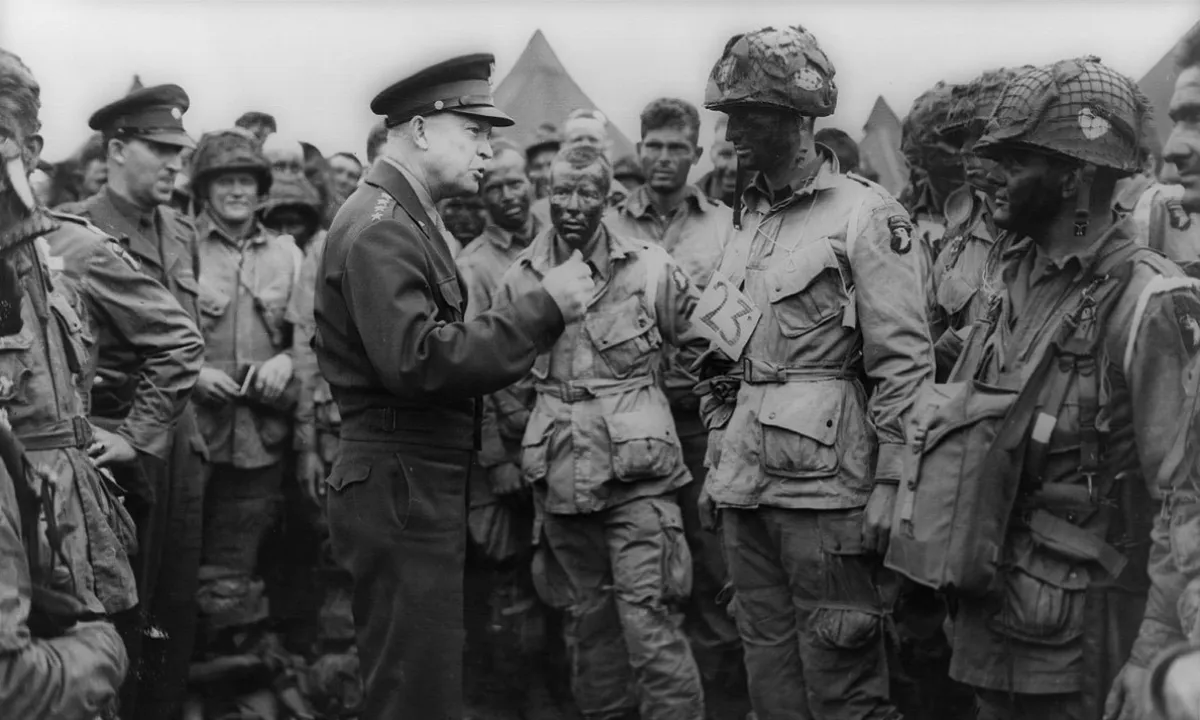
iqsafe.info – In times of conflict and crisis, true leaders emerge. Among those who led with resilience, clarity, and precision during one of the most turbulent periods in world history, Dwight D. Eisenhower stands out. As the Supreme Commander of the Allied Expeditionary Force during World War II, Eisenhower was thrust into situations where the stakes were incredibly high, and the pressure to succeed was overwhelming. Yet, time and again, he demonstrated an uncanny ability to make the right decisions under intense pressure, ultimately helping to secure the Allied victory. Let’s explore how Eisenhower’s leadership under pressure not only shaped the outcome of the war but also established him as one of the most respected military leaders in history.

The Weight of Command: Eisenhower’s Leadership Style

Eisenhower’s rise to Supreme Commander of the Allied Expeditionary Force wasn’t by accident. He had shown tremendous promise throughout his military career, quickly gaining the trust of his superiors and peers. However, it was his calm demeanor, ability to unite diverse groups, and sound decision-making that made him an exceptional leader in the most trying of circumstances.

One of Eisenhower’s most remarkable qualities was his ability to remain composed under pressure. In an environment where split-second decisions could mean life or death for thousands of soldiers, Eisenhower’s ability to maintain clarity and think critically in moments of crisis became an invaluable asset. His leadership style was pragmatic, diplomatic, and deeply focused on unity—qualities that were necessary for managing the massive and complex Allied forces.

A Multinational Force: Uniting Diverse Allies

When Eisenhower was appointed Supreme Commander in 1943, one of his biggest challenges was managing a coalition of Allied forces from different nations, each with their own interests, military traditions, and strategies. The United States, the United Kingdom, and other Allied powers like Canada and Free France were all committed to defeating Nazi Germany, but their priorities and approaches often differed.

Eisenhower’s ability to balance these varying perspectives while maintaining a clear, unified strategy was one of his greatest strengths. From his first day as Supreme Commander, he was tasked with aligning these diverse forces under one central command. His deep respect for different cultures, his diplomatic skill, and his ability to communicate effectively helped him foster a spirit of collaboration among the Allies. He understood that unity, rather than discord, would be key to achieving victory.

D-Day: The Ultimate Test of Leadership

While Eisenhower’s leadership was tested on numerous occasions throughout World War II, it was during the planning and execution of Operation Overlord—the D-Day invasion of Normandy on June 6, 1944—that his leadership under pressure was put to the ultimate test.

The D-Day invasion was the largest amphibious assault in history, involving over 156,000 troops from multiple countries, and its success was vital to the Allied strategy to liberate Western Europe from Nazi control. The planning for D-Day had been long and meticulous, but Eisenhower knew that the operation, which involved tremendous logistical challenges, could fail at any moment.

The pressure was immense. Eisenhower faced the burden of ensuring the operation went smoothly, coordinating air, sea, and ground forces from different nations, all while contending with unpredictable weather, intelligence challenges, and the constant threat of enemy forces. On the night before the invasion, Eisenhower famously prepared a speech to take responsibility if the mission failed, showing his unwavering commitment to leadership and accountability.

The invasion was a success, but it came at a heavy cost. Thousands of soldiers lost their lives, and the fight for the beaches of Normandy was grueling. Nevertheless, Eisenhower’s calm leadership throughout the operation, his ability to make split-second decisions, and his capacity to inspire confidence in his troops were essential to the success of D-Day.

Managing Crisis and Making Tough Decisions

Beyond D-Day, Eisenhower was consistently faced with situations that required him to make difficult decisions with far-reaching consequences. As the war progressed and the Allies advanced through France and into Germany, Eisenhower was tasked with managing a delicate balance of military, political, and logistical challenges.

For example, as Allied forces moved closer to Germany, the question of how to handle the growing number of Nazi prisoners of war became more urgent. Eisenhower made the difficult decision to treat the prisoners with discipline and order, not allowing them to return to their homes until the war’s end, a decision that was harsh but ultimately necessary to maintain stability in the region.

Another challenge was managing the war’s endgame. As the Allies liberated territories, they faced the question of what to do with the occupied lands and the civilian populations. Eisenhower’s leadership during this phase was not just about military victories but also about ensuring that the post-war world would be shaped by cooperation and stability.

Eisenhower’s Leadership After World War II

The pressure Eisenhower experienced during the war did not end when Germany surrendered in 1945. The leadership lessons he learned in the crucible of World War II would continue to serve him throughout his post-war career. After the war, Eisenhower served as the military governor of occupied Germany, where he helped rebuild the country, laying the groundwork for its future economic prosperity.

In 1952, Eisenhower’s leadership under pressure was again called into service when he became the 34th President of the United States. His time as President was marked by a steady hand in the face of the Cold War, civil rights challenges, and the threat of nuclear conflict. Much like his time as a military leader, Eisenhower’s ability to keep calm under pressure made him a capable and respected leader.

Legacy of Leadership: Eisenhower’s Impact

Eisenhower’s leadership under pressure during World War II has left an indelible mark on military strategy and leadership. His calm, diplomatic approach, his ability to work with people from diverse backgrounds, and his focus on unity and collaboration all contributed to the success of the Allied forces in the war. More importantly, his leadership has become a model for future leaders, whether in military, political, or business environments.

At CoeUniversity.com, we study figures like Eisenhower to better understand how leadership can shape world events. His ability to navigate extreme pressure, make difficult decisions, and lead with humility provides valuable lessons for today’s leaders. In many ways, Eisenhower’s leadership not only won a war but also helped define the modern understanding of what it means to lead with integrity, vision, and composure in the face of adversity.

Eisenhower’s role in World War II showed the world that effective leadership isn’t about avoiding pressure; it’s about rising to the occasion when the stakes are highest and guiding others toward success.
Andrew Jackson’s Role in Forced Relocation of Native Americans

iqsafe.info – The Trail of Tears stands as one of the most tragic chapters in American history. It refers to the forced relocation of thousands of Native Americans from their ancestral lands in the southeastern United States to designated territories west of the Mississippi River. This brutal removal process, carried out under the Indian Removal Act of 1830, resulted in the deaths of thousands of Native Americans due to disease, starvation, and exhaustion. At the center of this policy was Andrew Jackson, the seventh president of the United States, whose administration played a pivotal role in initiating and enforcing the relocation. This article explores Jackson’s role in the forced removal, the motivations behind his Indian policies, the devastating impact on Native American communities, and the lasting legacy of the Trail of Tears.

The Indian Removal Act of 1830

Jackson’s Vision for Westward Expansion

Andrew Jackson came into the presidency with a strong belief in westward expansion and the “destiny” of the United States to grow across the North American continent. A former military general and frontiersman, Jackson viewed the vast lands of the West as essential for the nation’s economic growth and prosperity. However, these lands were home to numerous Native American tribes, many of whom had lived on their ancestral lands for centuries. For Jackson and his supporters, the presence of Native Americans was seen as an obstacle to the expansion of American settlements.

Jackson’s vision of expansion was intertwined with his belief that Native Americans would not be able to coexist with white settlers in the East. He believed that the only solution to this perceived conflict was to remove Native Americans from their lands and relocate them to designated areas west of the Mississippi River. Jackson argued that this policy would benefit both white settlers, who could acquire valuable land for agriculture, and Native Americans, who would be able to preserve their cultures in territories away from American encroachment.

Jackson’s commitment to this vision was reflected in his first annual message to Congress in 1829, in which he called for the removal of Native Americans from their lands. In 1830, Congress passed the Indian Removal Act, which gave the federal government the authority to negotiate treaties with Native American tribes and forcibly relocate them to territories west of the Mississippi.

The Legal and Political Framework

The Indian Removal Act of 1830 was a legal framework designed to facilitate the removal of Native American tribes from their lands in the southeastern United States. The law empowered the federal government to enter into treaties with Native American tribes, offering them land in the West in exchange for their ancestral homelands in the East. While the Act technically called for voluntary removal, it was clear that the federal government was prepared to use force if tribes resisted.

Jackson’s administration was quick to use the Act to pressure Native American tribes into signing removal treaties. The government often used deceit, coercion, and manipulation to secure the consent of tribal leaders. Many Native American leaders were reluctant to sign away their lands, but they faced overwhelming pressure from federal agents and the threat of military force.

The Cherokee Nation, one of the most prominent tribes affected by the Indian Removal Act, resisted the removal through legal means. In 1832, the Cherokee took their case to the Supreme Court in the landmark case Worcester v. Georgia. The Court, led by Chief Justice John Marshall, ruled in favor of the Cherokee, stating that Georgia’s laws that extended over Cherokee territory were unconstitutional and that the Cherokee Nation had the right to its land. However, President Jackson famously disregarded the ruling, allegedly saying, “John Marshall has made his decision; now let him enforce it.” Jackson’s refusal to uphold the Supreme Court’s decision marked a dangerous precedent for the balance of power between the executive and judicial branches and further paved the way for forced removal.

The Implementation of the Indian Removal Policy

The Removal of the Five Civilized Tribes

The Indian Removal Act primarily targeted the Five Civilized Tribes, which included the Cherokee, Creek, Seminole, Chickasaw, and Choctaw nations. These tribes had been living in the southeastern United States for centuries and had developed sophisticated societies with their own systems of government, schools, and economies. Many of them had also adopted aspects of European-American culture, including written constitutions and agricultural practices.

Despite their efforts to assimilate, the Five Civilized Tribes were still viewed by Jackson and his supporters as obstacles to American expansion. Under the Indian Removal Act, each of these tribes was forcibly relocated to what is now known as Indian Territory, located in present-day Oklahoma. The removal process varied for each tribe, but the outcome was universally devastating.

The Choctaw were the first tribe to be forcibly relocated, beginning in 1831. Thousands of Choctaw people were marched westward, and many perished along the way due to hunger, disease, and exposure to harsh weather conditions. The Creek were removed in 1836, suffering similarly high casualties during their forced march. The Chickasaw were relocated in 1837, and like the other tribes, they endured immense suffering on the journey to Indian Territory.

The removal of the Cherokee Nation is perhaps the most well-known and is often synonymous with the Trail of Tears. In 1838, after years of resistance and legal battles, the Cherokee were forcibly removed from their lands under the orders of President Martin Van Buren, Jackson’s successor, who continued to enforce Jackson’s policies. The forced march, which took place over 1,000 miles, resulted in the deaths of an estimated 4,000 Cherokee people, many of whom died from disease, starvation, and the harsh conditions of the journey.

The Seminole, who lived in Florida, resisted removal more aggressively than the other tribes. The Seminole engaged in a series of conflicts with the U.S. government, known as the Second Seminole War, which lasted from 1835 to 1842. While some Seminole were eventually relocated, others remained in Florida, continuing to resist American control.

The Trail of Tears

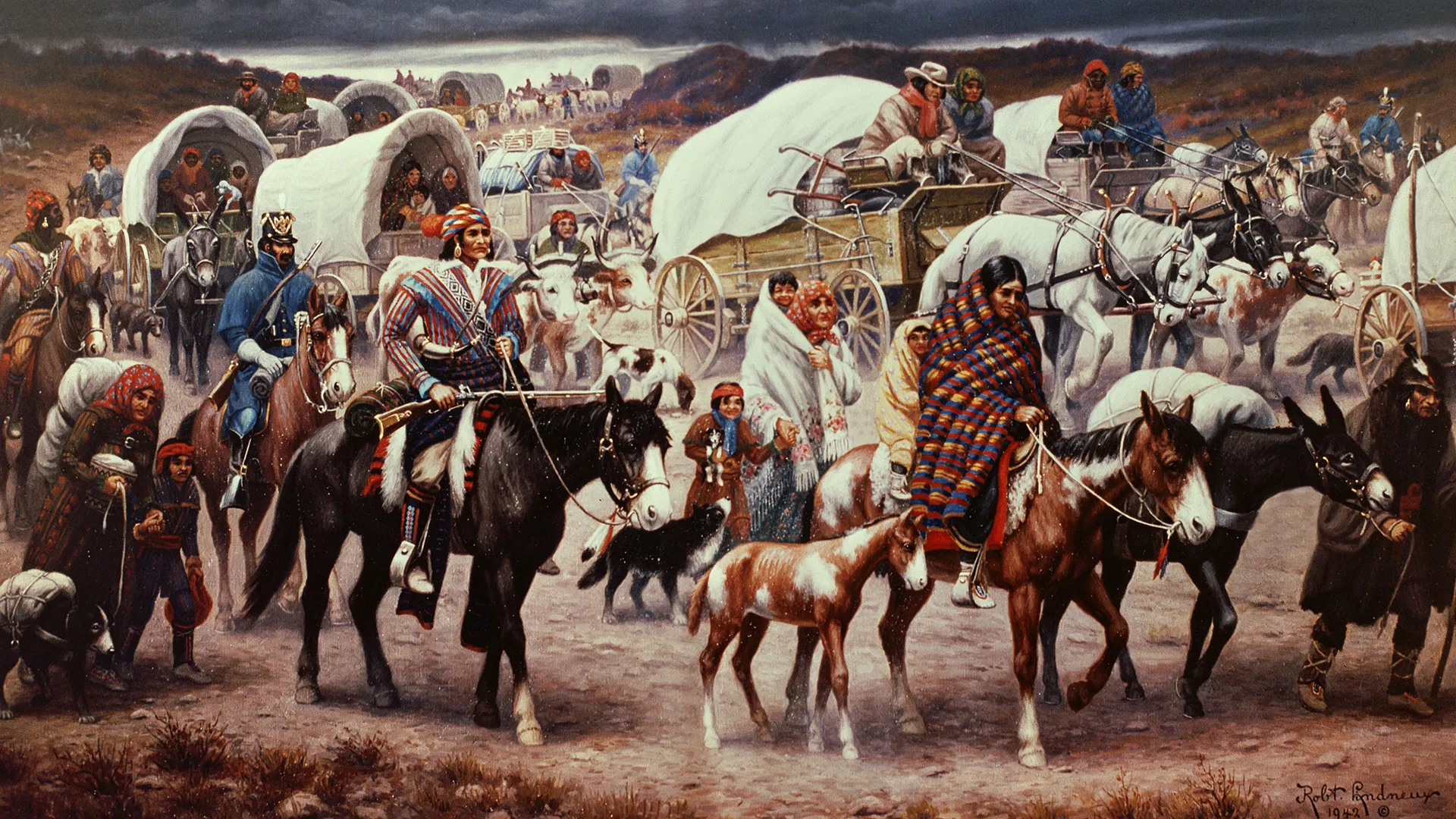
The term Trail of Tears is used to describe the series of forced relocations of Native American tribes, particularly the Cherokee, who suffered immense loss and hardship during their journey to Indian Territory. The Cherokee people, along with members of other tribes, were forcibly removed from their homes, often at gunpoint, and forced to march hundreds of miles across harsh terrain. They faced freezing temperatures, inadequate supplies, and little to no medical care.

The journey was particularly deadly for the elderly, children, and the sick, many of whom succumbed to disease, malnutrition, and exhaustion. The human toll of the Trail of Tears was staggering, with estimates suggesting that as many as one-quarter of the Cherokee population perished during the relocation.

The removal process was marked by cruelty and callousness. In many cases, Native Americans were not allowed to take their belongings, and they were driven from their homes with little notice. Those who survived the journey arrived in Indian Territory to find that the land they had been promised was often inhospitable and difficult to cultivate. The trauma of the Trail of Tears left a lasting scar on Native American communities, many of whom never fully recovered from the devastation of the forced relocation.

Andrew Jackson’s Role and Legacy

Jackson’s Motivations

Andrew Jackson’s role in the forced relocation of Native Americans has been the subject of much debate and criticism. Jackson’s supporters argue that his Indian removal policy was consistent with his broader vision of westward expansion and his belief in the “Manifest Destiny” of the United States. They claim that Jackson believed he was acting in the best interests of both Native Americans and white settlers by removing Native Americans to territories where they could live without interference from American expansion.

However, critics argue that Jackson’s policy was driven by greed, racism, and a desire to satisfy the demands of white settlers, particularly in the southern states, who wanted access to Native American lands for agricultural development, especially for cotton cultivation. Jackson’s personal views on Native Americans were shaped by his experiences as a military commander, where he had engaged in numerous conflicts with Native American tribes. He viewed them as impediments to progress and believed that their removal was necessary for the future prosperity of the nation.

The Legacy of the Trail of Tears

The legacy of Andrew Jackson’s Indian removal policy is one of profound suffering and injustice. The Trail of Tears remains a symbol of the brutality and inhumanity of the forced relocation of Native Americans, and it stands as a dark chapter in the history of American expansion.

While Jackson is often celebrated for his role in expanding democracy and transforming the presidency, his treatment of Native Americans is a significant blemish on his legacy. The Indian Removal Act and the subsequent Trail of Tears exemplify the contradictions of Jackson’s presidency: on one hand, he championed the rights of the common man, but on the other, he actively pursued policies that dispossessed and marginalized Native American communities.

The impact of the Trail of Tears is still felt by Native American communities today. The forced removal not only resulted in the deaths of thousands of Native Americans but also disrupted their cultural practices, economies, and social structures. The loss of their ancestral lands, combined with the trauma of the relocation, had long-lasting effects on Native American tribes, many of which continue to face challenges related to poverty, health disparities, and cultural preservation.

Conclusion

The Trail of Tears stands as a stark reminder of the human cost of American expansion and the consequences of Andrew Jackson’s Indian removal policy. While Jackson’s presidency is often remembered for his populist appeal and his contributions to American democracy, his role in the forced relocation of Native Americans is a troubling aspect of his legacy. The suffering endured by Native American communities during the Trail of Tears continues to resonate in American history, serving as a cautionary tale of the dangers of unchecked power and the consequences of policies that prioritize expansion and economic interests over human rights and justice.

The Role of Play in Child Development: Beyond Fun & Games

iqsafe.info – Play is often seen as a frivolous activity, a mere pastime for children to enjoy. However, the role of play in child development is far more significant than just providing entertainment. It is a crucial aspect of a child’s growth, influencing their physical, cognitive, emotional, and social development. This article delves into the multifaceted benefits of play and its essential role in shaping a child’s future.

Physical Development: The Physical Benefits of Play

Play is fundamental to a child’s physical development. Through active play, children develop their motor skills, both gross and fine. Running, jumping, and climbing help to build strength, coordination, and balance. Manipulating toys and engaging in crafts enhance hand-eye coordination and dexterity. These activities are not just fun; they are essential for the development of a healthy body.

Cognitive Development: Play as a Catalyst for Learning

Cognitively, play is a powerful tool for learning. It stimulates the brain, encouraging the development of problem-solving skills, creativity, and imagination. Educational games and puzzles can introduce and reinforce academic concepts in a way that is engaging and less intimidating than traditional instruction. Play also fosters curiosity, which is the foundation of a lifelong love for learning.

Emotional Development: The Emotional Intelligence Aspect of Play

Emotionally, play helps children to understand and express their feelings. Through role-playing and storytelling, they can explore different emotions and learn empathy. Play also provides an outlet for stress and anxiety, allowing children to work through their fears in a safe environment. The emotional regulation skills developed through play are vital for mental health and well-being.

Social Development: Play and the Development of Social Skills

Socially, play is where children learn to interact with others. It teaches them how to take turns, share, and communicate effectively. Through cooperative games, children develop teamwork and collaboration skills. Play also helps children to understand social cues and develop friendships, which are essential for their social integration and emotional support networks.

Conclusion: The Essential Role of Play in Child Development

In conclusion, play is much more than just fun and games. It is a critical component of child development, impacting every aspect of a child’s growth. By providing opportunities for play, we are not only ensuring that children have enjoyable childhoods but also laying the foundation for their future success. As such, it is imperative that play remains a priority in both educational and home settings, recognized for its profound influence on the holistic development of children.