Leadership Under Pressure: Eisenhower’s Role in World War II

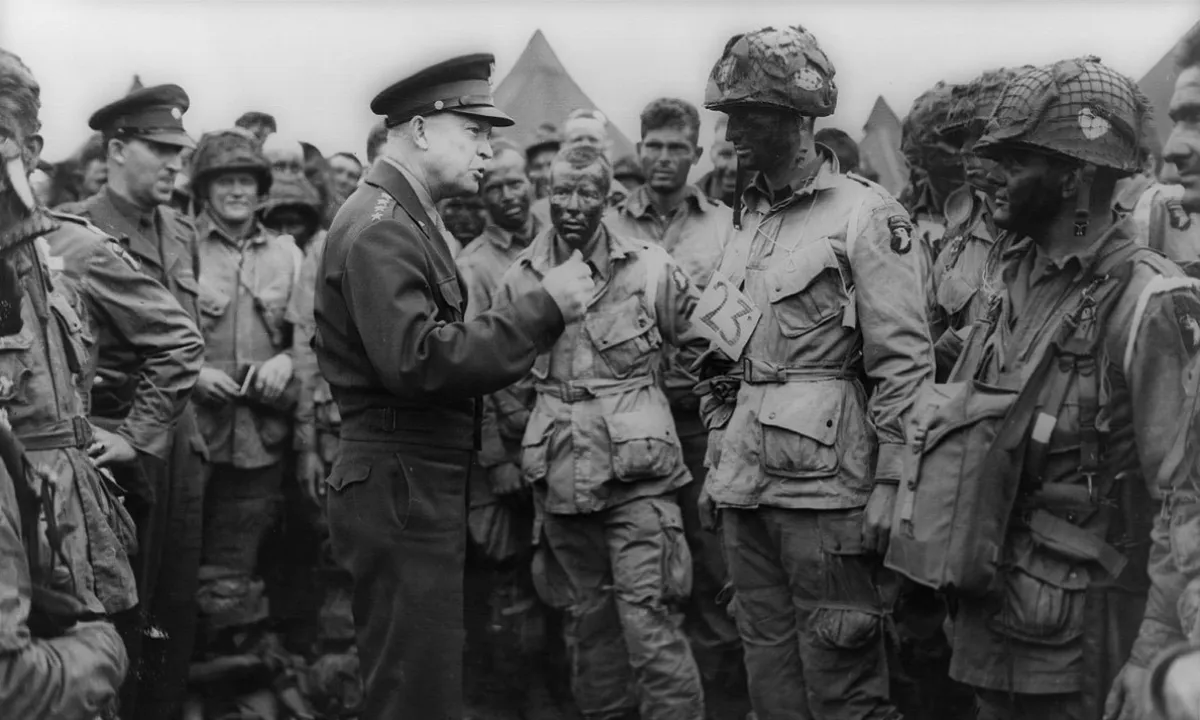
iqsafe.info – In times of conflict and crisis, true leaders emerge. Among those who led with resilience, clarity, and precision during one of the most turbulent periods in world history, Dwight D. Eisenhower stands out. As the Supreme Commander of the Allied Expeditionary Force during World War II, Eisenhower was thrust into situations where the stakes were incredibly high, and the pressure to succeed was overwhelming. Yet, time and again, he demonstrated an uncanny ability to make the right decisions under intense pressure, ultimately helping to secure the Allied victory. Let’s explore how Eisenhower’s leadership under pressure not only shaped the outcome of the war but also established him as one of the most respected military leaders in history.

The Weight of Command: Eisenhower’s Leadership Style

Eisenhower’s rise to Supreme Commander of the Allied Expeditionary Force wasn’t by accident. He had shown tremendous promise throughout his military career, quickly gaining the trust of his superiors and peers. However, it was his calm demeanor, ability to unite diverse groups, and sound decision-making that made him an exceptional leader in the most trying of circumstances.

One of Eisenhower’s most remarkable qualities was his ability to remain composed under pressure. In an environment where split-second decisions could mean life or death for thousands of soldiers, Eisenhower’s ability to maintain clarity and think critically in moments of crisis became an invaluable asset. His leadership style was pragmatic, diplomatic, and deeply focused on unity—qualities that were necessary for managing the massive and complex Allied forces.

A Multinational Force: Uniting Diverse Allies

When Eisenhower was appointed Supreme Commander in 1943, one of his biggest challenges was managing a coalition of Allied forces from different nations, each with their own interests, military traditions, and strategies. The United States, the United Kingdom, and other Allied powers like Canada and Free France were all committed to defeating Nazi Germany, but their priorities and approaches often differed.

Eisenhower’s ability to balance these varying perspectives while maintaining a clear, unified strategy was one of his greatest strengths. From his first day as Supreme Commander, he was tasked with aligning these diverse forces under one central command. His deep respect for different cultures, his diplomatic skill, and his ability to communicate effectively helped him foster a spirit of collaboration among the Allies. He understood that unity, rather than discord, would be key to achieving victory.

D-Day: The Ultimate Test of Leadership

While Eisenhower’s leadership was tested on numerous occasions throughout World War II, it was during the planning and execution of Operation Overlord—the D-Day invasion of Normandy on June 6, 1944—that his leadership under pressure was put to the ultimate test.

The D-Day invasion was the largest amphibious assault in history, involving over 156,000 troops from multiple countries, and its success was vital to the Allied strategy to liberate Western Europe from Nazi control. The planning for D-Day had been long and meticulous, but Eisenhower knew that the operation, which involved tremendous logistical challenges, could fail at any moment.

The pressure was immense. Eisenhower faced the burden of ensuring the operation went smoothly, coordinating air, sea, and ground forces from different nations, all while contending with unpredictable weather, intelligence challenges, and the constant threat of enemy forces. On the night before the invasion, Eisenhower famously prepared a speech to take responsibility if the mission failed, showing his unwavering commitment to leadership and accountability.

The invasion was a success, but it came at a heavy cost. Thousands of soldiers lost their lives, and the fight for the beaches of Normandy was grueling. Nevertheless, Eisenhower’s calm leadership throughout the operation, his ability to make split-second decisions, and his capacity to inspire confidence in his troops were essential to the success of D-Day.

Managing Crisis and Making Tough Decisions

Beyond D-Day, Eisenhower was consistently faced with situations that required him to make difficult decisions with far-reaching consequences. As the war progressed and the Allies advanced through France and into Germany, Eisenhower was tasked with managing a delicate balance of military, political, and logistical challenges.

For example, as Allied forces moved closer to Germany, the question of how to handle the growing number of Nazi prisoners of war became more urgent. Eisenhower made the difficult decision to treat the prisoners with discipline and order, not allowing them to return to their homes until the war’s end, a decision that was harsh but ultimately necessary to maintain stability in the region.

Another challenge was managing the war’s endgame. As the Allies liberated territories, they faced the question of what to do with the occupied lands and the civilian populations. Eisenhower’s leadership during this phase was not just about military victories but also about ensuring that the post-war world would be shaped by cooperation and stability.

Eisenhower’s Leadership After World War II

The pressure Eisenhower experienced during the war did not end when Germany surrendered in 1945. The leadership lessons he learned in the crucible of World War II would continue to serve him throughout his post-war career. After the war, Eisenhower served as the military governor of occupied Germany, where he helped rebuild the country, laying the groundwork for its future economic prosperity.

In 1952, Eisenhower’s leadership under pressure was again called into service when he became the 34th President of the United States. His time as President was marked by a steady hand in the face of the Cold War, civil rights challenges, and the threat of nuclear conflict. Much like his time as a military leader, Eisenhower’s ability to keep calm under pressure made him a capable and respected leader.

Legacy of Leadership: Eisenhower’s Impact

Eisenhower’s leadership under pressure during World War II has left an indelible mark on military strategy and leadership. His calm, diplomatic approach, his ability to work with people from diverse backgrounds, and his focus on unity and collaboration all contributed to the success of the Allied forces in the war. More importantly, his leadership has become a model for future leaders, whether in military, political, or business environments.

At CoeUniversity.com, we study figures like Eisenhower to better understand how leadership can shape world events. His ability to navigate extreme pressure, make difficult decisions, and lead with humility provides valuable lessons for today’s leaders. In many ways, Eisenhower’s leadership not only won a war but also helped define the modern understanding of what it means to lead with integrity, vision, and composure in the face of adversity.

Eisenhower’s role in World War II showed the world that effective leadership isn’t about avoiding pressure; it’s about rising to the occasion when the stakes are highest and guiding others toward success.
Andrew Johnson’s Legacy: Success or Failure in Post-War America?

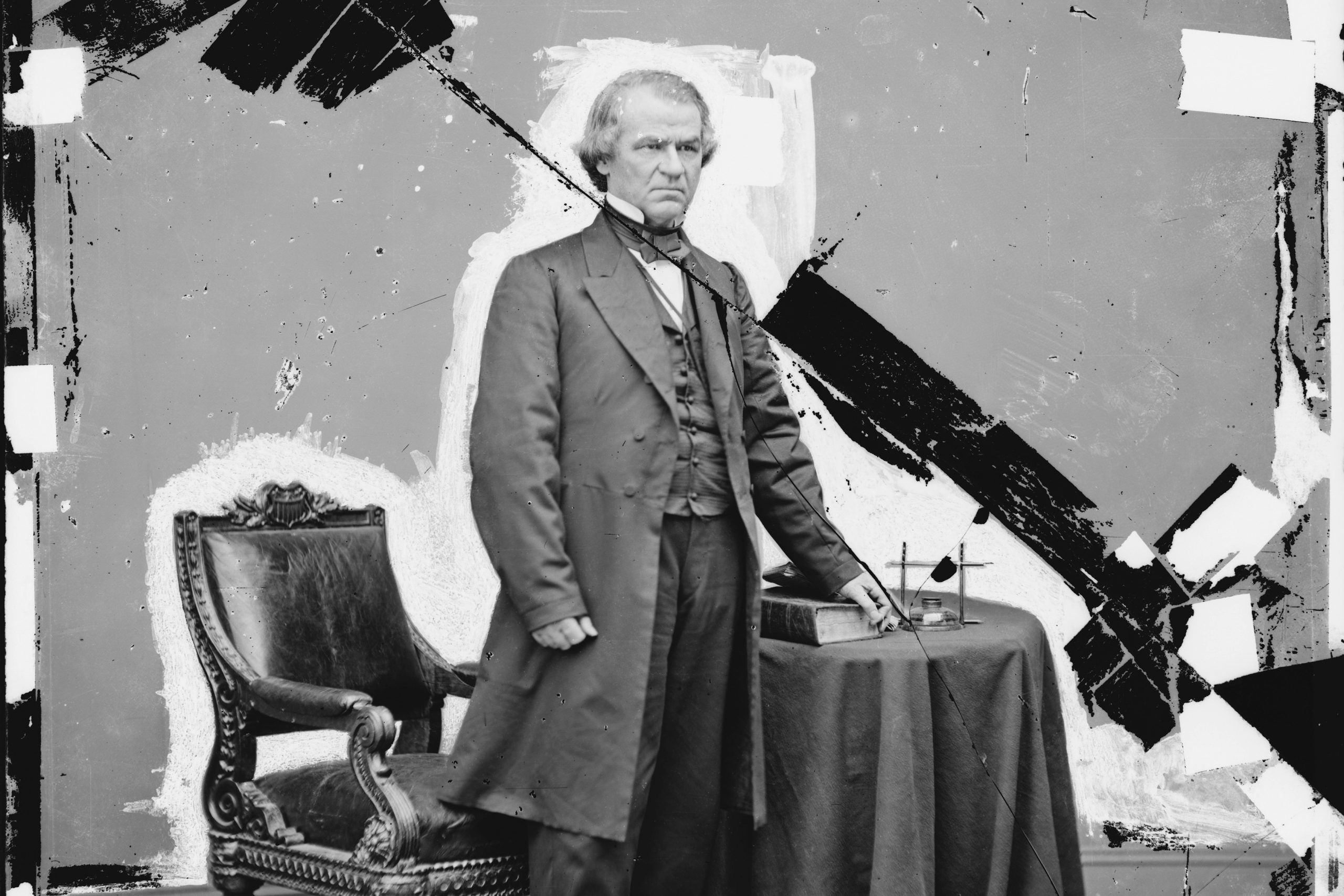
iqsafe.info – Andrew Johnson, the 17th President of the United States, is often regarded as one of the most controversial and divisive figures in American history. His presidency, which spanned from 1865 to 1869, was marked by a tumultuous relationship with Congress, a deeply divisive approach to the Reconstruction of the South, and an unwavering defense of states’ rights. Johnson’s actions and policies during the immediate post-Civil War era had far-reaching consequences that continue to be debated to this day. Was Johnson’s legacy one of success, or did his policies and leadership leave America more fractured than it was before? This article explores the complex and often contradictory legacy of Andrew Johnson, examining the successes and failures of his presidency in the context of post-war America.

The Background of Andrew Johnson: From Humble Origins to the White House

A Southern Unionist in a Time of Division

Andrew Johnson was born on December 29, 1808, in Raleigh, North Carolina, into a poor family. His early years were marked by hardship and a lack of formal education, but he was determined to rise above his circumstances. Johnson moved to Greeneville, Tennessee, where he worked as a tailor and became involved in local politics. By the 1840s, Johnson had established himself as a prominent politician in Tennessee, eventually becoming the state’s governor and later serving as a U.S. senator.

When the Civil War broke out, Johnson was a staunch Unionist, though he hailed from a Southern state. He opposed secession, and unlike many of his Southern counterparts, he chose to remain loyal to the Union. In 1862, after Union forces gained control of Tennessee, Johnson was appointed as the military governor of the state. His tenure as governor was focused on rebuilding the state and securing Union loyalty. His moderate stance on slavery and his desire to preserve the Union without excessively punishing the South earned him the respect of many Northern leaders.

When President Abraham Lincoln was re-elected in 1864, he chose Johnson as his running mate in part to help bridge the divide between the North and the South. Johnson, a Southern Unionist, was seen as the ideal candidate to promote national reconciliation.

Johnson’s Rise to the Presidency

Johnson’s path to the presidency was dramatically altered in April 1865 when President Lincoln was assassinated by John Wilkes Booth. Johnson, who was vice president at the time, was thrust into the role of president at a critical moment in American history—just days after the end of the Civil War. Johnson faced the monumental task of leading a divided country through the process of Reconstruction, the effort to rebuild the South and reunite the nation.

Johnson’s Approach to Reconstruction: Leniency vs. Radical Change

The Presidential Plan for Reconstruction

As president, Andrew Johnson sought to quickly reunite the Southern states with the Union. His vision for Reconstruction was marked by a lenient approach toward the South. Johnson’s plan, known as the Presidential Reconstruction Plan, offered amnesty and pardons to former Confederates who took an oath of loyalty to the Union. High-ranking Confederate officials and wealthy landowners were excluded from this amnesty, but they could apply for individual pardons.

Johnson’s Reconstruction plan was designed to restore Southern state governments with minimal interference from the federal government. He allowed Southern states to re-establish their governments without significant changes to the pre-war social structure. This approach did not demand a sweeping transformation of Southern society, particularly regarding the rights of newly freed African Americans. Johnson believed that the Southern states should determine their own fate and that the federal government should avoid heavy-handed interventions in state matters.

The Black Codes and Southern Resistance

One of the primary criticisms of Johnson’s Reconstruction policies was his failure to address the plight of African Americans in the South. Under Johnson’s plan, many Southern states quickly passed Black Codes, which severely restricted the rights and freedoms of freedmen. These laws limited African Americans’ ability to own property, work in certain professions, and move freely within the states. Many Black Codes were designed to keep African Americans in a state of subjugation and economic dependency, essentially perpetuating aspects of the pre-war system of racial hierarchy.

Johnson’s unwillingness to push for federal intervention to protect the civil rights of freedmen was a major point of contention. While some Northern leaders, particularly the Radical Republicans in Congress, sought to ensure the rights of African Americans through national legislation, Johnson vetoed key civil rights bills. The most notable of these was the Civil Rights Act of 1866, which aimed to grant citizenship and equal rights to African Americans. Johnson’s veto of this bill alienated many in Congress and led to a direct conflict between the president and the legislature.

The Radical Republicans and the Clash with Congress

The Radical Republicans, a faction within the Republican Party, took issue with Johnson’s lenient approach to Reconstruction. They believed that Johnson’s plan did not go far enough in securing the rights of African Americans or addressing the social and political power of former Confederates. The Radical Republicans advocated for a more comprehensive Reconstruction that included land redistribution, federal protection for African Americans, and a stricter process for Southern states to re-enter the Union.

The conflict between Johnson and Congress came to a head in 1866 when Congress passed the Fourteenth Amendment, which granted citizenship to African Americans and provided for equal protection under the law. Johnson opposed the amendment, viewing it as an overreach of federal power. His opposition to the amendment further deepened the divide between the president and Congress, and it was eventually ratified without his support.

The standoff between Johnson and Congress reached its peak when Congress passed the Tenure of Office Act in 1867. The law, which was designed to limit Johnson’s ability to remove certain officials from office without Senate approval, was a direct response to Johnson’s efforts to dismiss Edwin M. Stanton, his secretary of war. In 1868, Johnson’s dismissal of Stanton led to his impeachment by the House of Representatives—the first impeachment of a U.S. president in history. Although Johnson was acquitted by the Senate and avoided removal from office, the impeachment battle severely damaged his political influence and weakened his presidency.

Johnson’s Legacy: Success or Failure?

A Legacy of Failure in Protecting African American Rights

Johnson’s most enduring legacy is his failure to secure the civil rights of African Americans in the immediate aftermath of the Civil War. His lenient approach to Reconstruction allowed Southern states to enact Black Codes and deny African Americans basic rights. While Congress eventually passed important civil rights legislation, such as the Fourteenth and Fifteenth Amendments, Johnson’s lack of commitment to protecting African American rights left the South entrenched in racial inequality for decades to come.

Johnson’s opposition to the Civil Rights Act of 1866, and his veto of other key legislation designed to protect African Americans, ultimately delayed the full integration of freedmen into American society. His refusal to challenge the entrenched racial prejudices of Southern society contributed to the enduring legacy of racism and segregation in the United States.

A Political Survivor, But a Failed Leader?

Andrew Johnson’s tenure as president is often seen as a failure in terms of leadership. His inability to work with Congress and his defiance of legislative action left him politically isolated. While Johnson was a political survivor—he avoided removal from office and maintained some influence within the political landscape—his presidency failed to accomplish many of the crucial goals of Reconstruction.

Johnson’s refusal to compromise with the Radical Republicans and his staunch defense of states’ rights left him with few allies in the federal government. His presidency is often viewed as a missed opportunity for true national reconciliation and healing after the Civil War. Instead of leading the nation toward unity, Johnson’s policies exacerbated divisions and left the South to govern itself without meaningful federal oversight.

A Controversial Figure in American History

In the broader context of American history, Johnson’s legacy is controversial and complex. On one hand, he played a pivotal role in preserving the Union during the Civil War and in re-integrating the Southern states into the nation. On the other hand, his reluctance to confront the deeply ingrained system of racial inequality in the South and his ineffectiveness in protecting African American rights have overshadowed his accomplishments.

Johnson’s presidency was a pivotal moment in the development of the Reconstruction era. His policies left a lasting mark on the post-war South, and his battles with Congress set the stage for the modern relationship between the executive and legislative branches of government. Ultimately, however, Johnson’s legacy is one of missed opportunities—a legacy defined by failure to fully realize the promise of equality and justice for African Americans in the post-war United States.

Conclusion: A Legacy of Division and Missed Potential

Andrew Johnson’s presidency is a testament to the challenges of leading a nation through the turbulent aftermath of war. While his determination to restore the Union and preserve states’ rights may have made him a political survivor, his failure to address the pressing issues of racial equality and social justice ultimately marred his legacy. Johnson’s actions and policies during Reconstruction left America deeply divided, and his legacy continues to spark debate about the true nature of leadership and justice in post-war America. Whether viewed as a success or failure, Johnson’s presidency will always remain a pivotal chapter in the history of the United States—a chapter marked by contentious struggles, political survival, and an enduring struggle for civil rights.

The Impact of the Sri Lankan Civil War

iqsafe.info – The Sri Lankan Civil War, which spanned from 1983 to 2009, was a prolonged conflict that had profound and lasting impacts on the country and its people. The war was primarily fought between the Sri Lankan government and the Liberation Tigers of Tamil Eelam (LTTE), also known as the Tamil Tigers, over the issue of autonomy for the Tamil-majority areas in the north and east of the island.

Economic Consequences

The economic impact of the civil war was significant and long-lasting. The conflict led to widespread destruction of infrastructure, particularly in the north and east of the country, which were the main battlegrounds. This destruction hindered economic development and recovery in these regions. The war also led to a massive displacement of people, with hundreds of thousands of people becoming internally displaced. The economic burden of supporting these displaced populations further strained the country’s resources.

Social and Political Impact

The social and political impacts of the war were equally devastating. The conflict led to a deepening of ethnic and communal divisions, with the Tamil and Sinhalese communities becoming increasingly polarized. The war also led to a significant loss of life, with estimates of the death toll ranging from 80,000 to 100,000 people. The conflict also resulted in a large number of casualties among the military personnel of both sides, with over 28,708 Sri Lankan military personnel and an estimated 27,000 LTTE cadres killed during the conflict.

The end of the war in 2009 did not immediately lead to peace and reconciliation. The aftermath of the war saw a significant presence of the military in the north and east, which led to allegations of human rights abuses and repression of the Tamil population. The normalization of repression in these areas has hindered the process of reconciliation and has led to ongoing tensions between the government and the Tamil community.

International Dimensions

The Sri Lankan Civil War also had international dimensions, with India playing a significant role in the conflict. India intervened in the conflict in 1987, deploying peacekeeping forces to support the Sri Lankan government. However, this intervention was met with mixed results and led to further complexities in the conflict.

Conclusion

The Sri Lankan Civil War was a complex conflict with deep-rooted causes and long-lasting impacts. The economic, social, and political consequences of the war have had a profound effect on the country and its people. The path to reconciliation and peace remains challenging, as the wounds of the war continue to affect the country’s social fabric and economic development. The lessons from the Sri Lankan Civil War are a reminder of the devastating impact of prolonged conflict and the importance of addressing the root causes of such conflicts to ensure lasting peace.