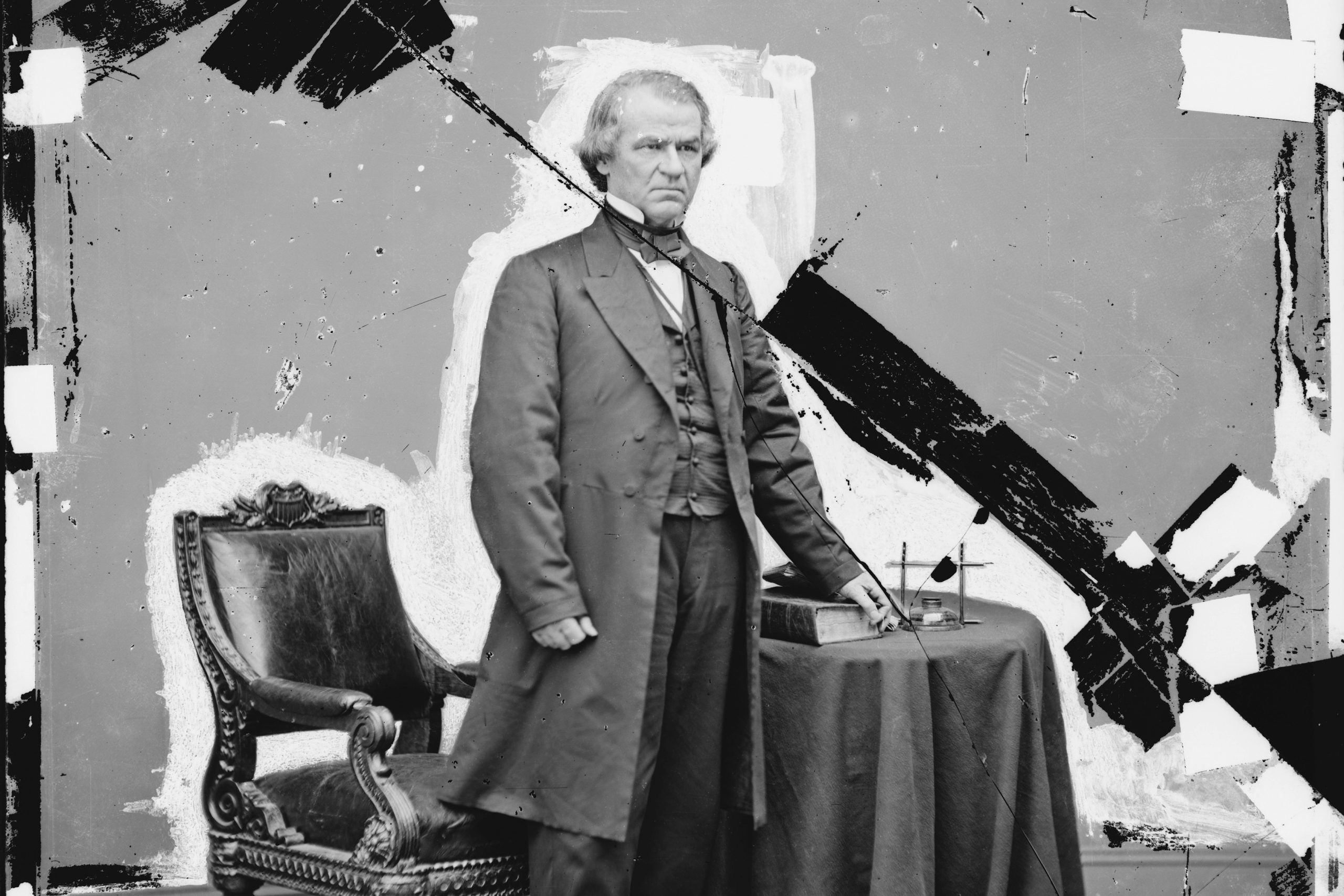
Andrew Johnson’s Legacy: Success or Failure in Post-War America?

iqsafe.info – Andrew Johnson, the 17th President of the United States, is often regarded as one of the most controversial and divisive figures in American history. His presidency, which spanned from 1865 to 1869, was marked by a tumultuous relationship with Congress, a deeply divisive approach to the Reconstruction of the South, and an unwavering defense of states’ rights. Johnson’s actions and policies during the immediate post-Civil War era had far-reaching consequences that continue to be debated to this day. Was Johnson’s legacy one of success, or did his policies and leadership leave America more fractured than it was before? This article explores the complex and often contradictory legacy of Andrew Johnson, examining the successes and failures of his presidency in the context of post-war America.

The Background of Andrew Johnson: From Humble Origins to the White House

A Southern Unionist in a Time of Division

Andrew Johnson was born on December 29, 1808, in Raleigh, North Carolina, into a poor family. His early years were marked by hardship and a lack of formal education, but he was determined to rise above his circumstances. Johnson moved to Greeneville, Tennessee, where he worked as a tailor and became involved in local politics. By the 1840s, Johnson had established himself as a prominent politician in Tennessee, eventually becoming the state’s governor and later serving as a U.S. senator.

When the Civil War broke out, Johnson was a staunch Unionist, though he hailed from a Southern state. He opposed secession, and unlike many of his Southern counterparts, he chose to remain loyal to the Union. In 1862, after Union forces gained control of Tennessee, Johnson was appointed as the military governor of the state. His tenure as governor was focused on rebuilding the state and securing Union loyalty. His moderate stance on slavery and his desire to preserve the Union without excessively punishing the South earned him the respect of many Northern leaders.

When President Abraham Lincoln was re-elected in 1864, he chose Johnson as his running mate in part to help bridge the divide between the North and the South. Johnson, a Southern Unionist, was seen as the ideal candidate to promote national reconciliation.

Johnson’s Rise to the Presidency

Johnson’s path to the presidency was dramatically altered in April 1865 when President Lincoln was assassinated by John Wilkes Booth. Johnson, who was vice president at the time, was thrust into the role of president at a critical moment in American history—just days after the end of the Civil War. Johnson faced the monumental task of leading a divided country through the process of Reconstruction, the effort to rebuild the South and reunite the nation.

Johnson’s Approach to Reconstruction: Leniency vs. Radical Change

The Presidential Plan for Reconstruction

As president, Andrew Johnson sought to quickly reunite the Southern states with the Union. His vision for Reconstruction was marked by a lenient approach toward the South. Johnson’s plan, known as the Presidential Reconstruction Plan, offered amnesty and pardons to former Confederates who took an oath of loyalty to the Union. High-ranking Confederate officials and wealthy landowners were excluded from this amnesty, but they could apply for individual pardons.

Johnson’s Reconstruction plan was designed to restore Southern state governments with minimal interference from the federal government. He allowed Southern states to re-establish their governments without significant changes to the pre-war social structure. This approach did not demand a sweeping transformation of Southern society, particularly regarding the rights of newly freed African Americans. Johnson believed that the Southern states should determine their own fate and that the federal government should avoid heavy-handed interventions in state matters.

The Black Codes and Southern Resistance

One of the primary criticisms of Johnson’s Reconstruction policies was his failure to address the plight of African Americans in the South. Under Johnson’s plan, many Southern states quickly passed Black Codes, which severely restricted the rights and freedoms of freedmen. These laws limited African Americans’ ability to own property, work in certain professions, and move freely within the states. Many Black Codes were designed to keep African Americans in a state of subjugation and economic dependency, essentially perpetuating aspects of the pre-war system of racial hierarchy.

Johnson’s unwillingness to push for federal intervention to protect the civil rights of freedmen was a major point of contention. While some Northern leaders, particularly the Radical Republicans in Congress, sought to ensure the rights of African Americans through national legislation, Johnson vetoed key civil rights bills. The most notable of these was the Civil Rights Act of 1866, which aimed to grant citizenship and equal rights to African Americans. Johnson’s veto of this bill alienated many in Congress and led to a direct conflict between the president and the legislature.

The Radical Republicans and the Clash with Congress

The Radical Republicans, a faction within the Republican Party, took issue with Johnson’s lenient approach to Reconstruction. They believed that Johnson’s plan did not go far enough in securing the rights of African Americans or addressing the social and political power of former Confederates. The Radical Republicans advocated for a more comprehensive Reconstruction that included land redistribution, federal protection for African Americans, and a stricter process for Southern states to re-enter the Union.

The conflict between Johnson and Congress came to a head in 1866 when Congress passed the Fourteenth Amendment, which granted citizenship to African Americans and provided for equal protection under the law. Johnson opposed the amendment, viewing it as an overreach of federal power. His opposition to the amendment further deepened the divide between the president and Congress, and it was eventually ratified without his support.

The standoff between Johnson and Congress reached its peak when Congress passed the Tenure of Office Act in 1867. The law, which was designed to limit Johnson’s ability to remove certain officials from office without Senate approval, was a direct response to Johnson’s efforts to dismiss Edwin M. Stanton, his secretary of war. In 1868, Johnson’s dismissal of Stanton led to his impeachment by the House of Representatives—the first impeachment of a U.S. president in history. Although Johnson was acquitted by the Senate and avoided removal from office, the impeachment battle severely damaged his political influence and weakened his presidency.

Johnson’s Legacy: Success or Failure?

A Legacy of Failure in Protecting African American Rights

Johnson’s most enduring legacy is his failure to secure the civil rights of African Americans in the immediate aftermath of the Civil War. His lenient approach to Reconstruction allowed Southern states to enact Black Codes and deny African Americans basic rights. While Congress eventually passed important civil rights legislation, such as the Fourteenth and Fifteenth Amendments, Johnson’s lack of commitment to protecting African American rights left the South entrenched in racial inequality for decades to come.

Johnson’s opposition to the Civil Rights Act of 1866, and his veto of other key legislation designed to protect African Americans, ultimately delayed the full integration of freedmen into American society. His refusal to challenge the entrenched racial prejudices of Southern society contributed to the enduring legacy of racism and segregation in the United States.

A Political Survivor, But a Failed Leader?

Andrew Johnson’s tenure as president is often seen as a failure in terms of leadership. His inability to work with Congress and his defiance of legislative action left him politically isolated. While Johnson was a political survivor—he avoided removal from office and maintained some influence within the political landscape—his presidency failed to accomplish many of the crucial goals of Reconstruction.

Johnson’s refusal to compromise with the Radical Republicans and his staunch defense of states’ rights left him with few allies in the federal government. His presidency is often viewed as a missed opportunity for true national reconciliation and healing after the Civil War. Instead of leading the nation toward unity, Johnson’s policies exacerbated divisions and left the South to govern itself without meaningful federal oversight.

A Controversial Figure in American History

In the broader context of American history, Johnson’s legacy is controversial and complex. On one hand, he played a pivotal role in preserving the Union during the Civil War and in re-integrating the Southern states into the nation. On the other hand, his reluctance to confront the deeply ingrained system of racial inequality in the South and his ineffectiveness in protecting African American rights have overshadowed his accomplishments.

Johnson’s presidency was a pivotal moment in the development of the Reconstruction era. His policies left a lasting mark on the post-war South, and his battles with Congress set the stage for the modern relationship between the executive and legislative branches of government. Ultimately, however, Johnson’s legacy is one of missed opportunities—a legacy defined by failure to fully realize the promise of equality and justice for African Americans in the post-war United States.

Conclusion: A Legacy of Division and Missed Potential

Andrew Johnson’s presidency is a testament to the challenges of leading a nation through the turbulent aftermath of war. While his determination to restore the Union and preserve states’ rights may have made him a political survivor, his failure to address the pressing issues of racial equality and social justice ultimately marred his legacy. Johnson’s actions and policies during Reconstruction left America deeply divided, and his legacy continues to spark debate about the true nature of leadership and justice in post-war America. Whether viewed as a success or failure, Johnson’s presidency will always remain a pivotal chapter in the history of the United States—a chapter marked by contentious struggles, political survival, and an enduring struggle for civil rights.
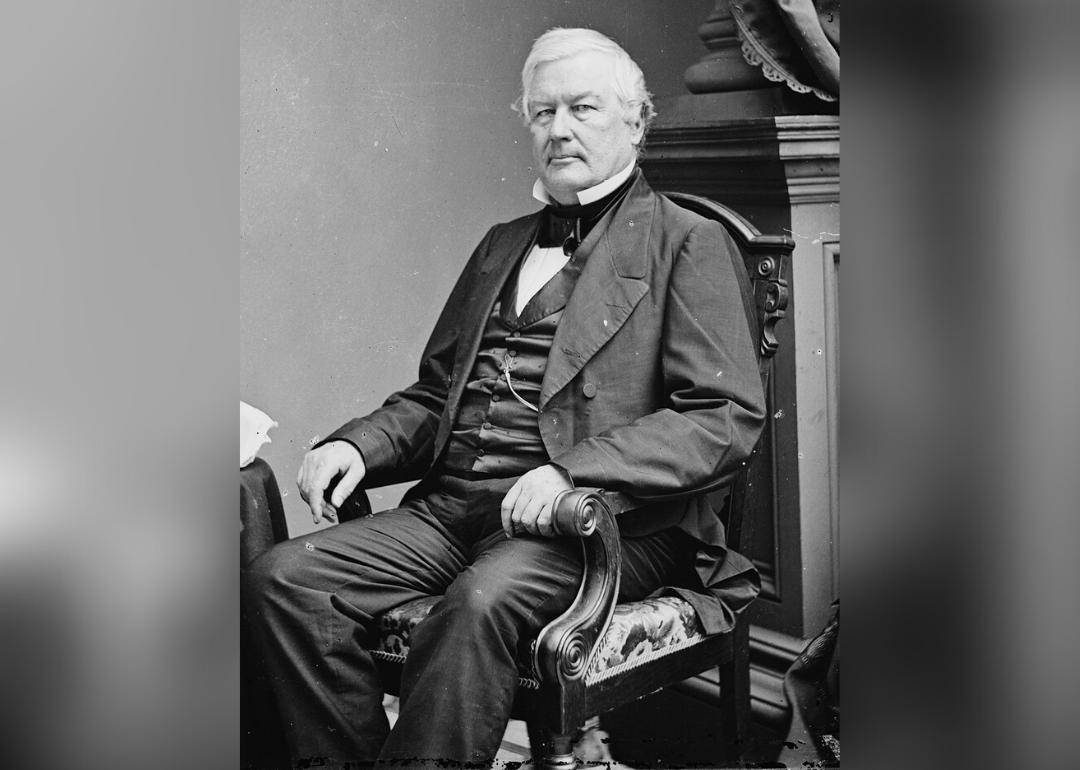
Millard Fillmore’s Legacy in the U.S. Cabinet

iqsafe.info – Millard Fillmore, the 13th president of the United States, often finds his place in history overshadowed by more well-known figures like Abraham Lincoln and Andrew Jackson. Nevertheless, his presidency and influence extend beyond just his time in office. Fillmore’s legacy is intricately tied to his decisions within his Cabinet, and the members of his administration played a crucial role in shaping the policies of his presidency. Fillmore, although not always remembered for his dynamic leadership, made key appointments that were vital to both domestic and foreign affairs during a critical period in American history.

His Cabinet was a diverse mix of politicians and statesmen who reflected the challenges and issues facing the United States in the mid-19th century. These men, many of whom had a significant influence on the political scene of their time, worked with Fillmore to navigate some of the most complex political, economic, and social issues that the country had encountered.

The Cabinet under Millard Fillmore: A Time of Compromise and Change

Appointments in the Context of Crisis

Fillmore assumed the presidency in 1850, following the sudden death of President Zachary Taylor. The nation was embroiled in a debate over slavery, the future of the newly acquired territories from the Mexican-American War, and the balance of power between the North and South. Fillmore’s Cabinet appointments were thus made with these issues in mind. In a time of national crisis, his selections were aimed at preserving the Union and finding a path to compromise. This was crucial, as the nation faced a growing divide that would eventually culminate in the Civil War.

Fillmore, a former congressman and vice president, had experience working with diverse political factions and had a deep understanding of the political landscape. He knew the importance of bringing together a team that could work across party lines. His Cabinet included men with a range of ideological positions, from moderates to conservatives, but all shared a commitment to maintaining the Union, even if it meant compromising on contentious issues like slavery.

Key Figures in Fillmore’s Cabinet

Millard Fillmore’s Cabinet consisted of individuals who played key roles in his administration and the broader political context of the time. Among the most notable were:

1. Daniel Webster – Secretary of State

One of Fillmore’s most important appointments was Daniel Webster as Secretary of State. Webster was an esteemed statesman and one of the most renowned orators of his time. He had previously served as a congressman and senator from Massachusetts and had been a prominent figure in national politics, known for his powerful speeches advocating for the preservation of the Union.

Webster played a crucial role in negotiating the Compromise of 1850, a package of legislation designed to settle the issue of slavery in the newly acquired territories. Webster’s support for the compromise, especially the controversial Fugitive Slave Act, was pivotal in getting the legislation passed. Although Webster’s stance on the issue of slavery was complex—he was not an abolitionist but believed in the preservation of the Union—his support of the compromise caused him to lose support in his home state of Massachusetts, where abolitionists were gaining influence.

2. William H. Seward – Secretary of State (Appointed in 1861)

Though William Seward did not serve directly under Fillmore (he was appointed in 1861 under Lincoln), he had been an influential member of the Whig Party prior to Fillmore’s time in office. A staunch abolitionist, Seward’s political views were diametrically opposed to Fillmore’s moderate stance on slavery. Nonetheless, Seward’s influence on American foreign policy would become significant after Fillmore’s time, particularly with his role in acquiring Alaska from Russia.

3. Thomas Corwin – Secretary of the Treasury

A well-respected Ohio politician, Thomas Corwin was appointed Secretary of the Treasury by Fillmore. Corwin had previously served as a congressman and governor of Ohio, and he was a strong advocate for economic reform and a stable national financial system. During his time in office, Corwin faced a burgeoning economic crisis, and his efforts helped strengthen the nation’s financial standing. He also worked on the country’s efforts to expand foreign trade.

4. William A. Graham – Secretary of the Navy

As a member of Fillmore’s Cabinet, William A. Graham worked on strengthening the Navy and promoting U.S. interests overseas. Graham was an experienced political figure from North Carolina and played a role in the Perry Expedition to Japan, which eventually led to the opening of Japan to trade with the United States. This was one of the most notable foreign policy achievements during Fillmore’s presidency and helped set the stage for future American interactions with East Asia.

5. Edward Everett – Secretary of State (Appointed in 1852)

Edward Everett, another prominent figure of the era, briefly served as Secretary of State under Fillmore after Daniel Webster’s departure in 1852. Everett was known for his diplomatic experience and eloquent speeches. Though he had limited time in Fillmore’s Cabinet, he played an important role in U.S. foreign relations during a pivotal period.

6. John M. Clayton – Secretary of State (1850-1852)

John M. Clayton, who was also a key player in foreign diplomacy during Fillmore’s presidency, served as Secretary of State before Everett. Clayton was instrumental in drafting the Clayton-Bulwer Treaty with Great Britain, which sought to resolve issues related to the construction of a canal across Central America, something that would become a major topic of U.S. foreign policy later on.

7. Jacob Collamer – Postmaster General

Jacob Collamer, a former senator from Vermont, was appointed Postmaster General during Fillmore’s presidency. Collamer was a member of the Whig Party and a moderate voice in politics. During his time in office, he focused on improving the efficiency of the postal system and managing the growing demands of a rapidly expanding nation.

8. Abel Upshur – Secretary of the Navy

Abel Upshur was another important member of Fillmore’s Cabinet. He succeeded William A. Graham and was deeply involved in efforts to modernize the Navy. Upshur was a staunch supporter of the expansion of American influence abroad, which he viewed as vital for the nation’s growth.

The Impact of Fillmore’s Cabinet on the Country

Fillmore’s Cabinet played a significant role in the unfolding events of the 1850s, especially in terms of foreign relations and national politics. His leadership helped ensure the passage of the Compromise of 1850, a series of laws that sought to balance the interests of slaveholding states and free states. While the compromise did not solve the issue of slavery, it did delay the outbreak of the Civil War for another decade.

His administration also saw the opening of Japan to the United States, largely through the diplomatic efforts of Commodore Matthew Perry, who was sent by Fillmore to negotiate a treaty with Japan. The Treaty of Kanagawa was signed in 1854, marking a significant shift in American foreign policy and increasing its influence in the Pacific region.

While Fillmore’s Cabinet worked diligently to manage domestic and foreign affairs, his political career would ultimately be marred by the increasing divisions over slavery, the rise of the Republican Party, and his failure to secure the Whig Party’s future. Despite this, his Cabinet’s actions were vital in shaping the policies of the era, and Fillmore’s moderate approach to politics helped prevent the country from descending into outright conflict during the years of his presidency.

Conclusion: The Lasting Impact of Millard Fillmore’s Cabinet

Millard Fillmore’s Cabinet may not have been as famous or as flashy as those of some of his successors, but it was undeniably influential in shaping the course of American history during a tumultuous time. The men he appointed worked to navigate the political and social challenges of their era, and their actions continue to reverberate in U.S. history. From domestic compromises on slavery to foreign policy triumphs, Fillmore’s Cabinet helped define the trajectory of the country during the pre-Civil War years.

While Fillmore’s own place in history may be overshadowed by the events that followed, his administration remains a significant moment in the story of the United States. His Cabinet, and the decisions they made together, was central to his presidency, reflecting his belief in pragmatism and compromise during a period of division. Their work allowed Fillmore to serve as a moderate leader during a time of great uncertainty, and their efforts provided an enduring legacy in both domestic and international policy.

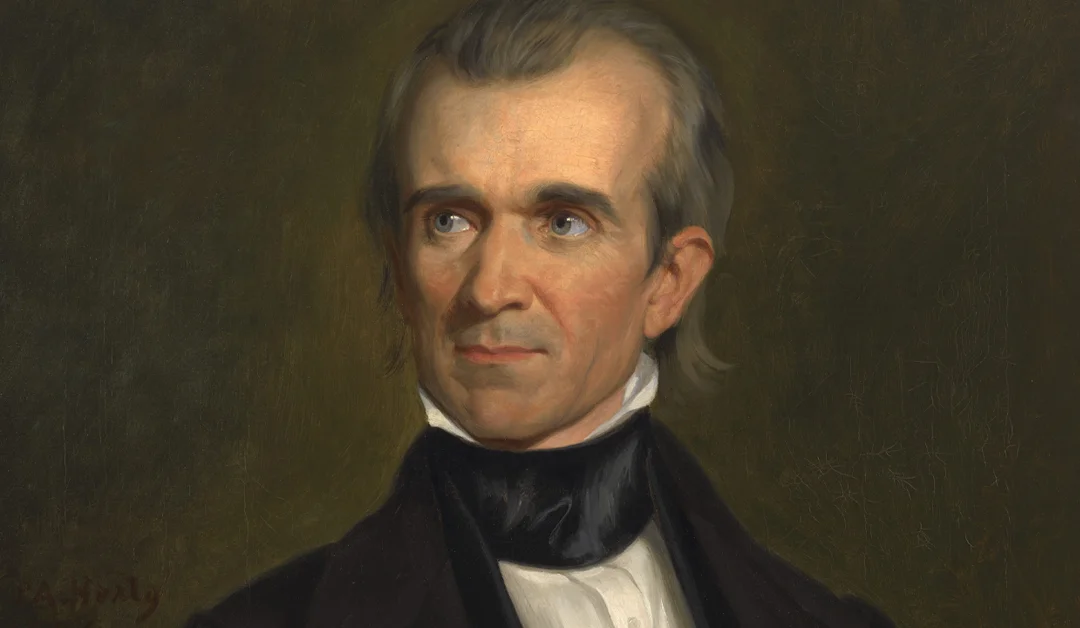
Polk’s Diplomatic Legacy: The Oregon Territory and Beyond

iqsafe.info – James K. Polk, the 11th President of the United States, is often remembered for his resolute pursuit of territorial expansion. Known for his aggressive stance on Manifest Destiny, Polk’s presidency saw the United States grow by a significant portion, both in terms of land and influence. Among his most important and enduring diplomatic achievements was the resolution of the Oregon Territory dispute, which not only shaped U.S. borders but also played a critical role in the nation’s development during the 19th century. Polk’s handling of the Oregon issue, alongside his broader foreign policy endeavors, cemented his diplomatic legacy and helped define the nation’s future trajectory.

The Oregon Territory Dispute: A Land of Dreams and Conflict

By the time James K. Polk took office in 1845, the United States had long been engaged in a diplomatic struggle over the Oregon Territory. The area, which spanned present-day Oregon, Washington, Idaho, and parts of Wyoming and Montana, was claimed by multiple powers: the United States, Great Britain, Spain, and Russia. However, by the 1820s and 1830s, the main contenders for control were the United States and Britain, each asserting competing interests in the land.

In the 1818 Treaty of Joint Occupation, the United States and Britain had agreed to allow citizens of both countries to settle the region without defining a clear boundary. As American settlers began to move westward, fueled by the promise of fertile land and opportunity, tensions grew between the two nations. By the 1840s, a large number of Americans had settled in Oregon, and the question of sovereignty was becoming more pressing.

For President Polk, the Oregon Territory was one of the central goals of his expansionist agenda. When he took office, he inherited the complex situation of balancing U.S. ambitions against British interests in the region. His policy would ultimately lead to a resolution of the dispute, but it would also require careful diplomacy and the threat of conflict.

Polk’s Campaign: “Fifty-Four Forty or Fight”

James K. Polk’s presidential campaign in 1844 was defined by the slogan “Fifty-four Forty or Fight!” This phrase referred to the northern latitude line (54 degrees, 40 minutes) that the United States hoped to establish as the boundary between U.S. and British territory in the Oregon region. It symbolized Polk’s commitment to securing all of the Oregon Territory for the United States. His supporters were enthusiastic about the prospect of expansion, and the slogan quickly became a rallying cry for the notion of Manifest Destiny—the belief that the United States was destined to expand across the North American continent.

Polk’s position on the Oregon question was unequivocal: he was determined to gain control of the entire Oregon Territory up to the 54° 40′ line, rejecting British claims to the land. However, Polk also recognized that the United States had much more to gain by avoiding war with Britain. As such, his strategy would balance boldness with diplomacy, working to secure American claims while preventing a military conflict that could stretch the nation’s resources and manpower.

Diplomatic Negotiation: The Oregon Treaty of 1846

Despite the heated rhetoric surrounding the Oregon question, Polk was keenly aware that the United States did not need to engage in a costly war with Britain over the territory. As the diplomatic negotiations began in 1845, Polk shifted from the strong demands of “Fifty-four Forty or Fight!” to a more pragmatic approach. He sought a peaceful resolution that would expand the nation without escalating tensions to war.

After several months of diplomatic talks, Polk and British Foreign Secretary Lord Aberdeen reached an agreement in 1846. The result was the Oregon Treaty, which established the 49th parallel as the boundary between British Canada and U.S. territories in the Oregon region. The United States gained control of the land south of this line, including the fertile Willamette Valley, while Britain retained control of the land to the north, which eventually became British Columbia.

The Oregon Treaty was a major diplomatic victory for Polk and the United States. By compromising on the northern boundary, Polk managed to avoid war with Britain, a nation that was still a global superpower, and at the same time, secured a vast and resource-rich territory for the United States. The treaty was seen as a triumph of diplomacy, as Polk achieved his goal of expanding American territory without resorting to violence or armed conflict.

The Impact of the Oregon Treaty on the United States

The Oregon Treaty marked a turning point in U.S. foreign policy and territorial expansion. By successfully negotiating the boundary with Britain, Polk not only preserved the peace with a powerful nation but also secured the future development of the American West. The acquisition of Oregon allowed for the continued settlement of the region, and it helped solidify the nation’s claim to the Pacific Coast, a key part of the broader vision of Manifest Destiny.

The agreement also had profound economic consequences. The fertile lands of Oregon attracted thousands of settlers, many of whom traveled the Oregon Trail in search of new opportunities. As these settlers moved westward, they established farms, towns, and trade routes that would form the foundation for the U.S. economy in the Pacific Northwest. Additionally, the region’s natural resources, including timber, minerals, and fish, provided new economic opportunities for the expanding United States.

Moreover, the Oregon Treaty marked the final step in the United States’ long-standing quest to control the western portion of the continent. The acquisition of Oregon was a key moment in the history of American territorial expansion, reinforcing the idea that the nation had a divine right to stretch from coast to coast.

Beyond Oregon: Polk’s Expansionist Vision

While the Oregon dispute was one of the defining moments of Polk’s presidency, his expansionist policies extended beyond the Pacific Northwest. Polk’s vision for the United States was one of continental domination, and he was not satisfied with merely securing Oregon. His administration aggressively pursued the annexation of Texas, which had been an independent republic after its secession from Mexico in 1836. Polk’s push for Texas statehood culminated in the annexation of Texas in 1845, an act that helped trigger the Mexican-American War.

The war itself, which resulted in the Treaty of Guadalupe Hidalgo in 1848, expanded U.S. territory even further, securing vast areas in the Southwest, including California, New Mexico, Arizona, Nevada, and Utah. Polk’s successful negotiation of the Oregon Treaty and his actions in the Mexican-American War together helped fulfill the dream of Manifest Destiny, a vision that saw the United States stretch from the Atlantic to the Pacific.

Polk’s Diplomatic Legacy: A Pragmatic Expansionist

James K. Polk’s handling of the Oregon Territory is often seen as a model of pragmatic diplomacy. While his rhetoric may have suggested a willingness to go to war over the land, his actions demonstrated a careful and calculated approach to foreign policy. Polk’s diplomatic negotiation of the Oregon Treaty of 1846 was a victory for both the United States and Britain, as it avoided military conflict while securing the land necessary for American expansion.

Polk’s legacy in foreign affairs is also marked by his broader achievements in securing the nation’s borders. His presidency played a crucial role in shaping the territorial map of the United States, and his actions helped set the stage for the country’s future growth and economic success.

While the Oregon Treaty was an important diplomatic success, it was just one chapter in Polk’s broader legacy of expansion. By the end of his presidency in 1849, the United States had added more territory than at any other time in its history, cementing Polk’s place as one of the most influential expansionist presidents in American history.

Conclusion: A Diplomatic Architect of America’s Future

James K. Polk’s diplomatic legacy, particularly regarding the Oregon Territory, remains one of the most significant aspects of his presidency. Through a combination of bold rhetoric and practical negotiation, Polk was able to expand the United States’ borders while avoiding unnecessary conflict with a major European power. The resolution of the Oregon question not only fulfilled the ambitions of Manifest Destiny but also laid the foundation for the United States to emerge as a continental power by the mid-19th century.

Polk’s diplomatic triumphs were not limited to Oregon. His broader vision of American expansion reshaped the nation and marked the beginning of its rise as a global power. By securing Oregon and the Southwest, Polk helped secure the future of the United States, leaving a lasting legacy as a president who understood the importance of diplomacy in the pursuit of national interests.