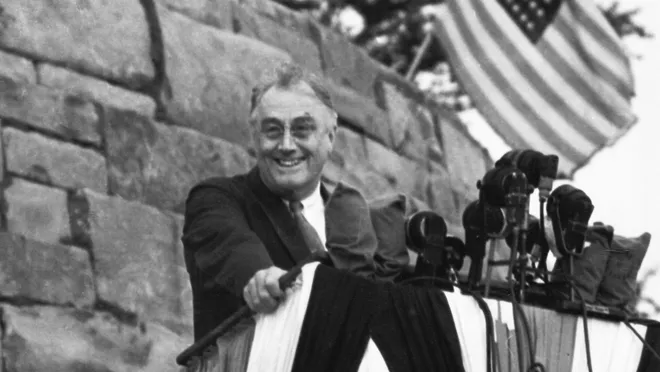
Franklin D. Roosevelt: Leading America Through Crisis

iqsafe.info – Franklin Delano Roosevelt, the 32nd president of the United States, stands as one of the most iconic and influential leaders in American history. Serving four terms from 1933 to 1945, Roosevelt led the nation through two of its gravest crises: the Great Depression and World War II. His leadership, vision, and ability to rally the American people during these times of unprecedented turmoil cemented his legacy as a president who steered America through darkness and laid the foundation for a more prosperous, secure, and equitable future.

This article explores Roosevelt’s leadership during the Great Depression and World War II, examining how he navigated these crises, reshaped the role of government, and forever altered the political, economic, and social landscape of the United States.

Early Life and Political Rise

A Prominent Upbringing

Franklin Delano Roosevelt was born on January 30, 1882, into a wealthy and influential family in Hyde Park, New York. He grew up in a privileged environment, receiving private education and eventually attending Harvard University. Roosevelt’s family background instilled in him a sense of duty and service, but it was his distant cousin, Theodore Roosevelt—26th president of the United States—who served as a key inspiration for his political ambitions.

In 1905, Franklin married Eleanor Roosevelt, Theodore’s niece, beginning a lifelong partnership that would greatly influence his political career and shape his progressive values.

Political Beginnings

Roosevelt entered politics in 1910 when he was elected to the New York State Senate as a Democrat, a rare feat in a predominantly Republican district. His charisma and political skill quickly propelled him into the national spotlight. In 1913, President Woodrow Wilson appointed him Assistant Secretary of the Navy, a position he held during World War I. Roosevelt’s work in the Navy gave him valuable experience in leadership and administration, and he emerged from the war as a rising star in the Democratic Party.

In 1920, Roosevelt ran for vice president on the Democratic ticket but lost. Shortly after, he was struck by a personal tragedy that would shape the rest of his life—he contracted polio, leaving him partially paralyzed. However, Roosevelt’s determination and resilience never wavered. Through years of physical therapy and with the support of his wife, Eleanor, he overcame his physical limitations and returned to politics stronger than ever.

The Great Depression and the New Deal

The Stock Market Crash and Economic Collapse

By the time Roosevelt was elected president in 1932, the United States was in the depths of the Great Depression, the most severe economic crisis in its history. The stock market crash of 1929 had triggered a massive collapse of the banking system, widespread unemployment, and economic despair. By 1932, the U.S. unemployment rate had soared to 25%, and millions of Americans were homeless, hungry, and desperate.

Roosevelt ran for president on a platform of optimism and hope, promising a “New Deal” for the American people. His message resonated with a nation longing for relief, and he won the 1932 election in a landslide, defeating incumbent President Herbert Hoover.

The First Hundred Days: Immediate Action

Upon taking office in March 1933, Roosevelt wasted no time. In his first Hundred Days, he introduced an unprecedented wave of legislation aimed at stabilizing the economy, providing immediate relief to struggling Americans, and laying the groundwork for long-term recovery. Roosevelt’s first priority was to restore confidence in the banking system, which was on the verge of collapse. He declared a national bank holiday, temporarily closing all banks while the government worked to secure and reorganize them. This action, coupled with the Emergency Banking Act, helped restore public trust and stem the tide of bank failures.

The Hundred Days also saw the creation of numerous programs and agencies designed to address the immediate needs of the American people. The Civilian Conservation Corps (CCC) put unemployed young men to work on environmental conservation projects, while the Public Works Administration (PWA) and Civil Works Administration (CWA) provided jobs building infrastructure such as roads, bridges, and schools. Roosevelt’s administration also established the Agricultural Adjustment Administration (AAA) to help farmers by stabilizing crop prices and reducing surpluses.

The cornerstone of Roosevelt’s early New Deal efforts was the National Industrial Recovery Act (NIRA), which aimed to boost industrial production and improve labor conditions by encouraging cooperation between government, business, and labor. Although the NIRA was later ruled unconstitutional, it laid the groundwork for future labor reforms.

The New Deal: Expanding the Role of Government

Roosevelt’s New Deal was more than a collection of emergency programs; it was a fundamental rethinking of the relationship between the federal government and the American people. Under Roosevelt, the government took on a much more active role in regulating the economy, protecting workers, and providing a social safety net for citizens.

One of the most significant New Deal programs was the Social Security Act of 1935, which established the nation’s first federal retirement system, providing pensions for the elderly and unemployment insurance for those who lost their jobs. The Social Security Act marked a major expansion of the federal government’s role in ensuring economic security for Americans and remains a cornerstone of the American welfare state to this day.

Other key New Deal initiatives included the Wagner Act, which strengthened labor unions by guaranteeing workers the right to collectively bargain, and the creation of the Securities and Exchange Commission (SEC) to regulate the stock market and protect investors from fraud.

While the New Deal did not fully end the Great Depression—economic recovery would not come until the outbreak of World War II—it succeeded in providing relief to millions of Americans, stabilizing key sectors of the economy, and restoring hope to a nation in crisis. Roosevelt’s leadership during this period fundamentally reshaped American society and the role of government in addressing social and economic challenges.

World War II: Leading America on the Global Stage

The Road to War

As the 1930s progressed, Roosevelt turned his attention to the growing threat of war in Europe and Asia. By 1939, Nazi Germany, led by Adolf Hitler, had launched a series of aggressive territorial expansions, invading Poland and triggering the outbreak of World War II. In Asia, Japan was pursuing its imperial ambitions, expanding into China and Southeast Asia.

Though Roosevelt recognized the threat posed by fascist regimes, the United States remained deeply isolationist in the years leading up to the war. Many Americans were reluctant to become involved in another overseas conflict, especially in the aftermath of World War I. Despite this sentiment, Roosevelt worked behind the scenes to prepare the United States for potential involvement. He increased military spending, expanded the Navy, and sought ways to support Allied nations fighting against the Axis powers, particularly the United Kingdom.

In 1940, Roosevelt made the unprecedented decision to run for a third term as president, arguing that the nation needed continuity of leadership in a time of global crisis. He won re-election and soon after ramped up support for the Allies through measures like the Lend-Lease Act, which allowed the U.S. to provide military aid to countries fighting against Germany, Italy, and Japan.

Pearl Harbor and America’s Entry into the War

The United States officially entered World War II on December 7, 1941, when Japan launched a surprise attack on the U.S. naval base at Pearl Harbor, Hawaii. The attack killed over 2,400 Americans and destroyed much of the Pacific Fleet. The next day, Roosevelt delivered his famous “Day of Infamy” speech to Congress, and the United States declared war on Japan. Shortly thereafter, Germany and Italy declared war on the United States, pulling the nation into the global conflict.

Roosevelt’s leadership during the war was critical in guiding the nation through one of its most challenging periods. He oversaw the mobilization of the American economy for war production, transforming factories to produce weapons, planes, ships, and other materials necessary for the war effort. Under his administration, the United States became the “Arsenal of Democracy,” supplying not only its own military but also the Allies with the tools needed to defeat the Axis powers.

Leadership as Commander-in-Chief

As Commander-in-Chief, Roosevelt worked closely with Allied leaders, including British Prime Minister Winston Churchill and Soviet Premier Joseph Stalin, to develop military strategy and coordinate efforts to defeat Nazi Germany and Imperial Japan. Together, they forged the Grand Alliance, a coalition of nations committed to the defeat of the Axis powers.

Roosevelt played a key role in planning the D-Day invasion of Normandy, which marked the beginning of the end for Nazi Germany. He also supported the development of the Manhattan Project, the top-secret program that would eventually lead to the creation of the atomic bomb.

Throughout the war, Roosevelt skillfully balanced military strategy with diplomacy, ensuring that the Allies remained united in their efforts despite differing political ideologies and post-war ambitions.

Roosevelt’s Legacy

Transforming the Role of Government

Franklin D. Roosevelt’s presidency fundamentally transformed the role of the federal government in American life. Through his New Deal programs, he expanded the government’s responsibilities in regulating the economy, providing social welfare, and protecting workers’ rights. These changes laid the foundation for the modern welfare state and established the principle that the government has a responsibility to ensure the well-being of its citizens.

Shaping the Post-War World

As the war drew to a close, Roosevelt turned his attention to shaping the post-war world. He was instrumental in the creation of the United Nations, an international organization aimed at promoting peace, security, and cooperation among nations. Roosevelt envisioned a world where nations would work together to prevent future conflicts and protect human rights. Although he did not live to see the end of the war, his vision for a more just and peaceful world endured.

Enduring Influence

Franklin D. Roosevelt passed away on April 12, 1945, just months before the Allied victory in World War II. His death marked the end of an era, but his legacy continues to shape American politics and society. His leadership during the Great Depression and World War II left an indelible mark on the United States, and his belief in the power of government to improve people’s lives remains a guiding principle for many to this day.

Roosevelt’s ability to navigate two of the greatest crises in American history—the Great Depression and World War II—cemented his place as one of the greatest presidents in U.S. history. He remains a symbol of resilience, leadership, and the enduring capacity of the American people to overcome adversity.

In conclusion, Franklin D. Roosevelt’s presidency was defined by crisis, but it was also defined by his vision for a better future. He led the nation through economic hardship and global conflict, emerging as a transformative figure who fundamentally reshaped American society and government. Roosevelt’s leadership, ideals, and legacy continue to inspire and resonate, not just in the United States but around the world.
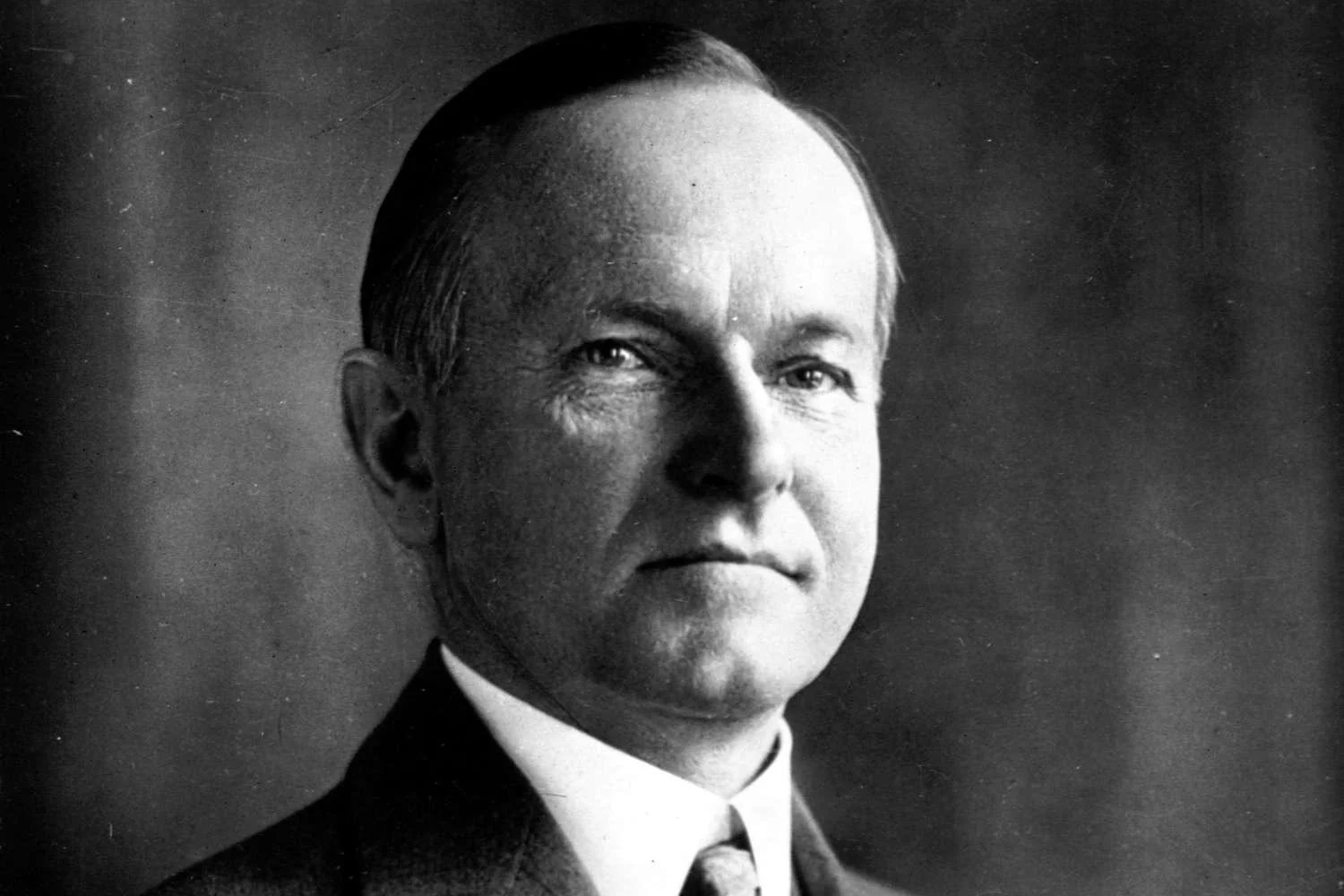
Coolidge in Crisis: How He Led America – Great Depression

iqsafe.info – Calvin Coolidge, the 30th President of the United States, is often remembered for his quiet leadership and steadfast commitment to fiscal conservatism. Serving from 1923 to 1929, Coolidge presided over one of the most prosperous periods in American history—the “Roaring Twenties.” However, his presidency was not without its challenges. As he prepared to leave office in 1929, signs of a looming economic crisis were already beginning to appear. Though Coolidge did not live to witness the full effects of the Great Depression, his leadership in addressing the early signs of economic distress left a significant impact on the nation and shaped how future leaders would respond to economic crises.

This article explores how Coolidge navigated the early signs of economic turbulence during the late 1920s. While he was deeply committed to a philosophy of minimal government intervention, his pragmatic response to the emerging crisis showcased a nuanced understanding of the need for federal action—without abandoning his belief in limited government. Coolidge’s actions during this time, including his cautious approach to addressing the stock market boom and his policies surrounding agricultural distress, provide a window into the challenges faced by a president at the cusp of the worst economic downturn in American history.

The Roaring Twenties: Prosperity and Its Perils

When Coolidge assumed the presidency in 1923 following the sudden death of Warren G. Harding, the U.S. economy was in a period of rapid expansion. The country had recovered from the aftermath of World War I, and the 1920s saw technological advancements, a growing consumer culture, and the rise of stock market speculation. Economic growth seemed unstoppable, and many Americans embraced a sense of optimism and prosperity.

Coolidge, a fiscal conservative and firm believer in laissez-faire economics, played a significant role in fostering this period of growth. He championed tax cuts, reduced government spending, and maintained a relatively hands-off approach to business regulation. These policies were well-received, and by the mid-1920s, the U.S. economy was booming. However, beneath the surface of this economic success, cracks were beginning to appear—signs of an impending financial disaster that Coolidge and his administration would soon have to confront.

Stock Market Speculation and the Coming Crisis

One of the most significant early warning signs of the coming Great Depression was the rampant speculation in the stock market. During the 1920s, the stock market experienced a dramatic rise, fueled by widespread investor enthusiasm and the availability of easy credit. Many Americans, including middle-class individuals, began investing in stocks, often with borrowed money. The practice of buying on margin—borrowing money to purchase stocks—became increasingly common, creating an inflated sense of the stock market’s true value.

While Coolidge’s administration took a largely hands-off approach to regulating the stock market, there were growing concerns among financial experts that the market was becoming dangerously overvalued. Coolidge, who believed in minimal government intervention, was hesitant to take drastic action, fearing that any interference might harm the economy’s growth. However, he did acknowledge the potential risks posed by stock market speculation and expressed concern over the dangers of “excessive speculation.”

In 1927, the Federal Reserve took initial steps to cool down the overheated stock market by raising interest rates, which slowed the growth of stock prices. However, Coolidge, while supportive of the Fed’s actions, continued to advocate for a limited role of government in managing economic affairs. His reluctance to intervene directly in the stock market or to introduce more substantial regulatory reforms is a reflection of his broader philosophy of government minimalism.

Coolidge’s avoidance of significant regulatory reform would come to haunt the nation. By 1929, the stock market crash, which would trigger the Great Depression, was imminent. Although Coolidge did not live to see the full consequences, his tenure was marked by the early signs of speculative excess that would lead to one of the most severe economic crises in U.S. history.

Agricultural Distress: The Struggles of Farmers

Another significant challenge facing Coolidge’s administration was the worsening plight of American farmers. While urban America thrived in the 1920s, rural America faced a starkly different reality. Farmers, particularly those in the Midwest and South, were struggling with falling agricultural prices, overproduction, and growing debt. The global market, which had once been a source of demand for American agricultural products, was in decline due to global economic shifts and a post-war slowdown in Europe.

Coolidge, who had grown up in rural Vermont and understood the importance of agriculture to the American economy, was aware of the difficulties faced by farmers. However, his belief in limited government meant that he was reluctant to implement federal interventions to directly support the agricultural sector. Coolidge, like many conservatives of his time, believed that the government should not be in the business of providing subsidies or support for struggling industries.

In response to the agricultural crisis, Coolidge’s administration took steps to address the issue by reducing tariffs on agricultural goods and attempting to negotiate international trade agreements that could open up markets for U.S. farmers. However, these efforts were limited in scope and did little to reverse the downward trend in agricultural prices. By 1928, agricultural distress was one of the early signs of a broader economic downturn, with farmers in many regions unable to make a profit or service their debts.

Although Coolidge’s hands-off approach to the agricultural crisis did not provide immediate relief, it reflected his broader economic philosophy that the market, not the government, should dictate the fate of industries. However, the challenges farmers faced during Coolidge’s presidency would contribute to the mounting economic difficulties that ultimately led to the Great Depression.

The Federal Reserve and Interest Rates: Early Signs of Economic Tightening

As the 1920s progressed, the economic landscape began to show signs of strain. The Federal Reserve, under Coolidge’s watch, began to take a more active role in responding to the overheated economy. In 1927, the Federal Reserve increased interest rates in an attempt to slow down the speculative frenzy in the stock market. While Coolidge supported the Fed’s actions, he did not advocate for greater government control over the economy.

The tightening of monetary policy by the Federal Reserve, while necessary in some respects, was not enough to prevent the inevitable crash. In 1929, after Coolidge had left office, the stock market crash plunged the nation into the Great Depression. However, the Fed’s actions in the latter years of Coolidge’s presidency provided a glimpse into the difficult economic decisions that would be needed in the years to come.

Though Coolidge was not able to prevent the impending crash, his leadership and the policies enacted during his time in office helped mitigate the damage in certain sectors. The tax cuts, reduced government spending, and efforts to maintain a stable currency were essential to the relative strength of the American economy during the early 1920s, even if those policies were not sufficient to ward off the larger economic collapse that followed.

The Election of 1928: The Changing Mood of the Nation

By the time Coolidge’s term ended in 1929, the economic warning signs had become increasingly impossible to ignore. Despite the mounting evidence of economic instability, Coolidge chose not to run for re-election in 1928, opting to retire from politics. His successor, Herbert Hoover, inherited a nation that was on the cusp of a major economic collapse. Coolidge’s departure from the political stage marked a turning point, as the country would soon face its greatest economic crisis.

Although Coolidge did not directly experience the full effects of the Great Depression, the 1928 election highlighted the growing public concerns about the future of the economy. Hoover, who ran on a platform of continued prosperity, would soon be faced with the harsh reality of the stock market crash of 1929 and the subsequent economic fallout. Despite the optimism of the 1928 election, the country was rapidly heading toward a new era of hardship.

Coolidge’s Legacy: Leadership in the Face of Economic Uncertainty

Calvin Coolidge’s presidency remains a study in contrasts. While his administration presided over one of the most prosperous periods in American history, it also marked the beginning of economic difficulties that would culminate in the Great Depression. Coolidge’s belief in minimal government intervention and fiscal conservatism, while successful in fostering growth during the 1920s, would be challenged in the years following his presidency, as the nation grappled with the effects of the stock market crash and the global economic downturn.

Coolidge’s legacy, however, is not one of failure. His cautious, restrained leadership during the early signs of economic instability showed a deep commitment to his principles, even in the face of mounting pressure. While his hands-off approach to the stock market and the agricultural sector may have been inadequate to prevent the Great Depression, his commitment to fiscal discipline and limited government would continue to influence American economic policy for decades to come.

In conclusion, Calvin Coolidge’s leadership during the early signs of the Great Depression illustrates the tension between his philosophical commitment to limited government and the reality of an economy on the brink of collapse. His presidency stands as a reminder that while government intervention should be limited, there are times when even the most committed proponents of minimal government must confront economic realities. Though Coolidge did not have the tools or the political will to prevent the coming depression, his legacy as a thoughtful, principled leader endures, offering lessons in restraint, fiscal discipline, and leadership in times of crisis.

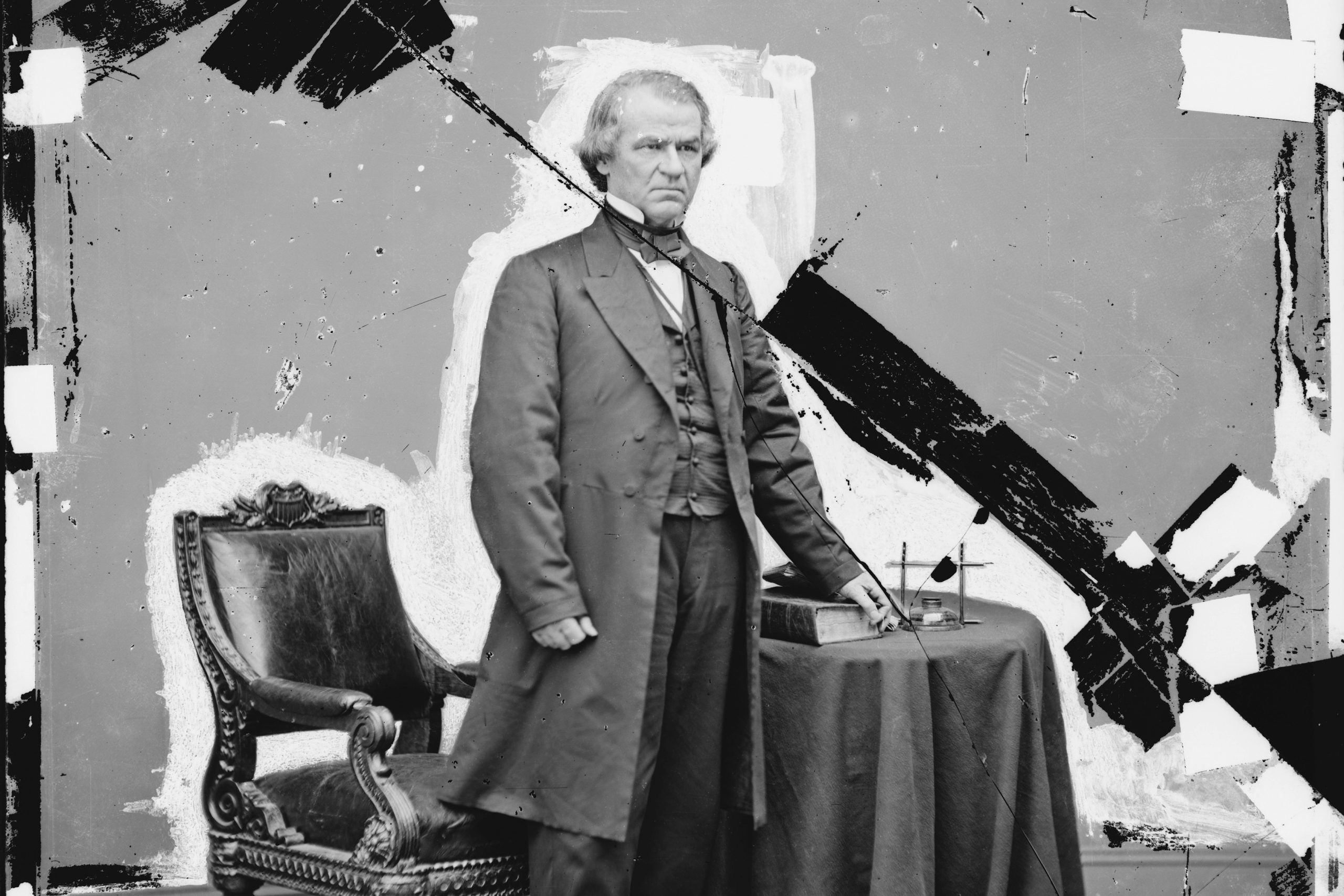
Andrew Johnson’s Legacy: Success or Failure in Post-War America?

iqsafe.info – Andrew Johnson, the 17th President of the United States, is often regarded as one of the most controversial and divisive figures in American history. His presidency, which spanned from 1865 to 1869, was marked by a tumultuous relationship with Congress, a deeply divisive approach to the Reconstruction of the South, and an unwavering defense of states’ rights. Johnson’s actions and policies during the immediate post-Civil War era had far-reaching consequences that continue to be debated to this day. Was Johnson’s legacy one of success, or did his policies and leadership leave America more fractured than it was before? This article explores the complex and often contradictory legacy of Andrew Johnson, examining the successes and failures of his presidency in the context of post-war America.

The Background of Andrew Johnson: From Humble Origins to the White House

A Southern Unionist in a Time of Division

Andrew Johnson was born on December 29, 1808, in Raleigh, North Carolina, into a poor family. His early years were marked by hardship and a lack of formal education, but he was determined to rise above his circumstances. Johnson moved to Greeneville, Tennessee, where he worked as a tailor and became involved in local politics. By the 1840s, Johnson had established himself as a prominent politician in Tennessee, eventually becoming the state’s governor and later serving as a U.S. senator.

When the Civil War broke out, Johnson was a staunch Unionist, though he hailed from a Southern state. He opposed secession, and unlike many of his Southern counterparts, he chose to remain loyal to the Union. In 1862, after Union forces gained control of Tennessee, Johnson was appointed as the military governor of the state. His tenure as governor was focused on rebuilding the state and securing Union loyalty. His moderate stance on slavery and his desire to preserve the Union without excessively punishing the South earned him the respect of many Northern leaders.

When President Abraham Lincoln was re-elected in 1864, he chose Johnson as his running mate in part to help bridge the divide between the North and the South. Johnson, a Southern Unionist, was seen as the ideal candidate to promote national reconciliation.

Johnson’s Rise to the Presidency

Johnson’s path to the presidency was dramatically altered in April 1865 when President Lincoln was assassinated by John Wilkes Booth. Johnson, who was vice president at the time, was thrust into the role of president at a critical moment in American history—just days after the end of the Civil War. Johnson faced the monumental task of leading a divided country through the process of Reconstruction, the effort to rebuild the South and reunite the nation.

Johnson’s Approach to Reconstruction: Leniency vs. Radical Change

The Presidential Plan for Reconstruction

As president, Andrew Johnson sought to quickly reunite the Southern states with the Union. His vision for Reconstruction was marked by a lenient approach toward the South. Johnson’s plan, known as the Presidential Reconstruction Plan, offered amnesty and pardons to former Confederates who took an oath of loyalty to the Union. High-ranking Confederate officials and wealthy landowners were excluded from this amnesty, but they could apply for individual pardons.

Johnson’s Reconstruction plan was designed to restore Southern state governments with minimal interference from the federal government. He allowed Southern states to re-establish their governments without significant changes to the pre-war social structure. This approach did not demand a sweeping transformation of Southern society, particularly regarding the rights of newly freed African Americans. Johnson believed that the Southern states should determine their own fate and that the federal government should avoid heavy-handed interventions in state matters.

The Black Codes and Southern Resistance

One of the primary criticisms of Johnson’s Reconstruction policies was his failure to address the plight of African Americans in the South. Under Johnson’s plan, many Southern states quickly passed Black Codes, which severely restricted the rights and freedoms of freedmen. These laws limited African Americans’ ability to own property, work in certain professions, and move freely within the states. Many Black Codes were designed to keep African Americans in a state of subjugation and economic dependency, essentially perpetuating aspects of the pre-war system of racial hierarchy.

Johnson’s unwillingness to push for federal intervention to protect the civil rights of freedmen was a major point of contention. While some Northern leaders, particularly the Radical Republicans in Congress, sought to ensure the rights of African Americans through national legislation, Johnson vetoed key civil rights bills. The most notable of these was the Civil Rights Act of 1866, which aimed to grant citizenship and equal rights to African Americans. Johnson’s veto of this bill alienated many in Congress and led to a direct conflict between the president and the legislature.

The Radical Republicans and the Clash with Congress

The Radical Republicans, a faction within the Republican Party, took issue with Johnson’s lenient approach to Reconstruction. They believed that Johnson’s plan did not go far enough in securing the rights of African Americans or addressing the social and political power of former Confederates. The Radical Republicans advocated for a more comprehensive Reconstruction that included land redistribution, federal protection for African Americans, and a stricter process for Southern states to re-enter the Union.

The conflict between Johnson and Congress came to a head in 1866 when Congress passed the Fourteenth Amendment, which granted citizenship to African Americans and provided for equal protection under the law. Johnson opposed the amendment, viewing it as an overreach of federal power. His opposition to the amendment further deepened the divide between the president and Congress, and it was eventually ratified without his support.

The standoff between Johnson and Congress reached its peak when Congress passed the Tenure of Office Act in 1867. The law, which was designed to limit Johnson’s ability to remove certain officials from office without Senate approval, was a direct response to Johnson’s efforts to dismiss Edwin M. Stanton, his secretary of war. In 1868, Johnson’s dismissal of Stanton led to his impeachment by the House of Representatives—the first impeachment of a U.S. president in history. Although Johnson was acquitted by the Senate and avoided removal from office, the impeachment battle severely damaged his political influence and weakened his presidency.

Johnson’s Legacy: Success or Failure?

A Legacy of Failure in Protecting African American Rights

Johnson’s most enduring legacy is his failure to secure the civil rights of African Americans in the immediate aftermath of the Civil War. His lenient approach to Reconstruction allowed Southern states to enact Black Codes and deny African Americans basic rights. While Congress eventually passed important civil rights legislation, such as the Fourteenth and Fifteenth Amendments, Johnson’s lack of commitment to protecting African American rights left the South entrenched in racial inequality for decades to come.

Johnson’s opposition to the Civil Rights Act of 1866, and his veto of other key legislation designed to protect African Americans, ultimately delayed the full integration of freedmen into American society. His refusal to challenge the entrenched racial prejudices of Southern society contributed to the enduring legacy of racism and segregation in the United States.

A Political Survivor, But a Failed Leader?

Andrew Johnson’s tenure as president is often seen as a failure in terms of leadership. His inability to work with Congress and his defiance of legislative action left him politically isolated. While Johnson was a political survivor—he avoided removal from office and maintained some influence within the political landscape—his presidency failed to accomplish many of the crucial goals of Reconstruction.

Johnson’s refusal to compromise with the Radical Republicans and his staunch defense of states’ rights left him with few allies in the federal government. His presidency is often viewed as a missed opportunity for true national reconciliation and healing after the Civil War. Instead of leading the nation toward unity, Johnson’s policies exacerbated divisions and left the South to govern itself without meaningful federal oversight.

A Controversial Figure in American History

In the broader context of American history, Johnson’s legacy is controversial and complex. On one hand, he played a pivotal role in preserving the Union during the Civil War and in re-integrating the Southern states into the nation. On the other hand, his reluctance to confront the deeply ingrained system of racial inequality in the South and his ineffectiveness in protecting African American rights have overshadowed his accomplishments.

Johnson’s presidency was a pivotal moment in the development of the Reconstruction era. His policies left a lasting mark on the post-war South, and his battles with Congress set the stage for the modern relationship between the executive and legislative branches of government. Ultimately, however, Johnson’s legacy is one of missed opportunities—a legacy defined by failure to fully realize the promise of equality and justice for African Americans in the post-war United States.

Conclusion: A Legacy of Division and Missed Potential

Andrew Johnson’s presidency is a testament to the challenges of leading a nation through the turbulent aftermath of war. While his determination to restore the Union and preserve states’ rights may have made him a political survivor, his failure to address the pressing issues of racial equality and social justice ultimately marred his legacy. Johnson’s actions and policies during Reconstruction left America deeply divided, and his legacy continues to spark debate about the true nature of leadership and justice in post-war America. Whether viewed as a success or failure, Johnson’s presidency will always remain a pivotal chapter in the history of the United States—a chapter marked by contentious struggles, political survival, and an enduring struggle for civil rights.